Mastering Hypnosis Techniques
Introduction to Hypnosis
What is Hypnosis?
Have you ever been so absorbed in a book or a movie that the world around you seems to fade away? You're not asleep, but your attention is completely captured. In a way, you've experienced a state similar to hypnosis.
Hypnosis is a state of highly focused attention, combined with reduced awareness of your surroundings and a heightened response to suggestions. It's not about losing control or being unconscious. Instead, it’s a natural state of mind that involves a cooperative interaction where a person is guided to respond to suggestions for changes in their subjective experience, perceptions, or thoughts.
Contrary to popular belief, hypnosis does not involve losing control or being in a deep sleep-like state; instead, it heightens suggestibility while maintaining awareness and control.
The key ingredient here is "suggestibility." During hypnosis, the critical part of your mind—the one that constantly questions and analyzes—takes a back seat. This allows you to be more open to new ideas and perspectives, making it easier to experience suggested changes.
A Journey Through Time
The idea of using trance-like states for healing isn't new. Ancient cultures in Egypt and Greece had practices like "temple sleep," where people would enter a focused state in sacred places hoping for healing dreams or divine guidance. While not called hypnosis, these rituals shared the element of using a focused mental state to create change.
The modern story of hypnosis often begins in the 18th century with Franz Anton Mesmer, a German doctor who believed in a force called “animal magnetism.” He thought that an invisible natural force possessed by all living things could be channeled to cure illnesses. His theatrical sessions involved patients sitting around a tub of

While Mesmer's theory of magnetic fluids was later discredited, his work sparked interest in the power of suggestion. It was a Scottish surgeon, James Braid, who moved the field toward science in the 1840s. He dismissed the magnetism theory and coined the term "hypnotism," from the Greek word Hypnos, meaning "sleep." Braid realized that the state wasn't actually sleep but a form of intense concentration. He called it "monoideism," or a focus on a single idea.
Sleep
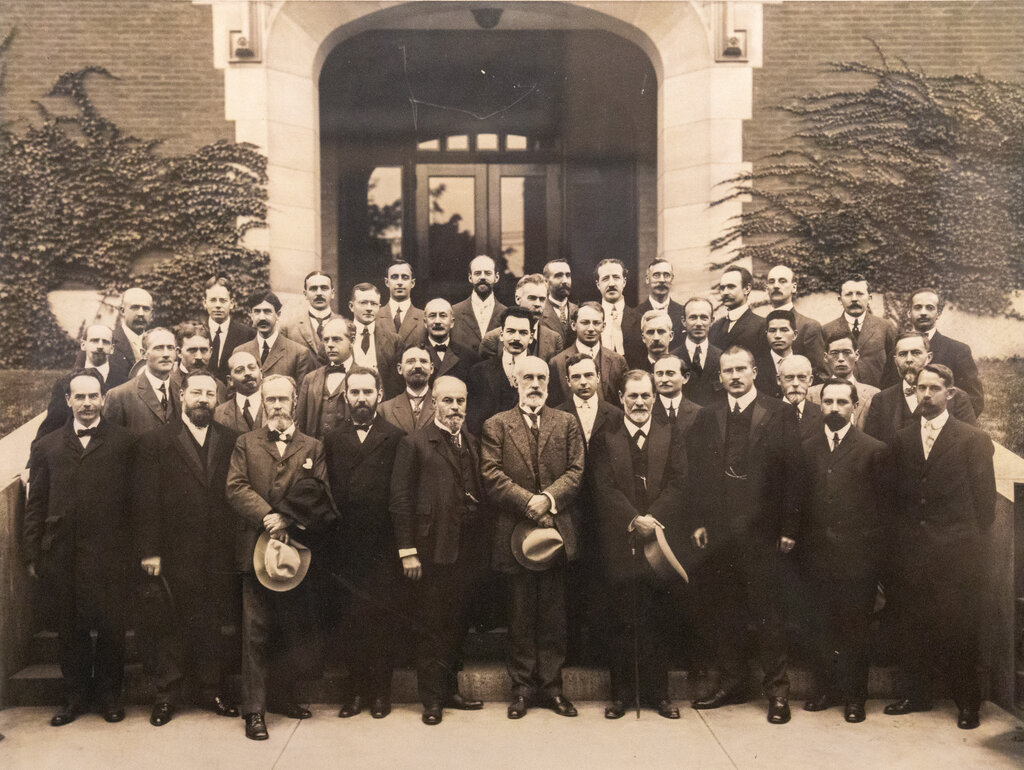
Hypnosis gained further traction in the 19th and 20th centuries, influencing prominent figures like Jean-Martin Charcot and Sigmund Freud, who initially used it to explore the unconscious mind before developing his own psychoanalytic methods.
How Does It Work?
So what's happening in the brain during hypnosis? While we don't have all the answers, modern neuroscience gives us some clues. Brain imaging studies show that hypnosis involves changes in brain activity.
Specifically, there seems to be reduced activity in the part of the brain involved in self-awareness and mind-wandering, called the default mode network. This might explain the feeling of losing track of your surroundings. At the same time, there's increased connectivity between brain regions involved in attention and mind-body control. This combination allows for a state of deep absorption and heightened focus on internal experiences.
Think of it like a camera lens. Normally, your attention is on a wide-angle setting, taking in everything at once. During hypnosis, you switch to a zoom lens, focusing intensely on one specific point while the background becomes blurry.
This focused state is believed to temporarily quiet the conscious, analytical mind. When the critical factor is relaxed, the subconscious mind becomes more accessible and receptive to suggestion. This doesn't mean you'll do anything against your will; it simply means you're more open to exploring suggestions you find acceptable.
Hypnosis vs. Sleep and Meditation
People often confuse hypnosis with sleep or meditation, but they are distinct states. While all three can involve relaxation and an inward focus, their goals and characteristics are different.
| State | Key Characteristic | Goal |
|---|---|---|
| Hypnosis | Heightened suggestibility and focused attention | To respond to specific suggestions for change. |
| Sleep | Reduced consciousness and physical activity | To rest and allow the body and mind to recover. |
| Meditation | Non-judgmental awareness of the present moment | To cultivate mindfulness and inner peace. |
When you are hypnotized, you are awake and aware, often more so than usual, but your attention is narrowly focused. Your brainwaves in hypnosis are typically in the alpha and theta states, similar to deep relaxation or light meditation, but different from the delta waves of deep sleep.
Meditation aims to observe thoughts without getting attached to them, fostering a state of mindful awareness. Hypnosis, on the other hand, is usually more goal-oriented. It uses that focused state to actively work on specific suggestions, whether it's changing a perception, a feeling, or a behavior.
Ready to test your knowledge?
What is the key characteristic of hypnosis?
Who coined the term "hypnotism" and moved the field away from the theory of "animal magnetism"?
Understanding these foundations helps demystify hypnosis, revealing it as a natural psychological process rather than a mysterious power. It is a tool for accessing the focused, creative parts of our own minds.