Mastering Human Psychology in Daily Life
Core Psychological Needs
Why We Do What We Do
Every action you take, from getting a glass of water to scrolling through your phone, is driven by something. Psychologists call this driver motivation. Think of it as the invisible software running in the background of your mind, constantly asking, "What do I need right now?"
Most of the time, we aren't even aware of these underlying needs. We just feel an urge, a push, or a pull. You might feel bored, so you call a friend. You feel a pang of hunger, so you grab a snack. These aren't random impulses. They are your brain's way of telling you to satisfy a fundamental need.
Psychology helps us understand the hidden motives behind our visible actions. It's about decoding the 'why' behind the 'what'.
A Ladder of Needs
To make sense of these needs, psychologist proposed a simple but powerful idea in the 1940s. He organised human needs into a pyramid, suggesting we must satisfy the needs at the bottom before we can focus on the ones at the top. It's called the hierarchy of needs, and it acts like a ladder for our motivations.
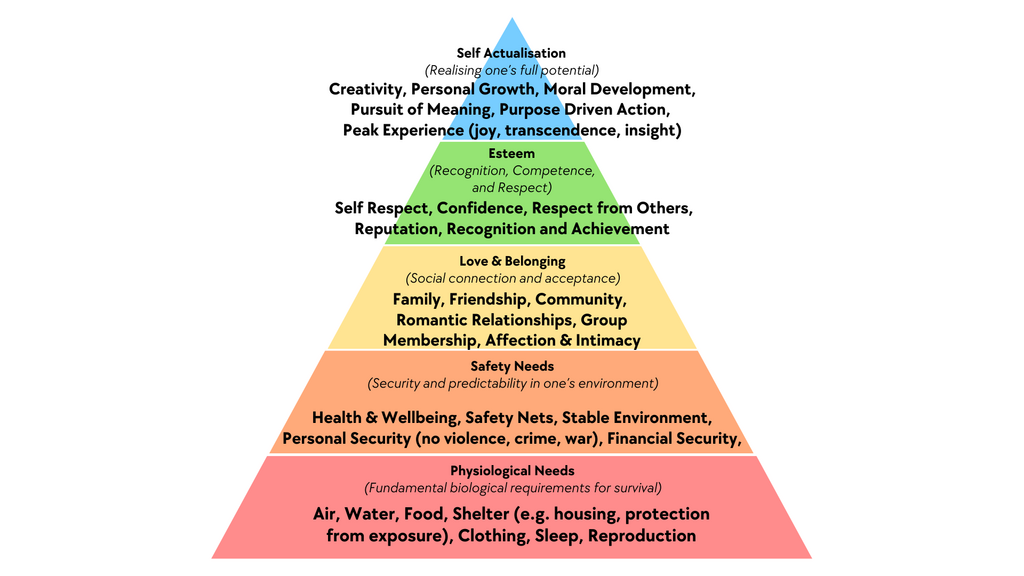
Let’s break it down:
-
Physiological Needs: This is the base of the pyramid. It’s all about survival: air, water, food, sleep, and shelter. If you're starving, you won’t be worrying about your career goals.
-
Safety Needs: Once you can breathe and eat, you need to feel safe. This includes physical safety (like having a locked door), financial security (a stable job), and good health.
-
Love & Belonging: Humans are social creatures. We need to feel connected to others. This level is about friendship, family, and a sense of community. Feeling lonely is a powerful signal that this need isn't being met.
-
Esteem Needs: This is the need to feel good about yourself. It has two parts: self-esteem (dignity, achievement, independence) and the desire for respect from others (status, prestige).
-
Self-Actualisation: At the very top is the desire to become the most that one can be. This is about fulfilling your unique potential, whether through art, parenting, or problem-solving. It's a journey, not a destination.
Ancient Instincts, Modern World
Many of our basic needs are wired into us from a time when survival was a daily struggle. Our ancestors' brains developed to handle threats on the savanna, not deadlines at the office. Yet, that ancient programming still runs our lives.
Think about why you jump at a loud, unexpected noise. That’s your ancient safety system kicking in, preparing you for a potential threat, even if it’s just a dropped plate. Or consider your craving for sugary or fatty foods. For our ancestors, calories were scarce and crucial for survival. Your brain still sends powerful signals to seek them out, even when you can just order a pizza.
Your modern brain is running on ancient software. Understanding this helps explain many of our seemingly irrational urges and fears.
The Need to Connect
Of all our needs, the drive for social connection is one of the most powerful. For early humans, being part of a group meant survival. An individual alone was vulnerable to predators and starvation, but a tribe offered protection, shared resources, and cooperation.
This deep-seated need to belong explains why social rejection feels so painful. It also drives us to form communities, families, and friendships. We constantly monitor our social standing, often without realizing it. We compare ourselves to others to figure out where we fit in, a process explained by . This is why getting likes on a social media post can feel so rewarding—it's a modern signal of social acceptance.
Understanding these core needs—for safety, belonging, and esteem—is the first step to understanding human behaviour. They are the invisible forces shaping your choices, feelings, and actions every single day.
Let's check your understanding of these fundamental drivers of human action.
According to Maslow's Hierarchy of Needs, which of the following is the most fundamental level?
A person loses their stable job and is worried about being able to afford rent and groceries. Which of Maslow's needs has become their primary concern?
By recognising these needs in yourself and others, you've taken the first step toward understanding the fascinating world of psychology.