Mastering Hindu Jurisprudence and Modern Codification
Traditional Schools and Sources
Ancient and Modern Sources
Hindu law draws its principles from a rich tapestry of sources, broadly classified into two categories: ancient and modern. The ancient sources are the bedrock, forming the traditional foundation of the law.
First are the Shrutis, which literally means "what is heard." These are considered the ultimate source of law, believed to be the direct revelations of the divine. They primarily consist of the four Vedas and the Upanishads. Following the Shrutis are the Smritis which mean "what is remembered." These are texts composed by sages, recalling the divine revelations. They are more systematic and handle practical legal matters, covering everything from marriage to inheritance. Famous Smritis include the Manusmriti and the Yajnavalkya Smriti. Over time, numerous commentaries and digests (Nibandhas) were written on these Smritis, interpreting and adapting them for different regions and eras.
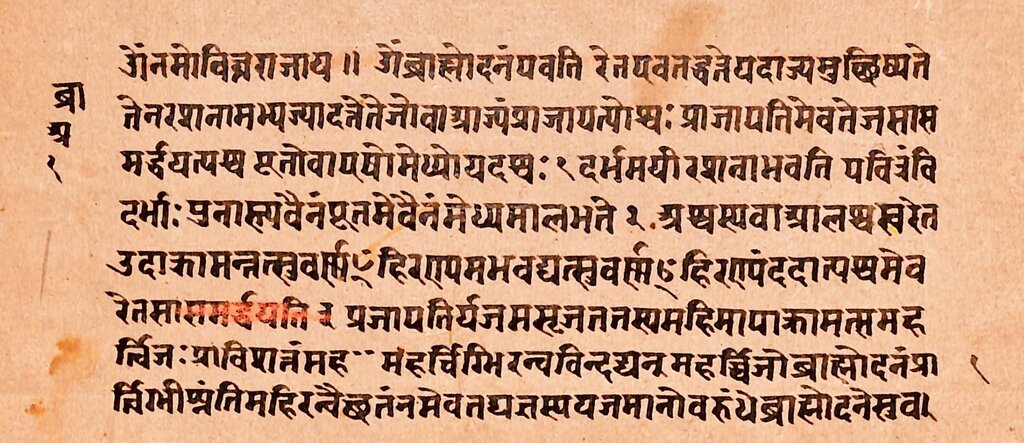
Custom, or Achara, is another vital ancient source. In many cases, a well-established custom can override the written text of the Smritis. For a custom to be legally valid, it must be ancient, certain, reasonable, and not contrary to public policy or morality. This flexibility allowed Hindu law to evolve and adapt to the specific needs of different communities across the subcontinent.
A key principle related to customs and textual rules is the Quod fieri non debet, factum valet. This means "what ought not to be done, becomes valid when done." It applies when a textual rule is merely advisory or directory, not mandatory. For example, if a marriage is performed without the proper ceremonies but is otherwise valid, it cannot be invalidated simply because a recommended rite was missed. The act, once done, is valid.
The modern sources of Hindu law developed to address the needs of a changing society. The most important of these is Legislation. Post-independence, India enacted a series of laws, often called the Hindu Code Bills, which codified and reformed aspects of Hindu personal law. These include the Hindu Marriage Act (1955), the Hindu Succession Act (1956), and others.
Judicial Precedent is another key source, where the decisions of higher courts (the Supreme Court and High Courts) become binding on lower courts. These interpretations fill gaps in the law and adapt ancient principles to modern contexts. Finally, in the absence of any specific law or custom, courts apply the principles of Equity, Justice, and Good Conscience, ensuring fair and just outcomes.
The Two Major Schools
As commentators interpreted the Smritis, different schools of thought emerged. Two became paramount: the Mitakshara and the Dayabhaga. These are not entirely separate legal systems but rather different interpretations of the same foundational texts, primarily the Yajnavalkya Smriti. Their biggest divergence lies in the laws of succession and joint family property.
The Mitakshara school is followed in most of India, with the exception of Bengal and Assam. Its authority is a commentary on the Yajnavalkya Smriti written by Vijnaneshwara. The Dayabhaga school, based on a text of the same name by Jimutavahana, prevails in Bengal and Assam.
The fundamental split between Mitakshara and Dayabhaga is not about what the law is, but when rights to property are acquired.
Property and Partition
The defining feature of the Mitakshara school is the concept of coparcenary property and the 'right by birth.' In this system, a son, grandson, and great-grandson acquire an interest in the ancestral property simply by being born into the family. Their ownership is equal to that of their father. This is known as unobstructed heritage (apratibandha daya), because the right is created by birth and is not obstructed by the life of the ancestor.
Because of this birthright, a son can demand a partition of the ancestral property even during his father's lifetime. The father's power to dispose of the ancestral property is limited; he acts more like a manager than an absolute owner.
The Dayabhaga school presents a starkly different model. It rejects the doctrine of 'right by birth.' Under this system, the father is the absolute owner of all property during his lifetime, whether it's self-acquired or ancestral. His sons have no claim or right to it while he is alive. They inherit the property only upon his death.
This is called obstructed heritage (sapratibandha daya) because the son's right is obstructed by his father's life. Consequently, sons cannot demand a partition from their father. The concept of a coparcenary that includes a father and his sons doesn't exist in the same way; inheritance is based on the principle of spiritual efficacy—whoever confers the most spiritual benefit to the deceased inherits the property.
| Basis of Difference | Mitakshara School | Dayabhaga School |
|---|---|---|
| Property Right | Acquired by birth in ancestral property. | Acquired only upon the death of the father. |
| Nature of Heritage | Unobstructed heritage (apratibandha daya). | Obstructed heritage (sapratibandha daya). |
| Father's Power | Limited; acts as a manager of family property. | Absolute owner with full disposal rights. |
| Right to Partition | A son can demand partition at any time. | A son has no right to demand partition. |
| Main Authority | Vijnaneshwara's commentary. | Jimutavahana's Dayabhaga text. |
| Geographical Area | All of India except Bengal and Assam. | Bengal and Assam. |
These structural differences have profound practical implications, especially in matters of property alienation, inheritance, and family disputes. While modern legislation has unified many aspects of Hindu law, understanding these traditional schools remains essential for interpreting property rights that have their roots in these ancient systems.
What is the fundamental difference between the Mitakshara and Dayabhaga schools of Hindu law regarding ancestral property?
Which of the following are considered the most sacred and ultimate ancient source of Hindu law, believed to be divine revelations?