Mastering High Dominance DISC
Understanding the DISC Model
Understanding Behavior with DISC
Have you ever noticed how different people react to the same situation? One person might take charge immediately, while another prefers to collaborate and build consensus. The DISC model offers a simple way to understand these behavioral tendencies. It's not a personality test that boxes you in; instead, it's a framework for observing how people tend to act.
The DISC model comprises the following four types: Dominance, Influence, Steadiness, Conscientiousness.
Developed from the work of psychologist William Moulton Marston in the 1920s, the model categorizes behavior into four main styles. Each style represents a predictable pattern of actions and preferences. By understanding these patterns, we can communicate more effectively, reduce friction, and work better with others. Let's look at a quick overview of each.
| Style | Focus | Pace & Priority |
|---|---|---|
| Dominance | Results | Fast-paced & Task-oriented |
| Influence | People | Fast-paced & People-oriented |
| Steadiness | Stability | Slower-paced & People-oriented |
| Conscientiousness | Accuracy | Slower-paced & Task-oriented |
A Closer Look at Dominance
People with a Dominance (D) style are often described as direct, decisive, and results-oriented. They are motivated by challenges, action, and achieving goals. You'll find them taking charge, making quick decisions, and focusing on the bottom line. They thrive in competitive environments and are not afraid to tackle difficult problems head-on.
Their core fear is being taken advantage of or losing control of a situation. This drives their need to be in charge and to see tangible outcomes. They communicate in a straightforward, sometimes blunt, manner. Small talk isn't their priority; getting to the point is.
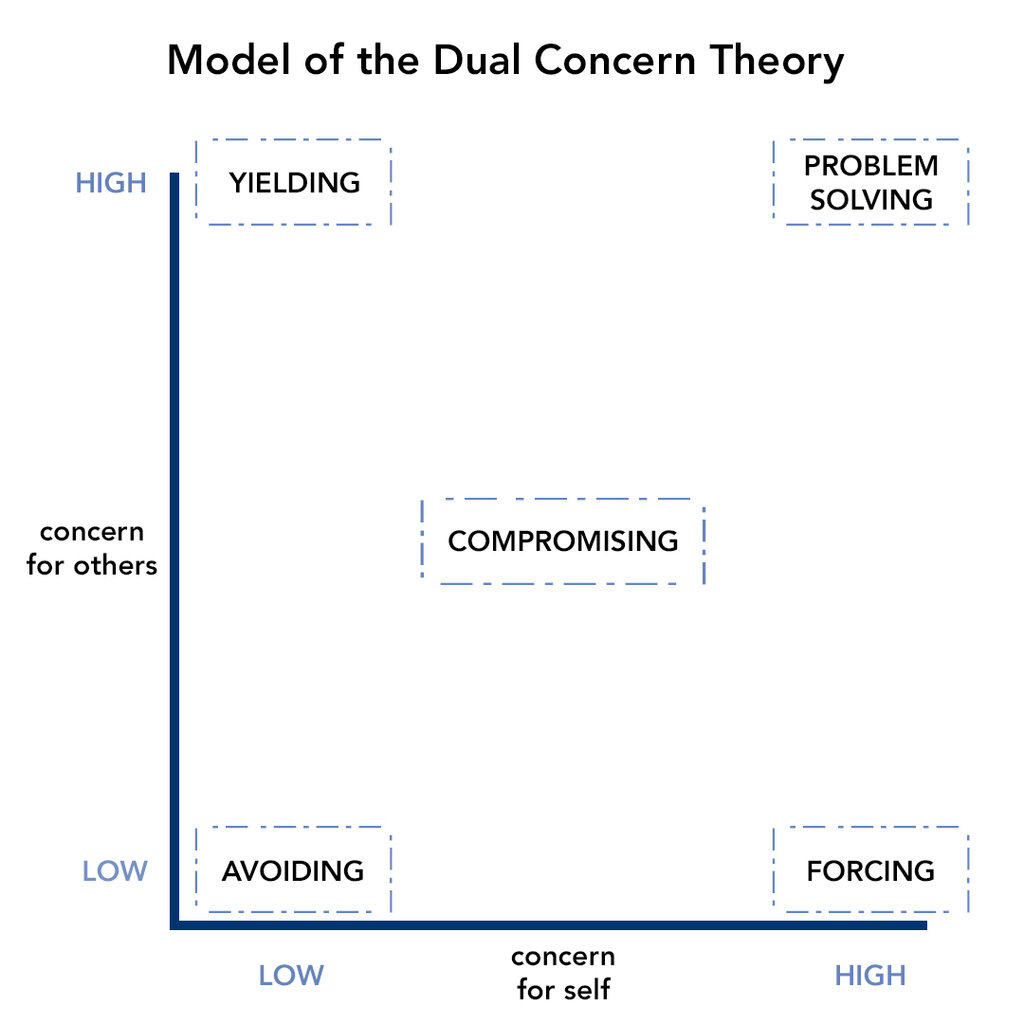
In a conflict, someone with a D-style is likely to adopt a "Forcing" or competitive approach, as seen in the Dual Concern model. Their high concern for their own goals can make them appear assertive as they drive toward a resolution. They see problems as obstacles to be overcome, and they're quick to challenge the status quo if it's not producing results.
While a D-style approach is valuable for driving progress and making tough decisions, it's just one of the four styles. Understanding this tendency is the first step toward recognizing different behavioral patterns in yourself and others.
Ready to check your understanding of these core ideas?
What is the primary purpose of the DISC model as described in the text?
Which of the following best describes the communication style of a person with a high Dominance (D) score?
Understanding the DISC model, especially the direct and decisive Dominance style, provides a foundation for improving how you interact with colleagues and lead teams.