Mastering Helicopter Flight
Helicopter Basics
The Secret of the Spinning Wing
A helicopter's magic lies in its main rotor. Those long, sweeping blades aren't just propellers pushing air; they're spinning wings. Just like the wing of an airplane, each rotor blade is an airfoil, shaped to slice through the air in a very specific way.
The top surface of the airfoil is curved, while the bottom is flatter. As the blade spins, air traveling over the curved top has to move faster than the air passing underneath. According to a principle in physics called Bernoulli's principle, faster-moving air has lower pressure. This pressure difference, with higher pressure below and lower pressure above, creates an upward force. We call this force lift.
Unlike an airplane, which must constantly move forward to keep air flowing over its wings, a helicopter creates its own airflow by spinning the blades. By changing the speed or the angle of these blades, a pilot can generate enough lift to overcome gravity and climb into the sky.
Controlling the Craft
Getting off the ground is one thing, but steering is another. Helicopter pilots use three main controls to maneuver.
First is the collective. This control, usually a lever to the pilot's left, changes the angle, or pitch, of all the rotor blades at the same time. Pulling up on the collective increases the pitch of every blade, creating more lift and causing the helicopter to climb. Pushing it down does the opposite, reducing lift and allowing for descent.
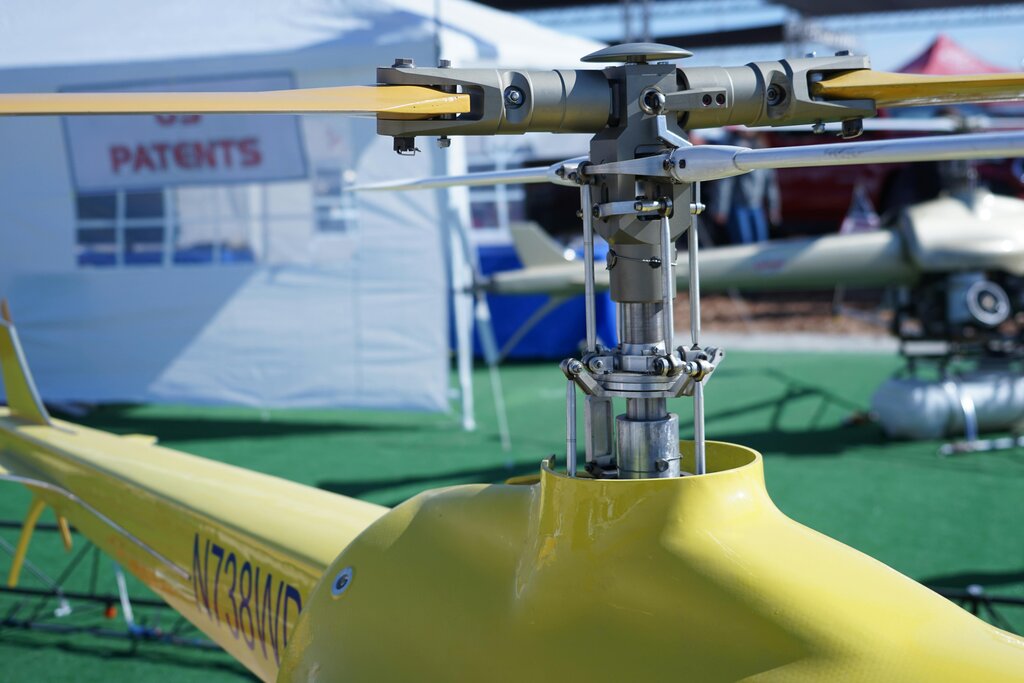
Next is the cyclic, which looks like a joystick in front of the pilot. The cyclic cleverly changes the pitch of each blade individually as it moves through its rotation. If the pilot pushes the cyclic forward, the blades are angled to create more lift at the back of the rotor's rotation and less at the front. This tilts the entire rotor disc forward, pulling the helicopter through the air. Pushing the cyclic left, right, or back tilts the rotor disc in those directions, allowing for sideways or backward flight.
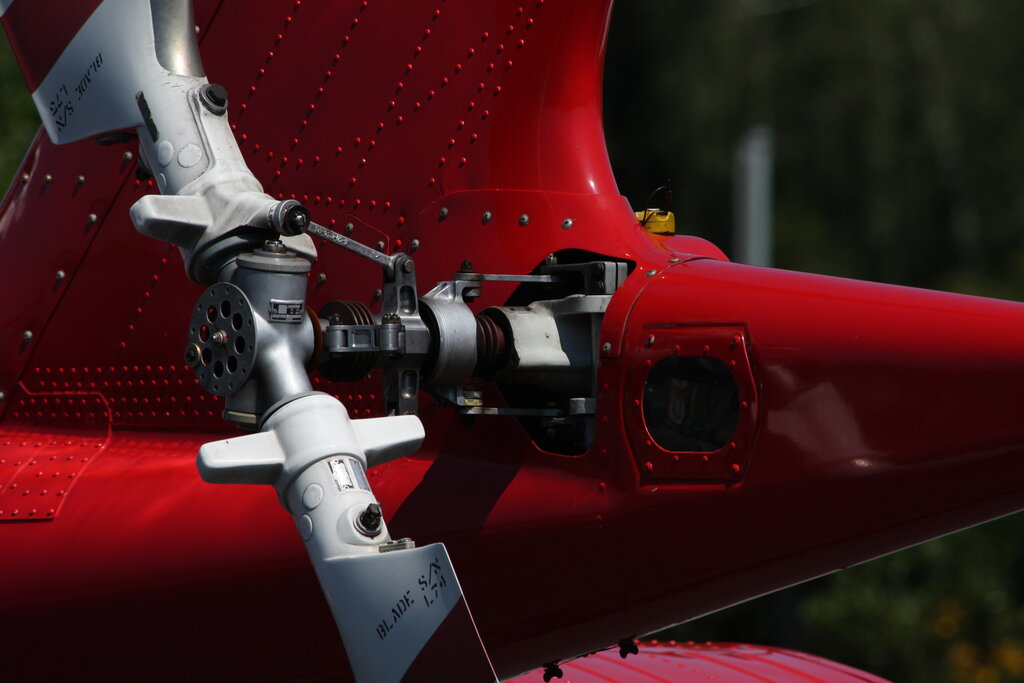
Finally, there are the anti-torque pedals at the pilot's feet. Physics dictates that for every action, there is an equal and opposite reaction. As the engine spins the main rotor in one direction, the helicopter's body naturally wants to spin in the opposite direction. This is called torque. The tail rotor creates a sideways thrust that pushes against this spin, keeping the helicopter straight. The pedals allow the pilot to adjust the tail rotor's thrust, which also lets them turn the nose of the helicopter left or right, a movement known as yaw.
Not Your Average Airplane
The fundamental difference between a helicopter and a fixed-wing airplane is how they generate lift. An airplane needs a runway to build up forward speed, forcing air over its stationary wings. A helicopter creates its own wind by spinning its rotor blades.
This distinction is the source of a helicopter's unique abilities. It can take off and land vertically without a runway, hover in one spot, and fly in any direction. This makes them invaluable for search and rescue, medical transport, and construction in tight spaces where airplanes simply can't operate.
| Feature | Helicopter | Fixed-Wing Aircraft |
|---|---|---|
| Lift Source | Rotating blades (rotors) | Stationary wings |
| Forward Motion | Tilting the rotor disc | Engine thrust and control surfaces |
| Hovering | Yes | No |
| Takeoff/Landing | Vertical (VTOL) | Requires a runway |
| Mechanical Complexity | Very high | Comparatively lower |
However, this versatility comes at a cost. Helicopters are mechanically far more complex than airplanes, requiring more maintenance and being more challenging to fly. They are also generally slower and have a shorter range than most fixed-wing aircraft.
In short: an airplane flies through the air, while a helicopter beats the air into submission.
Now that you understand the basic principles, let's test your knowledge.
According to Bernoulli's principle, how do a helicopter's rotor blades create lift?
A pilot pulls up on the collective lever. What is the immediate effect on the helicopter?