Mastering Habit Formation
Understanding Habit Formation
The autopilot in your brain
Habits are the brain's shortcuts. They are behaviors we perform automatically in response to specific situations, without much conscious thought. Think about tying your shoes or driving a familiar route. You don't have to actively decide each step; your brain just runs the program.
This automaticity is a feature, not a bug. Your brain is always looking for ways to save effort. When it detects a sequence of actions you repeat often, it bundles them into a routine. This frees up your conscious mind to focus on new challenges and decisions. The process is so efficient that about 40% of our daily actions are driven by habit, not active choice.
Habit
noun
A settled or regular tendency or practice, especially one that is hard to give up. In psychology, it's a routine of behavior that is repeated regularly and tends to occur subconsciously.
The habit loop
Every habit, good or bad, follows a simple three-step neurological pattern. Understanding this structure is the first step to understanding how habits work.
- Cue: A trigger that tells your brain to go into automatic mode and which habit to use.
- Routine: The physical, mental, or emotional behavior that follows the cue.
- Reward: A positive stimulus that tells your brain the loop was worthwhile and should be remembered for the future.
Over time, this loop becomes more and more automatic. The cue and reward become neurologically intertwined until a powerful sense of craving emerges whenever the cue appears. This is the brain's way of anticipating the reward before you even perform the routine.
Context is a powerful cue. The time of day, your location, your emotional state, or the people around you can all act as triggers. This is why it can be easy to slip into old habits in familiar environments and surprisingly easy to build new ones when you're on vacation.
Your brain on habits
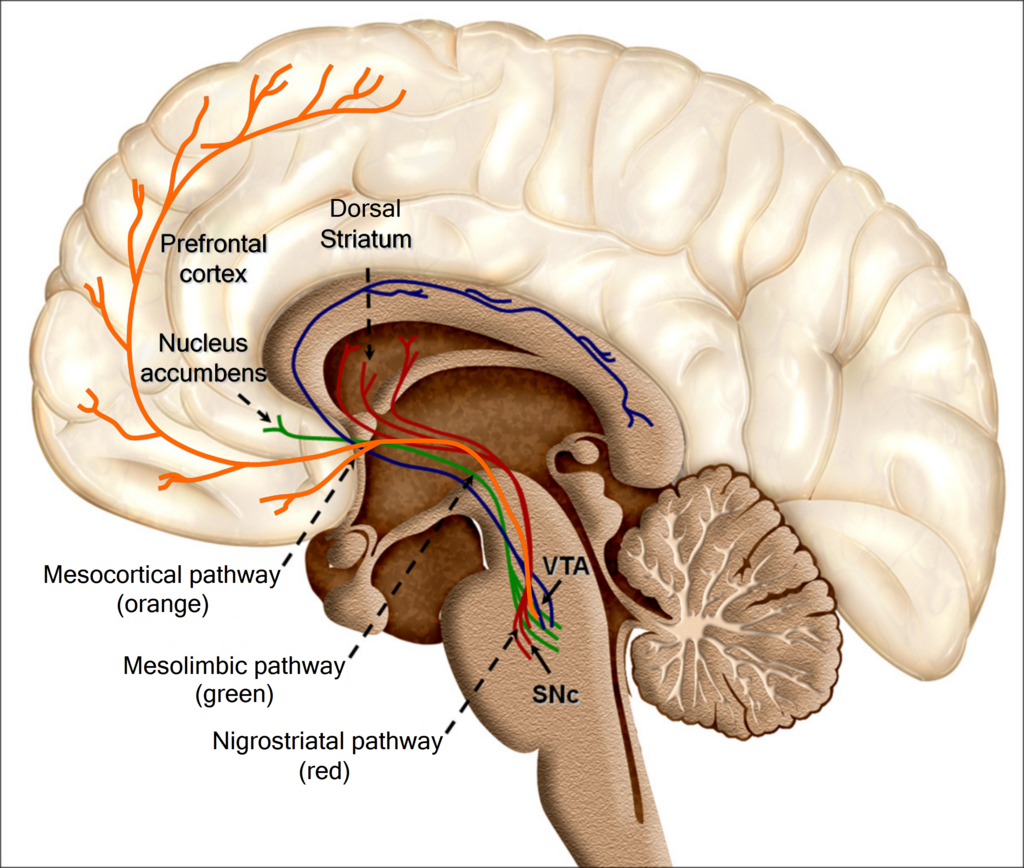
When you first perform a new action, your prefrontal cortex, the decision-making part of your brain, is heavily involved. It's working hard to figure out the best course of action. But as you repeat the behavior and your brain learns the cue-routine-reward loop, the activity shifts.
The control center for habits is a deeper, more primitive part of the brain called the basal ganglia. As a behavior becomes habitual, the basal ganglia take over, freeing up the prefrontal cortex. This is the neurological signature of a habit being formed: the brain is working less.
The reward part of the loop is driven by a neurotransmitter called dopamine. When you experience a reward, your brain releases dopamine, which creates a feeling of pleasure and reinforces the connection between the cue and the routine. This makes you more likely to repeat the behavior in the future.
How long does it take?
You may have heard that it takes 21 days to form a habit. This is a popular myth that originated from a plastic surgeon in the 1950s who noticed it took his patients about 21 days to get used to their new faces. It's a compellingly simple number, but reality is more complex.
Remember that adaptation takes 18 to 254 days depending on complexity.
Research from University College London found that, on average, it takes about 66 days for a new behavior to become automatic. But the range was huge, from 18 days to 254 days. The time it takes depends on the person, the behavior, and the circumstances. A simple habit like drinking a glass of water after breakfast will form faster than a complex one like going to the gym for an hour every day.
The key isn't the number of days, but the number of repetitions in a consistent context. Each time you perform the routine in response to the cue, you strengthen the neural pathway. Missing a day here and there doesn't ruin your progress, but consistency is what ultimately wires the habit into your brain.
Approximately what percentage of our daily actions are estimated to be driven by habit rather than conscious decision-making?
As a behavior becomes a habit, the brain's activity shifts from the decision-making prefrontal cortex to which deeper, more primitive part of the brain?