Mastering Guitar Barre Chords
Barre Chord Mechanics
The Mobile Nut
With open chords, the nut of the guitar does a lot of heavy lifting. It acts as the zero-fret, providing a solid anchor point for any strings you aren't fretting with your fingers. But to play chords all over the neck, you need to bring that anchor point with you. This is the job of a barre chord.
Think of your index finger as a movable nut, or a fleshy capo. By pressing it down across all six strings at a specific fret, you are effectively changing the
open position of the guitar. This single action unlocks the ability to play any major or minor chord anywhere on the fretboard using a handful of movable shapes.
Proper Finger Form
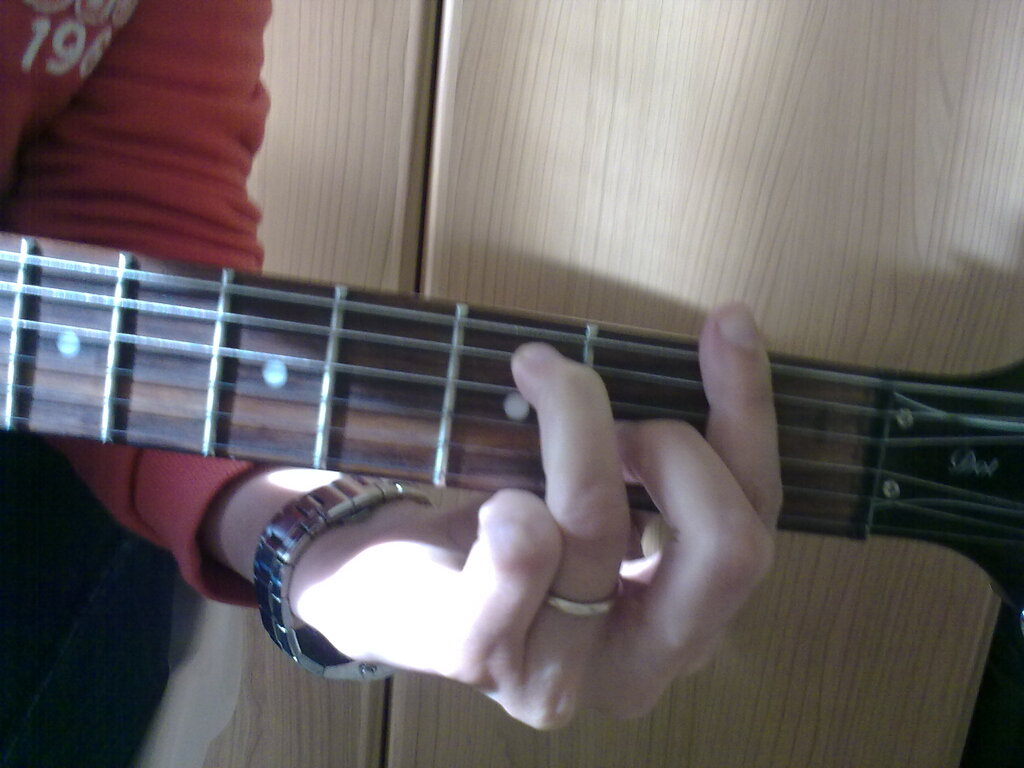
The most common mistake is trying to press the strings down with the soft, fleshy pad of your index finger. This approach requires a huge amount of pressure and usually results in muted strings. Instead, you need to use the side of your finger.
Slightly rotate your fretting hand's elbow toward your body. This will cause your index finger to roll onto its side, aligning the harder, bonier edge with the strings. You'll find this part of your finger is flatter and provides a more solid surface for fretting.
Keep your barre finger as straight as possible and place it directly behind the metal wire. The closer you are to the fret, the less pressure you need to apply to get a clean sound. If you're too far back, you'll have to squeeze much harder and will likely hear buzzing.
Aim to keep your barring finger straight. A slight natural curve is fine, but avoid letting it collapse into a bent position, which creates dead spots.
Leverage, Not Squeezing
Another major source of frustration is hand fatigue. Many players try to clamp the strings down using a pincer-like squeeze between their thumb and index finger. Your hand will get tired in seconds this way. The real strength comes from using leverage and your arm's weight.
Your thumb should be placed on the back of the neck, roughly opposite your middle finger. It acts as a fulcrum. Now, instead of squeezing, think about gently pulling your elbow back towards your body. This uses the natural weight of your arm to apply steady, even pressure across the strings. It transforms the action from a forceful squeeze into a balanced system of and counter-pressure.
Finding and Fixing Dead Notes
Even with perfect form, you might hear a
thud
instead of a clean note from one or two strings. This is normal. The grooves between your knuckles can create gaps in the pressure. Don't just press harder.
First, play each string of the barre one by one to identify the culprit. Once you find the dead string, try slightly adjusting your index finger up or down—sometimes moving it just a millimeter is enough to shift a solid part of your finger onto the string.
If that doesn't work, you can supplement the pressure. For barre chords based on the E-shape (like F major or G major), focus on adding a little extra push with your middle finger, which often sits on top of or near your index finger. This helps distribute the force more effectively.
practicing tips that will make barre chords soooo much easier - you won't have to work as hard because you'll be building them correctly.
Building the strength and muscle memory for barre chords takes time. Practice in short bursts, focusing on clean technique rather than speed. Start by just holding the barre, then add the other fingers to form full chords. Soon, it will feel as natural as any open chord.