Mastering Group Exercise Dynamics
Group Exercise Taxonomy
A Taxonomy of Group Fitness
Not all group exercise classes are created equal. While they all gather people to move together, the physiological goals can be worlds apart. To effectively lead a class, you first need to understand where it fits on the map. Within the PATHFit 4 framework, we can classify most group modalities into three main categories: aerobic, muscle-conditioning, and training.
Aerobic-focused classes, like Zumba or indoor cycling, are designed to elevate your heart rate for a sustained period. The primary goal is improving cardiovascular endurance. Muscle-conditioning classes, such as bootcamps or BODYPUMP, prioritize strength, power, and muscular endurance through resistance-based movements. Finally, neuromotor training, found in yoga, Pilates, and Tai Chi, hones balance, coordination, and agility. Of course, many formats are hybrids, blending elements from two or even all three categories.
Energy Systems at Play
The category a class falls into dictates its primary physiological demand, specifically which energy system it targets. A steady-state cycling class primarily uses the aerobic system, which requires oxygen to break down fuel for long-duration activity. The rhythm is consistent, the effort sustained. This feels very different from a class, which is built on short, all-out bursts of work followed by brief recovery.
HIIT deliberately taxes the anaerobic system, which provides explosive energy for short periods without oxygen. This metabolic distinction is crucial. An instructor leading an aerobic class focuses on pacing and endurance, while a HIIT instructor focuses on maximizing intensity during work intervals and coaching recovery. The structure of the class—its work-to-rest ratios, exercise selection, and overall flow—is a direct reflection of the targeted energy system.
| Format | Primary Goal | Primary Energy System | Typical Intensity |
|---|---|---|---|
| Step Aerobics | Cardiovascular Endurance | Aerobic | Moderate |
| HIIT | Metabolic Conditioning | Anaerobic & Aerobic | High to Max |
| Zumba | Cardiovascular Endurance | Aerobic | Moderate |
| Yoga (Vinyasa) | Flexibility & Balance | Aerobic / Neuromotor | Low to Moderate |
| Strength Circuit | Muscular Endurance | Anaerobic | Moderate to High |
Positioning and Flow
The format of a group class also dictates the instructor's physical role and the rhythm of the session. How you position yourself in the room sends a clear message about the class structure and your function as a leader. There are two primary models: leading from the front and coaching from the floor.
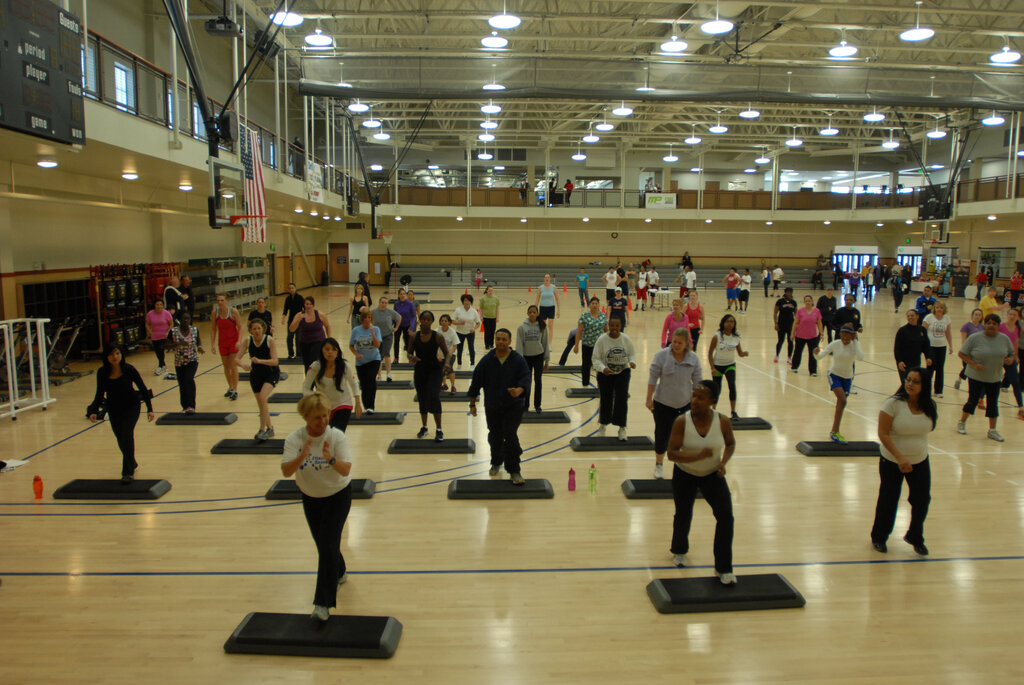
In choreography-based classes like dance or step aerobics, the instructor almost always leads from a stage or platform at the front. This 'lead from the front' model provides a constant visual reference point for participants to follow. The flow is continuous, with the instructor demonstrating moves just ahead of the beat, allowing the class to mirror them in real-time.
Conversely, in circuit-based or strength-conditioning classes, the 'coach the floor' model is more effective. Here, the instructor first demonstrates the exercises and then moves around the room, offering individual corrections, motivation, and modifications. The flow is interval-based rather than continuous, with the instructor's voice, not their body, guiding the transitions between work and rest.
Understanding these models allows you to select the right approach for your class, ensuring participants get clear instruction and effective coaching, whether they need to see the next step or get a quick form check.
Let's test your knowledge on these classifications.
A group exercise class that prioritizes improving balance, coordination, and agility, such as Tai Chi or yoga, would be classified as which type of training?
Which type of class format is most likely to rely on the anaerobic energy system for its primary physiological demand?
By categorizing group exercise formats, analyzing their physiological demands, and understanding the resulting impact on class structure and instructor positioning, we build the foundation for designing and leading effective, engaging, and safe group fitness experiences.