Mastering Greek Pronunciation
Greek Alphabet
Meet the Greek Letters
The first step to learning Greek is getting to know its alphabet. It has 24 letters, and you'll probably recognize many of them from math and science classes. The good news is that most letters have a consistent sound, which makes pronunciation straightforward once you know the basics.
Each letter has an uppercase and a lowercase form, just like in English. Let's take a look at the full set before we break them down.
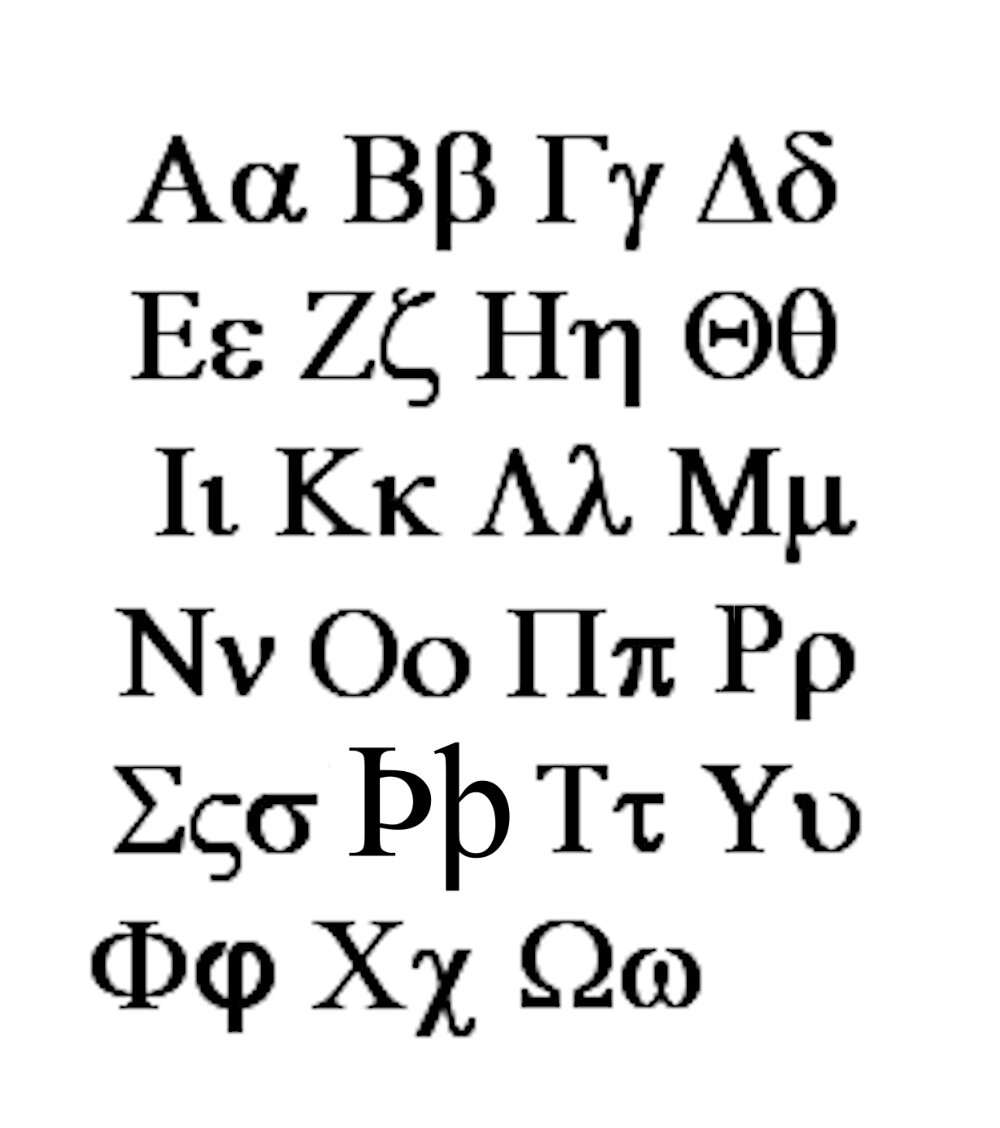
To make things easier, we can sort the letters into a few groups based on how they compare to the English alphabet.
Familiar Faces
Let's start with the easy ones. These letters look and sound very similar to their English counterparts. You can practically use them right away.
| Uppercase | Lowercase | Name | Sounds Like |
|---|---|---|---|
| Α | α | Alpha | The 'a' in father |
| Κ | κ | Kappa | The 'k' in kite |
| Μ | μ | Mu | The 'm' in mom |
| Ν | ν | Nu | The 'n' in nice |
| Ο | ο | Omicron | The 'o' in open |
| Τ | τ | Tau | The 't' in top |
See? You already know a quarter of the alphabet.
Tricky Look-Alikes
This next group includes letters that look familiar but make a completely different sound. These are important to memorize carefully to avoid confusion when reading.
| Uppercase | Lowercase | Name | Sounds Like | Note |
|---|---|---|---|---|
| Β | β | Beta | The 'v' in vest | Not a 'b' sound |
| Η | η | Eta | The 'ee' in see | Not an 'h' sound |
| Ρ | ρ | Rho | A rolled 'r' sound | Not a 'p' sound |
| Υ | υ | Upsilon | The 'ee' in see | Not a 'y' sound |
| Χ | χ | Chi | The 'ch' in Loch Ness | Not an 'x' sound |
Pay close attention to Beta (Β, β), which makes a 'v' sound. The Greek letter for the 'b' sound is actually a combination of two letters, which we'll cover later.
New Shapes, Old Sounds
Now for the letters that look new and unfamiliar, but whose sounds you already know very well. Once you connect the new shape to its familiar sound, these become quite simple.
| Uppercase | Lowercase | Name | Sounds Like |
|---|---|---|---|
| Γ | γ | Gamma | The 'g' in go |
| Δ | δ | Delta | The 'th' in this |
| Ζ | ζ | Zeta | The 'z' in zoo |
| Θ | θ | Theta | The 'th' in thin |
| Λ | λ | Lambda | The 'l' in lamp |
| Π | π | Pi | The 'p' in pet |
| Σ | σ, ς | Sigma | The 's' in sun |
| Φ | φ | Phi | The 'f' in fun |
| Ψ | ψ | Psi | The 'ps' in lapse |
You might have noticed Sigma has two lowercase forms: σ and ς. Use 'σ' at the beginning or in the middle of a word, and use 'ς' only at the very end of a word. For example, the word for seismologist is σεισμολόγος (seismológos).
The Vowels
Greek has seven vowels. Some make the same sound, which simplifies pronunciation. We've already seen a few, but here they are all together.
| Vowel | Name | Sounds Like |
|---|---|---|
| Α, α | Alpha | 'a' as in father |
| Ε, ε | Epsilon | 'e' as in met |
| Η, η | Eta | 'ee' as in see |
| Ι, ι | Iota | 'ee' as in see |
| Ο, ο | Omicron | 'o' as in open |
| Υ, υ | Upsilon | 'ee' as in see |
| Ω, ω | Omega | 'o' as in open |
That's right, three different letters (Eta, Iota, Upsilon) all make the same 'ee' sound. And two letters (Omicron, Omega) make the same 'o' sound. This is a key feature of modern Greek pronunciation.
With these letters, you have the complete toolkit for reading and pronouncing Greek words. Take some time to review the shapes and sounds before we test your knowledge.
How many letters are in the Greek alphabet?
True or false: All Greek letters that look like English letters also sound like their English counterparts.