Mastering Gradient Descent
Introduction to Optimization
Finding the Best
At its core, optimization is about finding the best possible solution from all available options. Think about using a GPS to find the fastest route to a destination. The GPS sifts through countless possible paths, considering traffic, distance, and speed limits to find the one that gets you there in the least amount of time. That's an optimization problem.
In mathematics, we formalize this idea. An optimization problem involves three key ingredients:
- Objective Function: This is the quantity you want to maximize or minimize. In our GPS example, the objective function is the travel time.
- Decision Variables: These are the things you can control. For the GPS, the variables are the specific sequence of roads and turns to take.
- Constraints: These are the rules or limitations you must follow. A constraint might be that you can't drive on roads that are closed or that your car can't fly.
So, an optimization problem is the task of minimizing or maximizing an objective function by choosing the best values for the decision variables, while satisfying all the constraints.
The Shape of the Problem
The difficulty of an optimization problem often depends on the “shape” of its objective function. Imagine you're blindfolded and trying to find the lowest point in a landscape. The shape of the ground beneath your feet makes a huge difference. This is where the concepts of convex and non-convex functions come in.
A convex function is like a simple, smooth bowl. No matter where you start inside the bowl, if you always walk downhill, you're guaranteed to end up at the single lowest point. There are no other dips or valleys to get stuck in. Mathematically, if you draw a straight line between any two points on the function's curve, the line will always be above or on the curve itself.
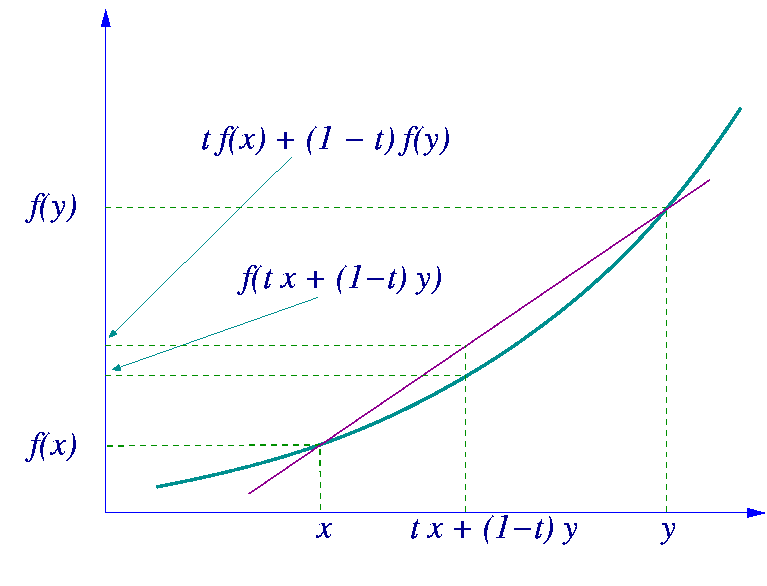
A non-convex function, on the other hand, is like a rugged, hilly terrain with many valleys and peaks. If you start walking downhill, you might find the bottom of a small valley, but there could be a much deeper valley somewhere else. This small valley is a local minimum, but the absolute lowest point in the entire landscape is the global minimum.
Finding the global minimum of a non-convex function is much harder than for a convex one. You can't just trust that the first valley you find is the deepest one.
Why Bother with Optimization?
Optimization isn't just an abstract mathematical exercise; it's the engine behind countless technologies and industries. It helps us make decisions that are more efficient, effective, and economical.
Machine Learning: At its heart, training a machine learning model is an optimization problem. The goal is to minimize a "loss function," which measures how inaccurate the model's predictions are. The decision variables are the model's internal parameters. By finding the parameters that result in the lowest possible loss, we get a more accurate model.
Engineering: Engineers use optimization to design everything from airplane wings to computer chips. The goal might be to create a car body that has minimal aerodynamic drag while still being strong and safe. The decision variables are the shape and materials of the car body, and the constraints are things like budget and manufacturing capabilities.
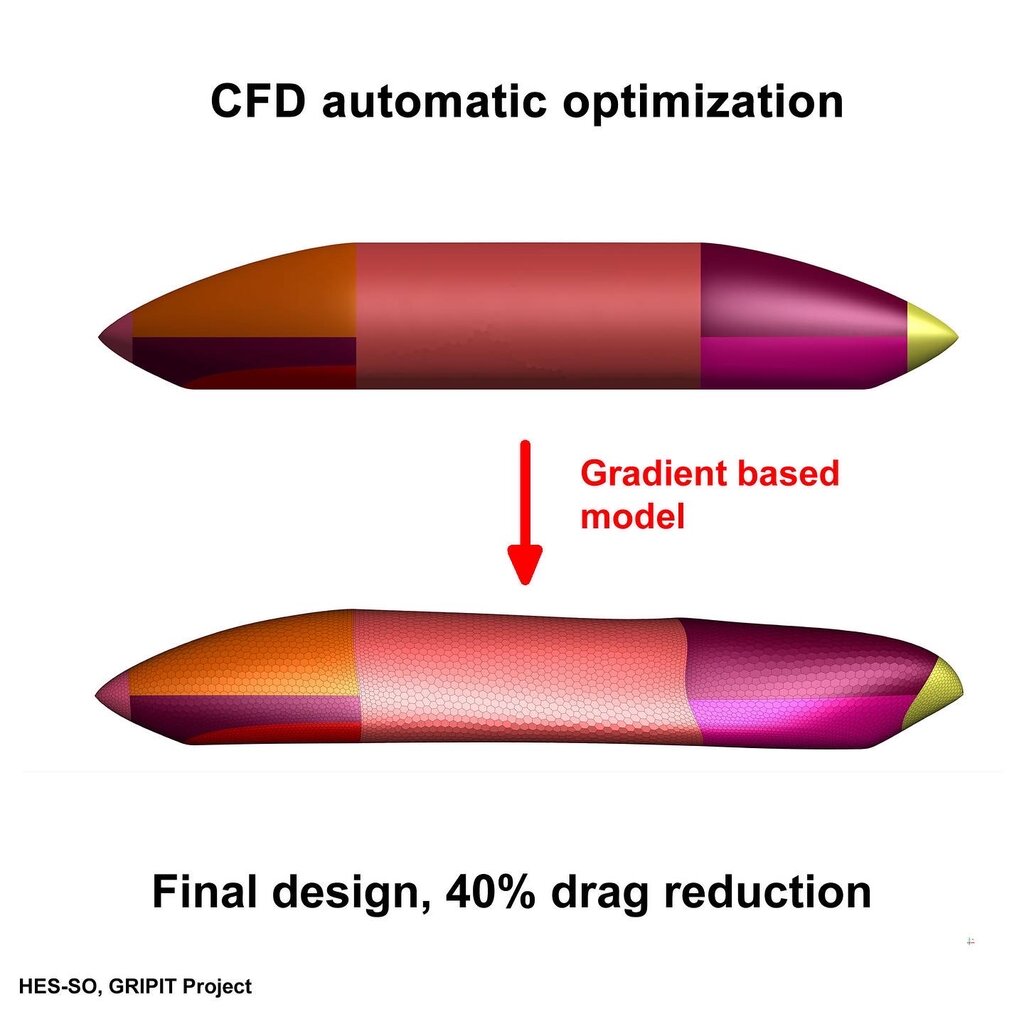
Logistics and Finance: Companies use optimization to plan shipping routes that save fuel and time. In finance, portfolio optimization is used to build investment strategies that maximize returns for a chosen level of risk.
Understanding these basic concepts is the first step. Next, we'll explore specific algorithms, like gradient descent, that are used to solve these optimization problems.
What is the primary goal of optimization?
A company wants to design a soda can that uses the least amount of aluminum but still holds 12 fluid ounces. In this problem, what does the amount of aluminum represent?