Mastering Grade 8 Factorization
Understanding Factors
The Building Blocks of Numbers
Think of a number, like 12. You can build it by multiplying other whole numbers together. For instance, . You could also use . Or even . The numbers you use to multiply—1, 2, 3, 4, 6, and 12—are called the factors of 12.
Factor
noun
A whole number that divides another whole number perfectly, with no remainder.
Finding all the factors of a number is straightforward. Let's try it with 20. We can start with 1 and see what we need to multiply it by to get 20. Then we try 2, and so on.
So, the factors of 20 are 1, 2, 4, 5, 10, and 20. Notice how we found them in pairs.
Every number greater than 1 has at least two factors: 1 and itself. But some numbers are special. They only have those two factors.
Prime Numbers
A prime number is a whole number greater than 1 that cannot be made by multiplying other whole numbers. Think of the number 7. The only way to get 7 by multiplying is . Since its only factors are 1 and itself, 7 is a prime number.
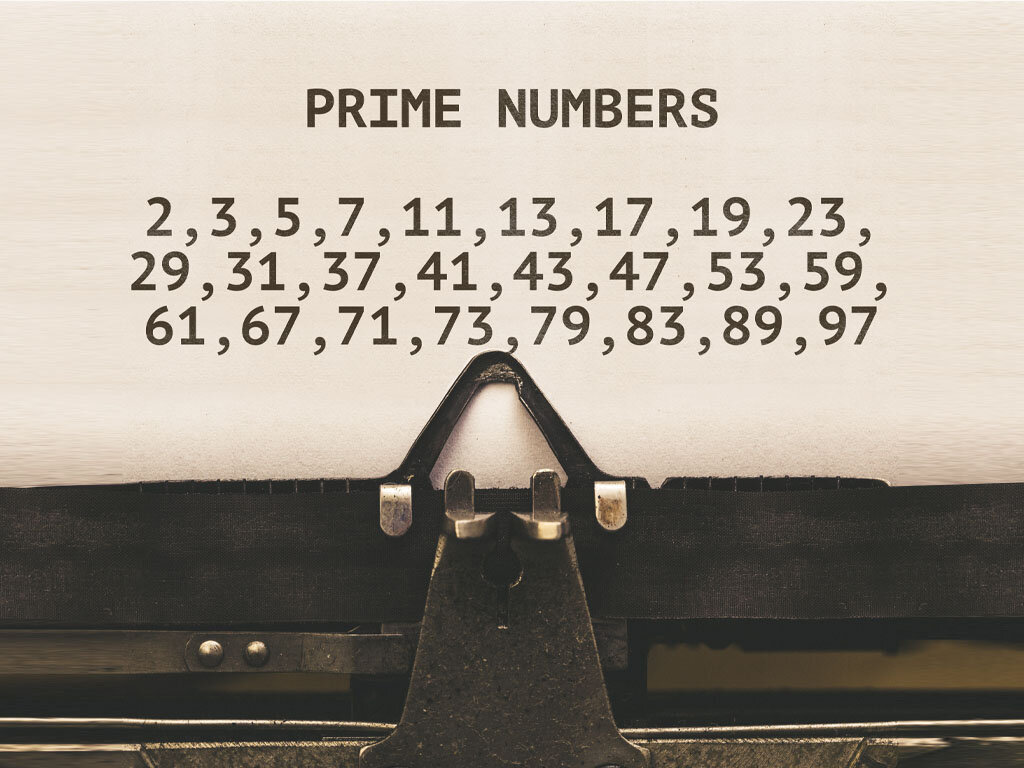
The first few prime numbers are 2, 3, 5, 7, 11, 13, and 17. The number 2 is the only even prime number. Why? Because every other even number can be divided by 2, meaning it has more than two factors.
A common question is whether 1 is a prime number. It is not. To be prime, a number must have exactly two distinct factors. The number 1 has only one factor: itself.
Numbers greater than 1 that are not prime are called composite numbers. They are 'composed' of other factors. For example, 12 is a composite number.
Let's see this in action. Here’s a list of the first 20 numbers and whether they are prime or composite.
| Number | Factors | Prime or Composite? |
|---|---|---|
| 1 | 1 | Neither |
| 2 | 1, 2 | Prime |
| 3 | 1, 3 | Prime |
| 4 | 1, 2, 4 | Composite |
| 5 | 1, 5 | Prime |
| 6 | 1, 2, 3, 6 | Composite |
| 7 | 1, 7 | Prime |
| 8 | 1, 2, 4, 8 | Composite |
| 9 | 1, 3, 9 | Composite |
| 10 | 1, 2, 5, 10 | Composite |
| 11 | 1, 11 | Prime |
| 12 | 1, 2, 3, 4, 6, 12 | Composite |
| 13 | 1, 13 | Prime |
| 14 | 1, 2, 7, 14 | Composite |
| 15 | 1, 3, 5, 15 | Composite |
| 16 | 1, 2, 4, 8, 16 | Composite |
| 17 | 1, 17 | Prime |
| 18 | 1, 2, 3, 6, 9, 18 | Composite |
| 19 | 1, 19 | Prime |
| 20 | 1, 2, 4, 5, 10, 20 | Composite |
Understanding factors and prime numbers is the first step toward breaking down numbers into their core components. This skill is a key building block for many other ideas in mathematics.