Mastering Goal Setting and Achievement
Advanced Goal-Setting Frameworks
Beyond the Basics: SMART Goals
You already know that setting goals is important. Now, let's get specific about making those goals effective. A great goal isn't just a vague wish; it's a clear target. The SMART framework is a simple checklist to turn fuzzy ambitions into concrete plans.
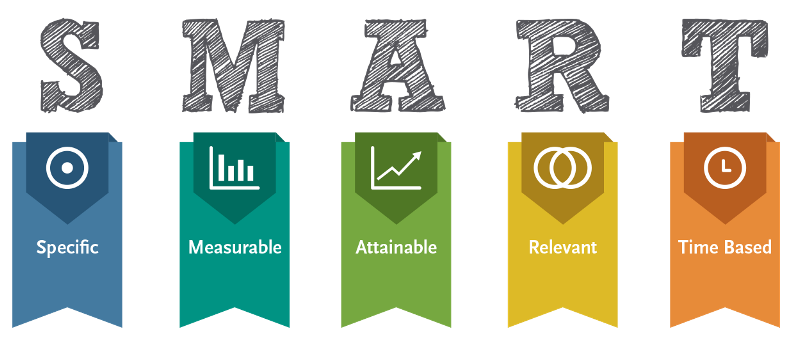
Each letter in SMART stands for a crucial element of a well-defined goal.
S - Specific: Your goal must be clear and unambiguous. What exactly do you want to accomplish? Who is involved? Where will it happen? Vague goals lead to vague results.
M - Measurable: You need to be able to track your progress. How will you know when you've reached your goal? Attaching numbers or clear indicators of success is key.
A - Achievable: Is your goal realistic? It should stretch you, but it shouldn't be impossible. Consider your resources, skills, and the time you have available.
R - Relevant: Does this goal matter to you? It should align with your broader ambitions and values. A relevant goal is one you'll be motivated to pursue.
T - Time-bound: Every goal needs a deadline. A target date creates urgency and helps you prioritize your efforts. Without a timeframe, there's a risk your goal will be pushed aside indefinitely.
Instead of: "I want to learn to code."
A SMART goal is: "I will complete a 10-hour online Python for beginners course (Specific, Achievable) by the end of next month (Time-bound), so I can build a simple web scraper for a personal project (Relevant). I'll track my progress by finishing two hours of lessons each week (Measurable)."
Coaching Yourself with GROW
While SMART helps you define a goal, the GROW model is a framework for figuring out how to achieve it. It's structured like a coaching conversation you can have with yourself or a team member. It helps you understand where you are, where you want to go, and how you'll get there.
Let's walk through it.
- Goal: This is your starting point. You define what you want to achieve, just like in the SMART framework. It should be as specific as possible.
- Reality: Now, take an honest look at your current situation. What's happening right now? What progress have you made so far? What obstacles are in your way?
- Options (or Obstacles): Here, you brainstorm. What are all the possible paths you could take to reach your goal? Don't filter your ideas yet, just list everything you can think of. What could you do to overcome the obstacles you identified in the Reality step?
- Will (or Way Forward): This is the final, crucial step. You've looked at your goal, your reality, and your options. Now, what will you actually do? Choose the best options and commit to specific actions. This is where you create your action plan.
Strategic Planning with OGSM
The OGSM framework scales up from personal goals to strategic planning for a team or an entire company. It provides a simple, one-page roadmap that connects your big-picture vision to the daily actions needed to get there. OGSM stands for Objectives, Goals, Strategies, and Measures.
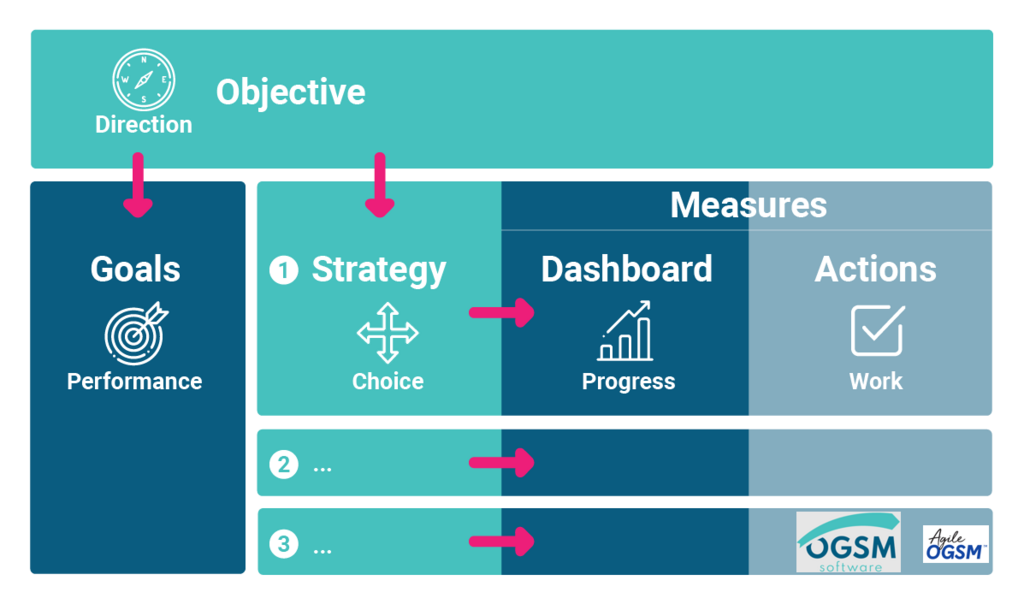
This framework creates a clear cascade of logic.
- Objective: This is your mission. It's the high-level, qualitative statement of what you want to achieve. It answers the question, "What is our primary purpose?" For example: "Become the most trusted local source for fresh baked goods."
- Goals: These are the numbers that prove you're achieving your objective. They are specific, measurable, and time-bound targets. A goal supporting the objective above could be: "Increase repeat customer rate by 25% within one year."
- Strategies: These are the choices you make about how you will achieve your goals. They describe the general approach. A strategy could be: "Create a customer loyalty program and improve in-store experience."
- Measures: These are the key performance indicators (KPIs) that track the success of your strategies. They tell you if your plan is actually working. For the strategy above, measures could include: "Number of loyalty program sign-ups per week" and "Average customer satisfaction score."
By linking what you want (Objective), what it looks like (Goals), how you'll do it (Strategies), and how you'll track it (Measures), the OGSM framework ensures everyone is pulling in the same direction.
Ready to see how well you've grasped these concepts? Let's test your knowledge.
Which of the following best represents a 'Specific' goal according to the SMART framework?
In the GROW model, which step focuses on taking an honest look at your current situation and any obstacles?