Mastering Global Tariffs and Trade Strategy
Technical Tariff Mechanics
The Building Blocks of a Tariff
Tariffs aren't one-size-fits-all. They come in three main flavors, each calculated differently.
| Type | Calculation | Example |
|---|---|---|
| Ad Valorem | Percentage of the item's value | A 10% tariff on a $20,000 car is $2,000. |
| Specific | A fixed fee per unit of quantity | A $0.54 tariff per kilogram of imported sugar. |
| Compound | A combination of both types | $0.10 per kilogram plus 5% of the value. |
Ad valorem tariffs, from the Latin for "according to value," are the most common. Because they're a percentage, the amount of tax collected rises and falls with the price of the good. This provides a consistent level of protection for domestic industries, whether global prices are high or low.
Specific duties are simpler but less flexible. Their protective power is inversely related to the price of the good. If the price of sugar doubles, that $0.54 per kilogram tariff suddenly becomes half as protective. Conversely, if prices crash, the fixed duty becomes a much heavier burden on importers.
Official Rates vs. Real-World Costs
When a government announces a new tariff, they are referring to the statutory rate. This is the official rate published in a country's tariff schedule. For most of the world, this schedule is a massive, detailed catalog called the (HTS).
Every conceivable product is assigned a specific code in the HTS, which determines its statutory tariff rate. Think of it as a Dewey Decimal System for everything from live animals to airplane parts.
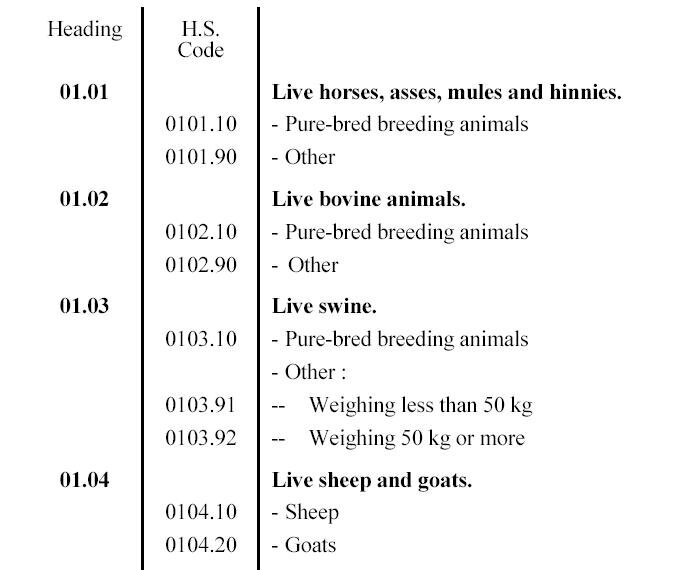
However, the statutory rate is rarely what a company actually pays. The actual duty collected, averaged across all imports of a certain type, is called the effective rate.
Why the difference? The effective rate accounts for reality: trade agreements that lower or eliminate tariffs for certain countries, special exemptions for specific industries, and other policy adjustments. The gap between the statutory and effective rate is where trade policy gets nuanced.
Calculating the Bill
For an ad valorem tariff, the taxable amount, or dutiable value, must be calculated first. Customs officials can't just trust the price on an invoice. Instead, they use standardized valuation methods. The two most common are FOB and CIF.
- FOB (Free On Board): The value is based on the cost of the product when it leaves the port of export. This excludes the costs of international shipping and insurance.
- (Cost, Insurance, and Freight): The value includes the cost of the product plus the costs of shipping it to the destination port and insuring it along the way.
A country using CIF valuation will collect more tariff revenue than one using FOB, because the dutiable value is higher.
Finally, the impact of a tariff depends on price sensitivity, often discussed in terms of . This concept measures how much of the tariff cost is passed on from the importer to the final consumer through higher prices. A 10% tariff rarely results in a neat 10% price increase.
In some cases, the foreign exporter might absorb some of the cost by lowering their prices to remain competitive. In others, the importer might take a smaller profit margin. Most often, the cost is shared between the exporter, the importer, and the consumer. The exact split depends on market competition and how badly consumers want the product.
Let's check your understanding of these tariff mechanics.
An ad valorem tariff is calculated as...
What is the primary difference between a statutory tariff rate and an effective tariff rate?
Understanding these technical details is key to seeing how trade policy moves from headlines to the price tags on the goods you buy.