Mastering GitHub Copilot
Introduction to GitHub Copilot
Your AI Pair Programmer
GitHub Copilot is an AI-powered coding assistant that functions like a collaborative partner. It helps you write code faster by providing suggestions directly within your editor. Instead of just completing single words, it can suggest entire lines, blocks of code, or even complete functions based on the context of your project.
At its core, GitHub Copilot acts as an AI pair programmer, providing real-time code suggestions as developers type.
Developed by GitHub in partnership with OpenAI, Copilot turns natural language prompts and existing code into coding suggestions across dozens of languages. It integrates directly into popular development environments, aiming to reduce the time spent on repetitive tasks and searching for solutions online.
How Copilot Thinks
The engine behind GitHub Copilot is a generative AI model called OpenAI Codex. It was trained on a vast dataset consisting of billions of lines of public code from GitHub repositories and a massive amount of natural language text. This extensive training enables it to understand the relationship between a programmer's intent, expressed in comments or code, and the resulting implementation.
Think of it as a programmer who has studied countless open-source projects. By analyzing the context of your current file, including comments, function names, and surrounding code, it predicts what you're trying to build and offers relevant suggestions. It understands programming patterns and conventions, allowing it to generate idiomatic code for various languages and frameworks.
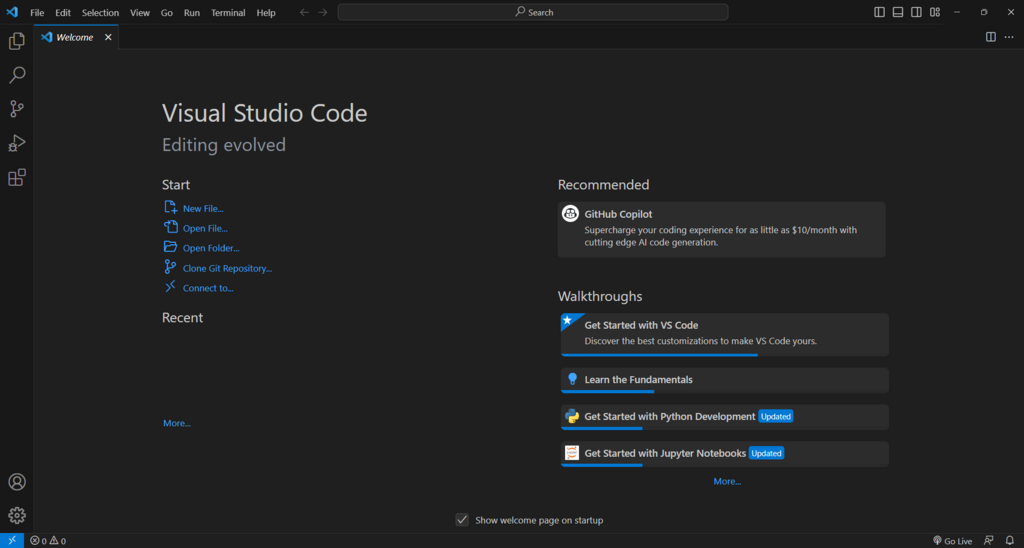
This deep integration is a key part of its design. Copilot isn't a separate application you have to switch to. It works inside Integrated Development Environments (IDEs) like Visual Studio Code, Neovim, and the JetBrains suite (IntelliJ IDEA, PyCharm, etc.). This makes its assistance feel like a natural extension of the coding process.
Core Capabilities
Copilot's functionality extends across several areas of the development workflow.
Inline Suggestions: As you type, Copilot offers suggestions in grayed-out text directly in your editor. These can range from a single line to a complete function. You can accept the suggestion, cycle through alternatives, or simply keep typing to ignore it.
Code Generation from Comments: You can write a comment in natural language describing the logic you need, and Copilot will attempt to generate the corresponding code. For example, a comment like // function to fetch user data from an API and parse the JSON response can prompt Copilot to write the entire function.
Copilot Chat: Beyond inline suggestions, Copilot offers a chat interface within the IDE. This allows for more complex interactions. You can ask it to explain a block of code, suggest refactorings, find bugs, or generate unit tests for a specific function. This conversational approach helps with problem-solving without breaking your development flow.
// A comment in Python that Copilot can use to generate code
// function that takes a list of numbers and returns the sum of the even numbers

def sum_even_numbers(numbers):
    # Copilot would generate the implementation below
    total = 0
    for num in numbers:
        if num % 2 == 0:
            total += num
    return total
These features combined can significantly accelerate development. Research from GitHub and MIT found that developers completed tasks 55% faster when using Copilot. It helps reduce manual effort, especially with boilerplate code, and allows developers to focus more on complex logic and architecture.
A Tool, Not a Replacement
While powerful, Copilot is an assistant, not an autonomous programmer. The code it generates is not guaranteed to be perfect, secure, or optimal. It's a suggestion that requires human oversight.
Limitations and ethical considerations are important. Since it learns from public code, it may sometimes reproduce code that is outdated, inefficient, or contains security vulnerabilities. It can also suggest code that includes sensitive information like API keys if it has seen similar patterns in its training data, though safeguards are in place to prevent this.
There's also the question of copyright. The training data includes code under various open-source licenses, which has sparked debate about the ownership and licensing of AI-generated code. Developers are ultimately responsible for the code they commit, so it's crucial to review, understand, and test any suggestions before accepting them.
Think of GitHub Copilot like a junior developer — the clearer your instructions, the better the output. Always review and test its suggestions.
Effectively using Copilot means treating it as a productivity tool. It can handle the routine parts of coding, freeing you up to concentrate on solving bigger problems. It's a powerful partner, but the final responsibility for the quality and security of the code rests with the developer.