Mastering Git Fundamentals
Version Control Concepts
A Digital Time Machine
Imagine spending hours writing an important document, only to accidentally delete a key paragraph. Or maybe you've seen a folder cluttered with files like report_final.docx, report_final_v2.docx, and report_REALLY_final.docx. It’s a messy and risky way to keep track of changes.
Version control is like a sophisticated 'undo' button for your entire project. It’s a system that records changes to a file or set of files over time so you can recall specific versions later. Think of it as a time machine for your work. You can jump back to any previous state, see exactly what changed, and never worry about losing progress.
This system doesn't just save over old files. It stores a complete history of every change, creating a timeline you can explore at any time.
Working Together, Not Against
The real power of version control shines when you work with a team. Without it, developers might accidentally overwrite each other's code. One person's bug fix could be wiped out by another person's new feature. It creates chaos.
A Version Control System (VCS) acts as a traffic controller for code. It allows multiple people to work on the same project—even the same files—at the same time without interfering with one another. The system helps merge everyone's changes together smoothly. The most popular VCS in the world is called Git, created by to manage the development of the Linux operating system.
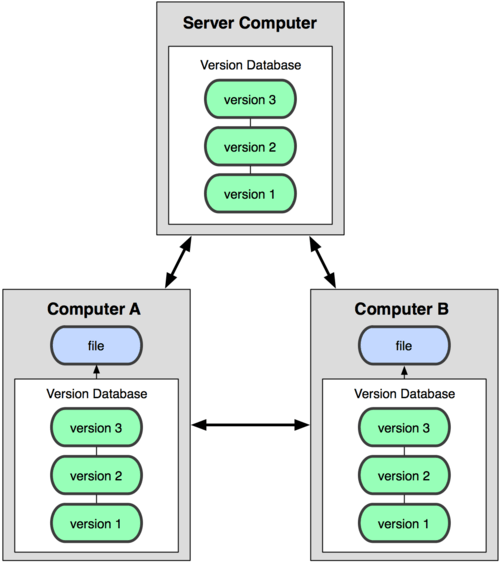
Your Project's Memory
In the world of Git, your project lives inside a repository (often shortened to "repo"). A repository is more than just a folder for your files. It’s a project folder with a complete, built-in memory.
This memory contains every version of every file that has ever existed in the project. When you want to save a snapshot of your work, you make a . Each commit is a permanent record of the project at a specific moment in time. You can think of commits as save points in a video game. They are checkpoints you can always return to if something goes wrong.
This repository structure is the foundation of version control. It holds not only what your project looks like now, but the entire story of how it got here. By understanding these core ideas, you're ready to explore how developers use these tools to build amazing things.
What is the primary purpose of a Version Control System (VCS)?
In Git, a permanent record of the project at a specific moment in time is called a __________.