Mastering Gestalt Principles and Visual Perception
Berlin School Foundations
Beyond the Building Blocks
At the turn of the 20th century, a dominant school of thought called structuralism tried to understand the mind by breaking it down into its smallest possible parts. Think of it like trying to appreciate a painting by analysing each individual pigment of paint. Structuralists believed that if you could understand all the basic sensations, images, and feelings, you could understand consciousness itself. It was an atomistic approach, focused on the individual components.
But a group of thinkers in Germany, known as the Berlin School, saw a major flaw in this. When we listen to a melody, we don't hear a disconnected series of notes; we hear a tune. The relationship between the notes creates something new, something the individual notes alone don't possess. This central idea launched Gestalt psychology: the whole is something different than the sum of its parts.
The Gestalt movement wasn't just a new theory; it was a fundamental rejection of the atomistic view of structuralism, arguing for a more holistic understanding of mental processes.
The Berlin Pioneers
The revolution began with an observation on a train. In 1910, noticed that flashing lights at a railway crossing created the illusion of a single light moving back and forth. It wasn't actually moving, but his brain perceived motion. This led to his famous experiments on the phi phenomenon, where two lights are flashed in quick succession. Viewers don't see two separate flashes; they see one light moving from the first position to the second. There is no sensory input for this movement—the brain creates it. This simple illusion demonstrated that perception was more than just the sum of sensory data.
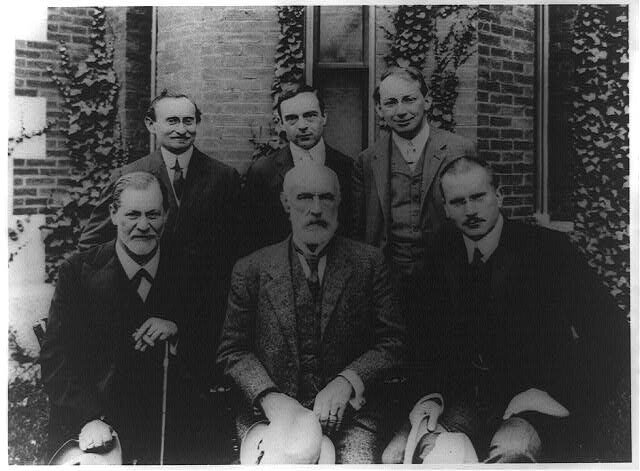
Wertheimer was soon joined by two colleagues, Kurt Koffka and an der Berliner Universität. Koffka became the movement's chief spokesperson, introducing Gestalt principles to a wider, English-speaking audience. His 1922 article in the Psychological Bulletin brought the term into the American mainstream.
Köhler, meanwhile, extended these ideas beyond perception into learning and cognition. Through his famous studies with chimpanzees, he showed that learning doesn't always happen through trial and error (as behaviourists argued). Instead, it often occurs in a flash of insight—an "Aha!" moment—where the solution appears as a complete whole.
Mind and Brain in Harmony
The Gestaltists didn't just want to describe what we perceive; they wanted to understand why. This led them to the concept of psychophysical a principle suggesting a direct correlation between our subjective psychological experiences and the underlying electrochemical activity in the brain.
It doesn't mean there's a tiny picture of a cat in your brain when you see a cat. Rather, the structural relationships in what you see—the cat's form, its outline, its relation to the background—correspond to the structural relationships of the neural activity in your visual cortex. The organised pattern of the experience mirrors the organised pattern in the brain. This idea provided a crucial physiological bridge for their psychological theories, grounding the holistic patterns of the mind in the physical workings of the brain.
These foundational principles—the rejection of structuralism, the focus on holistic patterns, and the theory of isomorphism—set the stage for identifying the specific rules our minds follow to make sense of a chaotic world. These rules, known as the laws of grouping, are the mental shortcuts our brains use to organise sensory information effortlessly.
Time to test your knowledge of these foundational concepts.
What is the core principle of Gestalt psychology?
Max Wertheimer's observation of flashing railway lights, which led to his experiments on the phi phenomenon, demonstrated what key idea?
With this historical and theoretical grounding, we can now explore the specific principles of perception that the Gestalt psychologists identified.