Mastering Generative AI Tools
Introduction to GPT Models
What is a GPT?
GPT stands for Generative Pre-trained Transformer. It sounds complex, but we can break it down. Think of it as a very advanced student of language.
At its core, a GPT is a type of large language model (LLM) designed to understand and generate human-like text.
Let's look at each part of its name:
-
Generative: This means it creates something new. Instead of just analyzing existing text, it can write its own sentences, paragraphs, and even entire articles.
-
Pre-trained: Before it can help with any specific task, the model goes through a massive learning phase. It's trained on a vast collection of text from the internet, books, and other sources. This is like reading a giant library to understand how language works, learning grammar, facts, and reasoning skills.
-
Transformer: This is the key to its power. A transformer is a specific type of neural network architecture that's exceptionally good at handling sequential data, like text. Its secret weapon is a mechanism called 'attention'.
Transformer
noun
A type of neural network architecture that learns context and meaning by tracking relationships in sequential data, like the words in a sentence.
The attention mechanism lets the model weigh the importance of different words in a sentence when processing it. It can 'pay attention' to words far apart from each other to understand the full context, much like how you might connect a pronoun at the end of a paragraph to the person it refers to at the beginning.
The Evolution of GPT
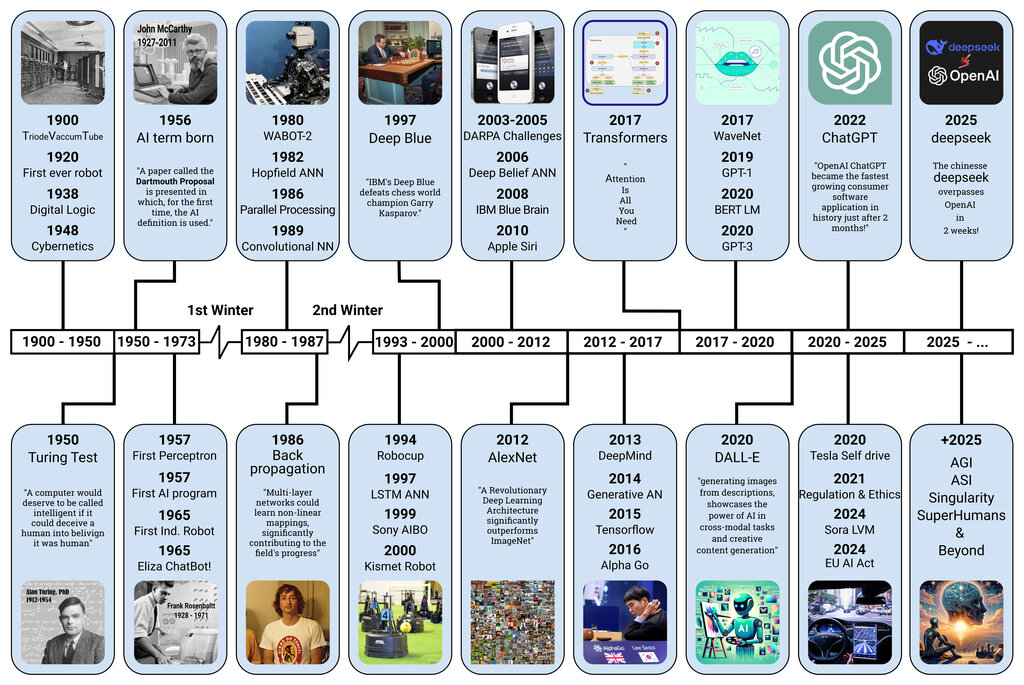
The journey of GPT models has been one of rapid and astounding progress. Each new version represents a significant leap in size, capability, and sophistication.
GPT-1 (2018): The pioneer. With 117 million parameters, it demonstrated that the transformer architecture had huge potential for understanding and generating language. It was a proof of concept that set the stage for everything to come.
GPT-2 (2019): The leap forward. This version was much larger and more powerful. The text it generated was so coherent that its creators initially released it in stages, concerned about potential misuse for creating fake news or spam.
GPT-3 (2020): The game changer. With a staggering 175 billion parameters, GPT-3 could write surprisingly human-like text, translate languages, and even generate code with minimal prompting. It marked the point where these models became powerful enough for wide-scale applications.
GPT-4 and Beyond: The new era. These models are even more powerful and reliable. A key advancement is their ability to become 'multimodal', meaning they can understand and process information beyond text, including images.
How They Learn
A GPT model's education happens in two main phases: pre-training and fine-tuning. This two-step process is what makes them so versatile.
ChatGPT’s training process involves two key stages: pre-training on a massive corpus of text data to learn language patterns and context, followed by fine-tuning for specific tasks.
The first phase is pre-training. This is where the model gets its broad, general knowledge. It's fed a massive dataset of text and its only job is to predict the next word in a sequence. By doing this billions of times, it learns grammar, facts, reasoning styles, and the subtle nuances of language. It's like building a massive, foundational library of knowledge in its neural network.
After pre-training, the model is a powerful but general tool. To make it useful for specific applications, like carrying on a conversation or summarizing legal documents, it undergoes fine-tuning.
In this phase, the model is trained on a smaller, more specific dataset. For a conversational AI like ChatGPT, this involves training it on dialogue examples and having human reviewers rate its responses for helpfulness and safety. This specialized training refines the general model, teaching it to follow instructions and align its behavior with desired outcomes. It's like a brilliant university graduate taking on an apprenticeship to learn a specific trade.
Ready to check your understanding of these foundational concepts?
In the acronym GPT, what does the 'G' stand for and signify?
What is the primary role of the 'Transformer' architecture in a GPT model?