Mastering Gemini AI
Introduction to Gemini AI
Meet Gemini
Gemini is a family of artificial intelligence models created by Google. It was developed by the teams at Google AI and DeepMind, building on the foundations of earlier models like LaMDA and PaLM 2. The goal was to create a more capable and flexible AI that could work more like humans do, by understanding the world through different types of information at once.
Think of it as the next chapter in conversational AI. While previous models were very good with text, Gemini was designed from the ground up to be different. Its name, Latin for "twins," hints at this dual nature: a deep understanding of human language coupled with an ability to process a rich variety of other inputs.
What Makes Gemini Different
Gemini's standout feature is its native multimodality. This means it was trained from the beginning to understand, operate across, and combine different types of information like text, images, audio, video, and code. It doesn't just handle text and then have add-ons for other formats; it processes all of them seamlessly.
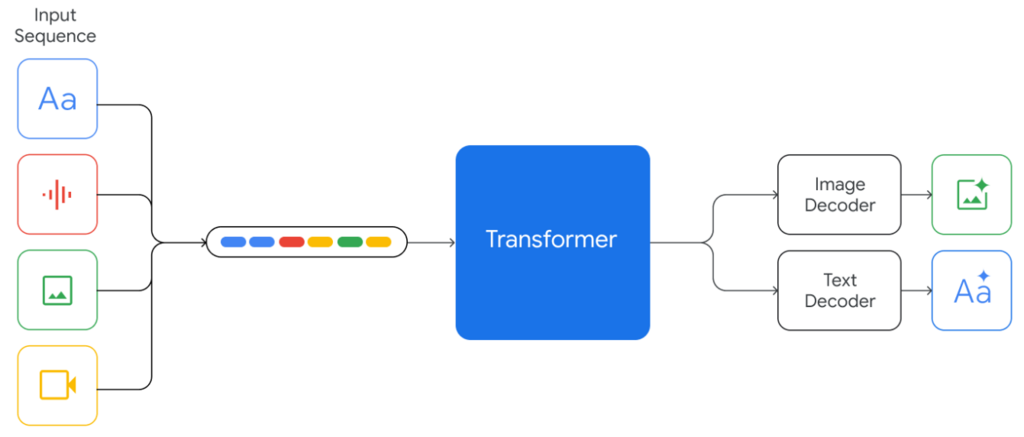
Imagine showing it a picture of your pantry and asking for a recipe. It can see the ingredients, understand your spoken question, and write out a recipe in response. This ability to reason across different formats allows for more sophisticated and useful interactions. Beyond multimodality, Gemini models also have powerful reasoning skills and can generate high-quality code in various programming languages.
Gemini's core strength is its ability to understand the world through text, images, audio, and video all at the same time.
The Gemini Family
Gemini isn't a single AI model, but a family of them, each optimized for different tasks and platforms. Google has released several versions to balance performance and efficiency.
| Model | Best For | Example Use Case |
|---|---|---|
| Pro | Complex reasoning, creative tasks | Writing a detailed research report |
| Flash | Speed and efficiency at scale | Quickly summarizing a long email |
| Nano | On-device, offline tasks | Smart replies in a messaging app |
Gemini Pro is the balanced, all-around model. It's powerful enough for a wide range of tasks, from brainstorming creative ideas to analyzing data. This is the version you'll likely interact with most often in Google products.
Gemini Flash is built for speed. It's a lighter model that's great for high-frequency tasks where quick responses are critical, like powering a rapid-fire chatbot.
Gemini Nano is the most efficient model, designed to run directly on devices like smartphones. It enables AI features that work even without an internet connection, putting powerful capabilities right in your pocket.
Let's check your understanding of these models.
What is the defining feature of the Gemini family of models, setting it apart from previous AI like LaMDA and PaLM 2?
Which Gemini model is specifically designed for efficiency and to run directly on devices like smartphones, even without an internet connection?
By offering different sizes, the Gemini family can power everything from large-scale applications in the cloud to small, helpful features on your personal device.