Mastering Fruit Tree Pruning
Introduction to Pruning
What is Pruning?
Think of pruning as a strategic haircut for your fruit tree. It’s the careful, selective removal of certain parts of the plant, like branches, buds, or roots. But unlike a haircut, the goal isn't just about looks. Pruning is a vital practice that directs the tree's energy, shaping its growth for long-term health and a bountiful harvest.
By removing specific parts, you encourage the tree to grow in a way that’s strong and productive. You're getting rid of what's unnecessary or harmful to make room for what you really want: healthy growth and delicious fruit.
Pruning fruit trees is necessary to open up the center of the plant to the sun and increase productivity.
Why Bother Pruning?
An unpruned fruit tree will still produce fruit, but it will likely be small, less flavorful, and harder to reach. The tree can become a tangled mess of branches, creating a perfect environment for diseases and pests to thrive. Proper pruning addresses these issues directly.
First, it improves tree health. You’ll remove any wood that is dead, damaged, or diseased. This simple act prevents decay and disease from spreading to the rest of the tree. It also gets rid of branches that cross over or rub against each other, which can create wounds and entry points for infections.
Second, it boosts fruit quality. By thinning out the canopy, you allow sunlight and air to reach the inner parts of the tree. Sunlight is crucial for ripening fruit and developing its sugars, which means sweeter, more colorful apples, peaches, or pears. Good air circulation helps leaves and fruit dry quickly after rain, reducing the risk of fungal diseases.
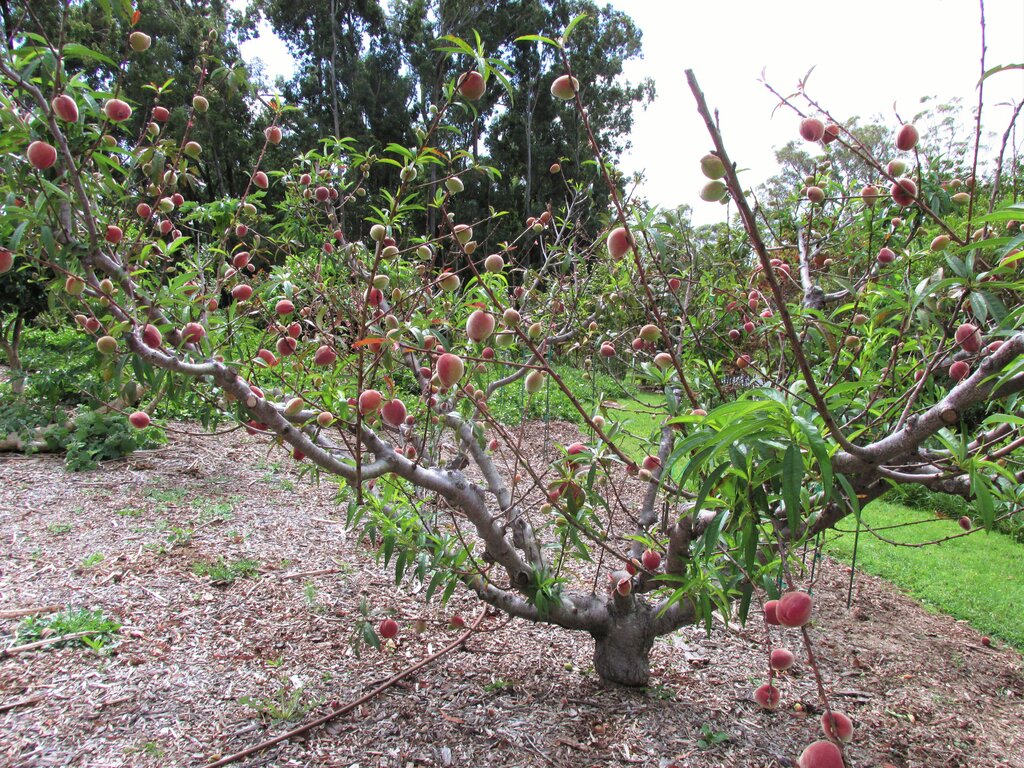
Finally, pruning creates a strong structure. A tree needs a solid framework of branches to support the weight of a heavy fruit load. Without pruning, trees can develop weak branch angles that are prone to splitting under the stress of wind, ice, or the fruit itself.
Getting to Know Your Tree
To prune effectively, you need to understand a little about how a tree is put together. You don't need to be a botanist, but knowing a few key parts will help you make smart cuts.
Branch
noun
A woody structural member connected to but not part of the central trunk of a tree.
The largest branches growing from the trunk are called scaffold branches. They form the tree's main skeleton. Smaller branches, called laterals, grow from the scaffolds. The goal is to encourage a strong scaffold system with well-spaced laterals.
Even more important are the buds. Trees have two main types of buds:
| Bud Type | Appearance | Function |
|---|---|---|
| Leaf Bud | Smaller, pointier | Grows into leaves and new shoots (vegetative growth) |
| Fruit Bud | Plumper, rounder | Develops into flowers and, eventually, fruit |
Knowing the difference is critical. If you cut off all your fruit buds, you won't get any fruit that year. Generally, fruit buds form on older wood, so you want to maintain a good balance of new growth for the future and older wood for this year's harvest.
Common Pruning Myths
Pruning can seem intimidating, and a few common misconceptions don't help. Let's clear some of them up.
Myth: Pruning is bad for the tree and hurts it. Fact: While a cut is technically a wound, proper pruning is beneficial. It's like a necessary surgery that removes problem areas and directs the tree's energy toward healthy growth and fruit production, ultimately extending its life and productivity.
Myth: The more you cut, the better. Fact: Over-pruning can be just as harmful as not pruning at all. Removing too much of the tree at once can stress it, stimulating a panic response of weak, bushy growth called watersprouts. It can also remove too many future fruit buds. A good rule of thumb is to never remove more than a third of the tree's canopy in a single year.
Myth: You must paint or seal pruning cuts. Fact: For most small cuts, this is an outdated practice. Trees have their own natural ways of sealing wounds. Applying a sealer can sometimes trap moisture and create an ideal environment for decay and disease to grow. It's usually best to let the tree handle its own recovery.
What is the primary goal of pruning a fruit tree?
Which part of a tree is primarily responsible for increasing the length of a branch?
Understanding these basics is the first step. By learning why you're pruning and what parts of the tree you're targeting, you're well on your way to helping your fruit trees thrive.