Mastering French
French Pronunciation
The Sounds of French
Getting the sounds right is a huge step toward speaking French confidently. Unlike English, French pronunciation follows very consistent rules. Once you learn the patterns, you can correctly pronounce words you've never even seen before. The biggest difference for English speakers is often the vowels. French has more vowel sounds than English, and they are pure, meaning they don't glide into another sound.
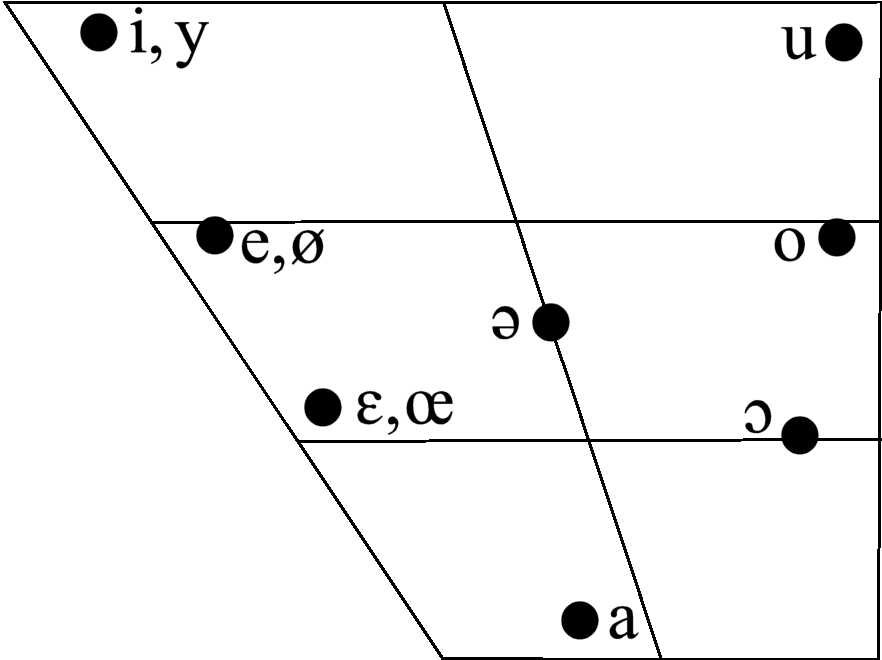
Look at the sound in the word tu (you). The lips are rounded and pushed forward, a position that's rare in English. Or consider the difference between dé (die, as in dice) and dès (from). The first has a sharp, closed 'e' sound, while the second is more open and relaxed. Tiny changes in your mouth shape create completely different words.
you (informal)
die (dice)
from, as soon as
Consonants and Silence
French consonants are generally crisper and pronounced further forward in the mouth than in English. The tongue often touches the back of the front teeth for sounds like 't', 'd', and 'n'. The French 'r' is also famously different. It's not rolled with the tip of the tongue but produced in the back of the throat, almost like a light gargle.
One of the biggest rules to learn is that final consonants are usually silent. In words like trop (too much), grand (big), and deux (two), the 'p', 'd', and 'x' are not pronounced. This can be tricky at first, but it's a very consistent pattern.
Don't pronounce the last consonant. If you follow this one rule, you'll be right about 80% of the time.
However, there's an exception called liaison, where a normally silent final consonant is pronounced if the next word begins with a vowel. For example, in les amis (the friends), the 's' from les is pronounced like a 'z' to link the two words smoothly.
Nasal Vowels
Nasal vowels are a signature sound of French. They are produced by passing air through both the nose and the mouth. You don't actually pronounce the 'n' or 'm' that follows the vowel. Instead, the letter just tells you to make the preceding vowel sound nasal. The four main nasal sounds are:
- an / en: as in maman (mom) or vent (wind)
- on: as in bon (good)
- in / ain / ein: as in vin (wine) or pain (bread)
- un: as in brun (brown)
wine
wind
good
Les sons nasaux (nasal sounds) are one of the most challenging aspects of French pronunciation.
Rhythm and Intonation
French has a very different rhythm from English. English is a stress-timed language, meaning certain syllables are stressed while others are rushed. French is syllable-timed. Every syllable receives roughly equal time, creating a machine-gun-like, even flow. The stress, or emphasis, almost always falls on the last syllable of a word or phrase.
Intonation, the 'melody' of the language, is also simple. For most statements, the pitch falls at the end. For most questions, the pitch rises sharply on the final syllable. Mastering this rhythm and intonation is key to sounding more natural.
Time to check what you've learned.
How is the 'n' or 'm' typically pronounced in a French nasal vowel, such as in the word "bon"?
The French 'r' sound is typically produced by rolling the tip of the tongue, similar to Spanish.
Pronunciation takes practice. Listening to native speakers and mimicking what you hear is one of the best ways to improve your accent and confidence.