Mastering Fraction Division
Understanding Fractions
What is a Fraction?
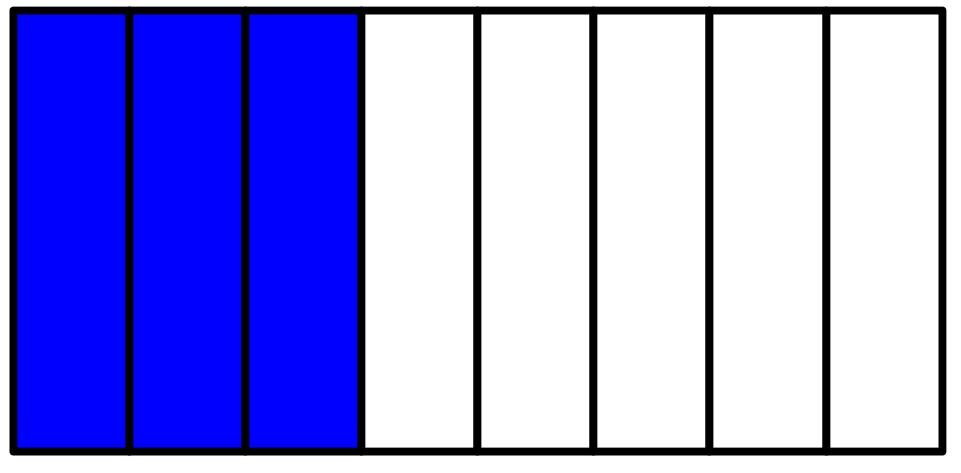
Fractions are a way of talking about parts of a whole. Imagine you have a pizza cut into 8 equal slices. If you eat 3 of those slices, you haven't eaten the whole pizza, just a part of it. A fraction lets us say exactly how much you ate: 3 out of 8 slices.
Fractions represent parts of a whole.
We write this as a number over another number, with a line in between. The number on the bottom, the denominator, tells us how many equal parts the whole is divided into. In our pizza example, the denominator is 8.
The number on top, the numerator, tells us how many of those parts we're considering. Since you ate 3 slices, the numerator is 3. So, you ate 3/8 of the pizza.
Types of Fractions
Not all fractions are less than one whole. Depending on the numerator and denominator, fractions can be sorted into a few different categories.
| Type | Description | Example |
|---|---|---|
| Proper Fraction | The numerator is smaller than the denominator. It's less than one whole. | , , |
| Improper Fraction | The numerator is equal to or larger than the denominator. It's one whole or more. | , , |
| Mixed Number | A whole number combined with a proper fraction. It's another way to write an improper fraction. | , |
A proper fraction, like , is a straightforward piece of a whole. An improper fraction, like , means you have more pieces than what makes up one whole. Think of it as one whole pizza (4 slices) and one extra slice.
This is where mixed numbers come in. We can write as , which means "one whole and one quarter." It's the same amount, just written differently.
Seeing Fractions on a Number Line
Besides shapes, we can also place fractions on a number line. This helps us see how they relate to whole numbers and to each other. The space between any two whole numbers, like 0 and 1, can be divided into any number of equal parts.
On the number line, you can clearly see that proper fractions like and live between 0 and 1. Improper fractions like appear after 1, showing they represent more than a single whole.
Now that you have a handle on the basic concepts, let's review the key terms.
Time to check your understanding.
In the fraction , what does the number 8 represent?
A pizza is cut into 12 equal slices. If you eat 5 of them, what fraction of the pizza have you eaten?
Understanding these basics is the first step. Once you're comfortable identifying the parts of a fraction and its type, you'll be ready to see what else they can do.