Mastering Ford Mustang Longevity and Part Preservation
Cooling System Preservation
The Right Coolant Chemistry
Using the correct coolant in a Mustang is about more than just freeze protection. It's a matter of chemical compatibility. Ford has used several different coolant formulations over the years, and mixing them or using the wrong one can lead to corrosion, gelling, and damage to gaskets and seals. Each formula is designed to protect the specific metals and plastics used in a particular generation's cooling system.
Older models, typically up to the early 2000s, used Motorcraft Premium Gold engine coolant. This is a hybrid organic acid technology (HOAT) formula. Around 2002, Ford began transitioning to Motorcraft Orange, an organic acid technology (OAT) coolant. More recently, the spec has changed again to Motorcraft Yellow, a phosphate-enhanced organic acid technology (P-OAT) coolant designed for the newest aluminum engines and cooling systems. Never trust the color alone; always check the specification number on the bottle against your owner's manual.
The rule is simple: never mix coolant types. If you're switching from Gold to a newer spec like Yellow, the system requires a complete and thorough flush, not just a drain and fill.
Generation-Specific Weak Spots
Different Mustang eras have their own unique cooling system challenges. For Fox Body (1979-1993) and early SN95 (1994-1998) models, the factory mechanical fan clutch is a common point of failure. When it wears out, it fails to engage the fan properly at low speeds, leading to overheating in traffic. Many owners upgrade to an electric fan setup, which provides more consistent cooling, frees up a small amount of horsepower, and is generally more reliable.
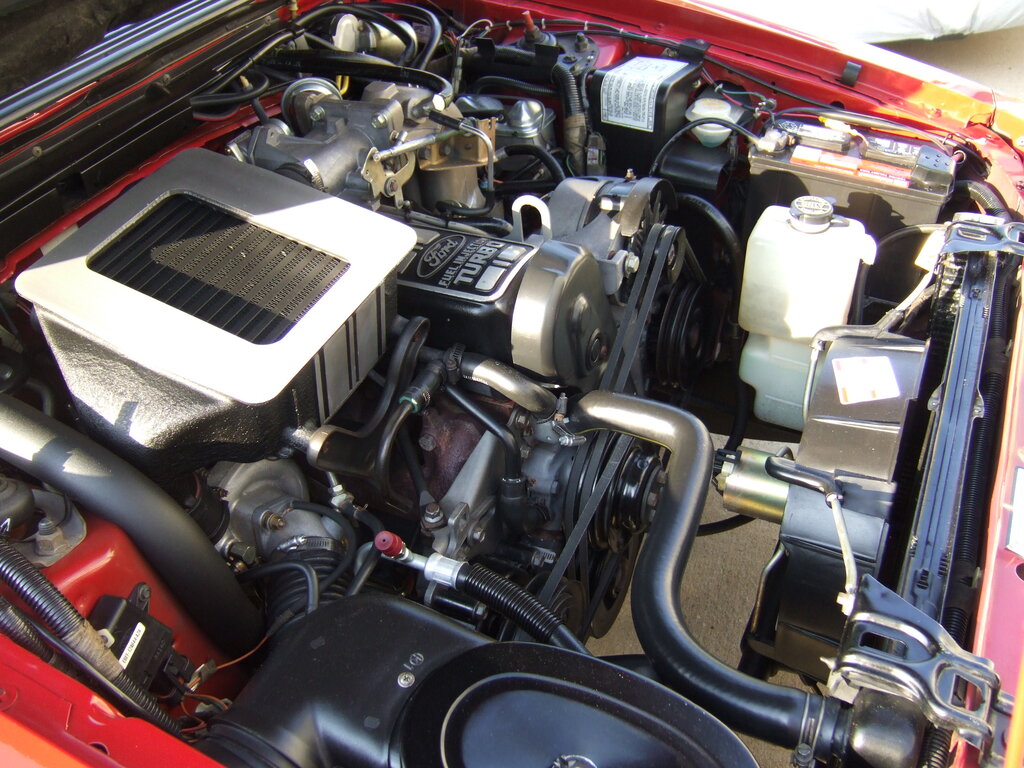
The S197 generation (2005-2014) has a well-known vulnerability: the plastic thermostat housing and intake manifold crossover. After thousands of heat cycles, the plastic becomes brittle and can crack suddenly, causing a massive coolant leak. Proactive replacement with an aluminum aftermarket part is a highly recommended modification to prevent catastrophic engine damage from overheating.
Getting the Air Out
Modular engines like the 4.6L and 5.0L Coyote are notoriously difficult to bleed air from after a coolant service. Air pockets trapped in the cylinder heads can create hot spots, leading to localized boiling of the coolant. This steam pocket prevents liquid coolant from touching the metal, causing extreme temperatures that can warp heads or blow head gaskets.
This process, often called 'burping' the system, is critical. It involves running the engine with the radiator cap off and the heater on full blast, while massaging the upper radiator hose to encourage bubbles to escape. Parking the car on an incline, with the nose pointing up, can also help guide air towards the radiator opening.
Modern Mustangs like the S550 (2015-2023) present a new challenge: stacked coolers. These cars often have separate coolers for the transmission, engine oil, and power steering fluid placed in front of the main radiator. Leaves, plastic bags, and other road debris can get trapped between these layers, significantly reducing airflow to the radiator and causing high coolant temperatures, especially during performance driving. Cleaning this area requires removing the front bumper cover for full access.
When replacing hoses, owners face a choice between standard EPDM rubber and silicone. While more expensive, silicone hoses offer superior durability and heat resistance for long-term preservation and performance applications.
| Feature | EPDM Rubber Hoses | Silicone Hoses |
|---|---|---|
| Cost | Lower (OEM standard) | Higher (Premium aftermarket) |
| Temp. Resistance | Good (up to ~260°F / 125°C) | Excellent (up to ~350°F / 177°C) |
| Lifespan | 5-8 years | Essentially lifetime of vehicle |
| Flexibility | Becomes brittle with age | Remains flexible, resists cracking |
| Best For | Daily driving, OEM replacement | High performance, long-term preservation |
Ready to see what you've learned about keeping your Mustang's engine cool?
What is the primary danger of having an air pocket trapped in the cylinder head of a modular Mustang engine after a coolant change?
An owner of a 1992 Fox Body Mustang is experiencing overheating in stop-and-go traffic, but the temperature is normal on the highway. What is a likely cause and a common upgrade?
Properly maintaining your Mustang's cooling system is one of the most effective ways to ensure its long-term health and performance.