Mastering Football Strategy
Football Fundamentals
The Game and the Field
The goal of American football is simple: score more points than your opponent. The game is played between two teams, with 11 players from each team on the field at a time. One team is on offense, trying to advance the ball, while the other is on defense, trying to stop them.
The ball is advanced by either running with it or throwing it to a teammate. The game is played on a rectangular field that is 120 yards long and 53 1/3 yards wide.
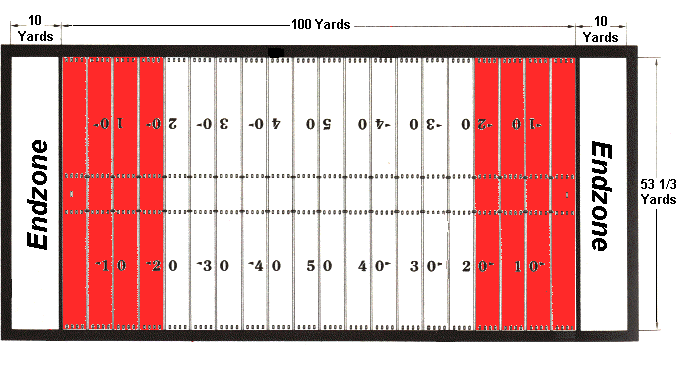
The 100-yard playing area is marked with a line every five yards and numbered every ten yards, counting down from the 50-yard line toward each end zone. The offense's main challenge is to move the ball down the field in a series of plays.
The offense gets four chances, called downs, to advance the ball at least 10 yards. If they succeed, they get a fresh set of four downs to gain another 10 yards. If they fail, they usually turn the ball over to the other team.
This cycle of gaining yards and earning new downs is how a team marches toward their opponent's end zone to score.
How Points Are Scored
The ultimate goal of any offensive drive is to put points on the scoreboard. There are several ways to do this, each with a different point value.
| Scoring Play | Points Awarded |
|---|---|
| Touchdown | 6 points |
| Extra Point | 1 point |
| Two-Point Conversion | 2 points |
| Field Goal | 3 points |
| Safety | 2 points |
A touchdown is the most valuable play, earned when a player carries the ball into the opposing team's end zone or catches a pass there. After a touchdown, the scoring team can attempt an extra point by kicking the ball through the uprights of the goalpost, or a two-point conversion by running or passing the ball into the end zone again.
A field goal is another way to score by kicking. It's often attempted on fourth down when the offense is close enough to the opponent's goalpost but doesn't want to risk turning the ball over.
Finally, a safety occurs when the defense tackles an offensive player with the ball in their own end zone. The defense is awarded two points, and they also get possession of the ball.
The Players on the Field
A football team is a unit of specialists. The 11 players on the field are part of either the offense, the defense, or a special teams unit for kicking plays. Each player has a specific role.
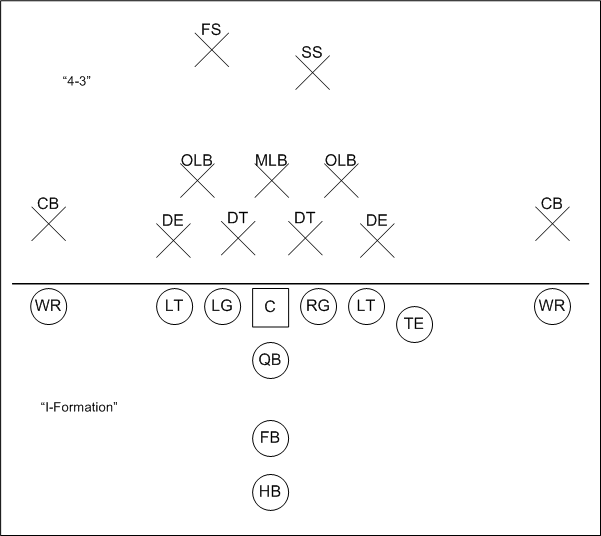
Offense The offense is responsible for moving the ball and scoring. Key positions include:
- Quarterback (QB): The leader of the offense. The QB calls the play, receives the ball from the center, and then throws it, hands it off, or runs with it.
- Running Back (RB): Lines up behind or next to the quarterback and specializes in running with the ball. Also known as a halfback or fullback.
- Wide Receiver (WR): A pass-catching specialist who runs designated routes to get open for a pass from the quarterback.
- Tight End (TE): A hybrid player who can block for runners and passers or run routes to catch passes.
- Offensive Line (OL): A group of five players (a center, two guards, and two tackles) who block the defense to protect the quarterback or clear paths for the running back.
Defense The defense's job is to prevent the other team from scoring. They do this by tackling the ball carrier, forcing turnovers, or preventing pass completions. Key positions include:
- Defensive Line (DL): These players line up opposite the offensive line. Their goal is to disrupt the offense by tackling the quarterback or the running back.
- Linebacker (LB): Positioned behind the defensive line, linebackers are versatile defenders who must defend against both the run and the pass.
- Defensive Backs (DB): This group includes cornerbacks and safeties. They are the last line of defense, primarily responsible for covering wide receivers to prevent them from catching passes.
You'll be tested on these new concepts now.
How many players from one team are on the football field at any given time during a play?
Which player is considered the leader of the offense, responsible for throwing, handing off, or running with the ball?
With these basics in place, you have the foundation needed to understand the flow and strategy of a football game.