Mastering Fluidity and Rhythm in Dance
Advanced Weight Transfer
The Floor Is Your Partner
At an intermediate level, the floor stops being just something you stand on and becomes a source of power. Think of it as your primary partner in every movement. The concept of grounding is about creating a conscious, active connection with the surface beneath you. It’s the difference between simply placing your foot down and pressing into the floor to generate energy for your next step.
Every push against the floor is a conversation. The floor pushes back with an equal and opposite force, giving you the energy to move with power and control.
To feel this, stand with your feet parallel and gently bend your knees. Now, instead of just straightening your legs, push the floor away. Feel the rebound energy that travels up your body. This is the foundation of powerful jumps, sharp turns, and dynamic transitions. You're not just lifting your body; you're using the planet to propel yourself.
Power Up Through the Body
That energy you generate from the floor doesn't just stay in your legs. It travels up through your body in what's known as the kinetic chain. This is the sequence of how your joints and muscles activate, starting from the point of contact with the floor and moving up through your ankles, knees, hips, and core.
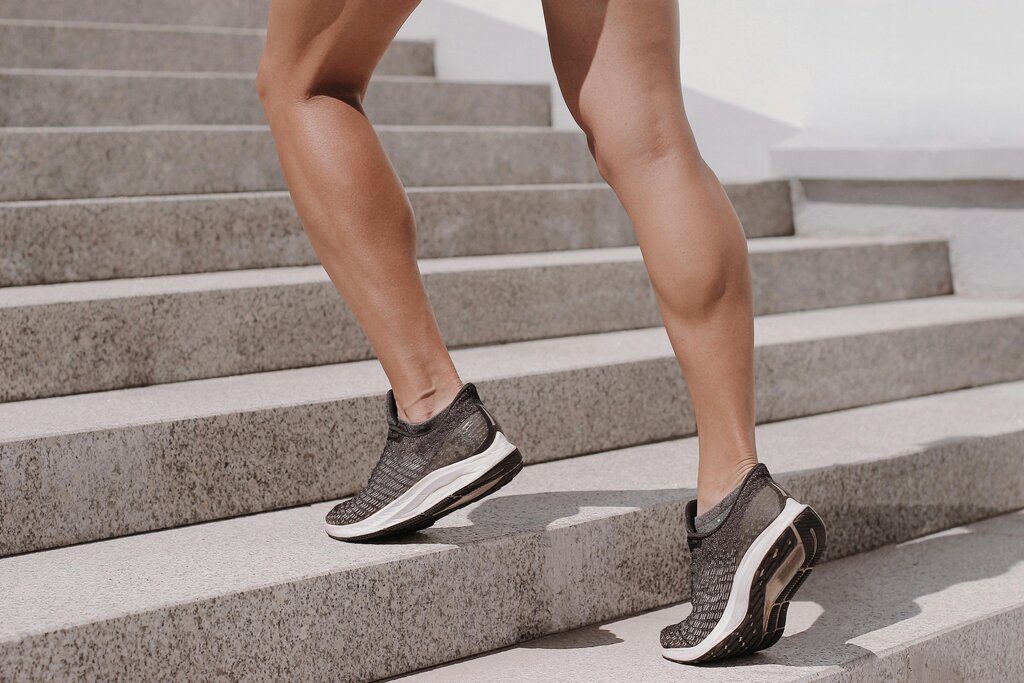
A fluid and efficient kinetic chain means the transfer of energy is seamless. When you take a step forward, the push-off from your back foot doesn't just move your leg; it sends a wave of force that should be channeled by your hips to direct your entire body. A stiff ankle or an unengaged core can break this chain, making movements look disconnected and less powerful. Mastering your kinetic chain is about turning a series of separate motions into a single, fluid expression.
The weight transfer should be initiated by the hips with the legs, knees, ankles to follow.
Directing Your Momentum
As you move, how you manage your center of gravity defines the quality of your dance. We can break this down into two main approaches: stacked weight transfer and traveling weight transfer.
Stacked weight transfer is when your center of gravity arrives and settles directly over your supporting foot before you initiate the next movement. This creates clear, defined positions. It’s stable, controlled, and excellent for sharp, percussive styles or when you need to establish a strong line. Each step is a distinct event.
Traveling weight transfer is the key to fluidity. Here, your center of gravity moves continuously through the space between your feet. You are in a state of controlled falling, catching your weight on the next step just in time. This dissolves the pauses between movements, blending them into a seamless flow. It’s what makes a dancer appear to glide across the floor.
Neither approach is better than the other; they are different tools. A mature dancer knows when to use a sharp, stacked transfer for punctuation and when to use a smooth, traveling transfer for lyricism.
The Art of the Roll
Fluidity is also controlled at the micro-level of the foot itself. The way your foot meets and leaves the floor dictates the timing and texture of your movement. Think about the difference between stepping directly onto a flat foot versus rolling through the foot from heel to toe.
Articulating your foot—using a toe-ball-heel or heel-ball-toe weight distribution—is a form of micro-timing. A quick roll can make a step feel sharp and urgent. A slow, deliberate roll can give it a smooth, languid quality. This articulation is what connects your steps. Without it, movement can feel clunky, like a series of disconnected poses.
Practice walking across the room and focus only on your feet. First, step flat-footed. Notice the jarring sensation. Now, try it again, but consciously roll from your heel, through the ball of your foot, and push off with your toes. The movement is instantly smoother and more controlled. By mastering this roll, you add a sophisticated layer of texture to your dancing, allowing you to fine-tune the feeling of every step you take.
Ready to test your understanding of these core concepts?
What is the primary goal of "grounding" in dance?
An unengaged core or a stiff ankle can lead to what issue in a dancer's movement?