Mastering First Principles Thinking
Introduction to First Principles Thinking
What Is First Principles Thinking?
Most of us solve problems by looking at how others have solved similar problems. We reason by analogy. This is usually effective, but it rarely leads to breakthrough ideas. It tends to produce slightly better versions of what already exists.
First principles thinking is different. It’s a way of taking a problem apart, piece by piece, until you’re left with only the most basic, undeniable truths. These are the “first principles.” From there, you build your solution back up from scratch.
Instead of starting with the finished product and tweaking it, you start with the raw materials and ask what you can build.
Think of it like cooking. Reasoning by analogy is following a recipe. First principles thinking is understanding the role of heat, salt, fat, and acid to create a new dish entirely. You're not just improving the recipe; you're working from the fundamentals of flavor.
A Nod to Ancient Greece
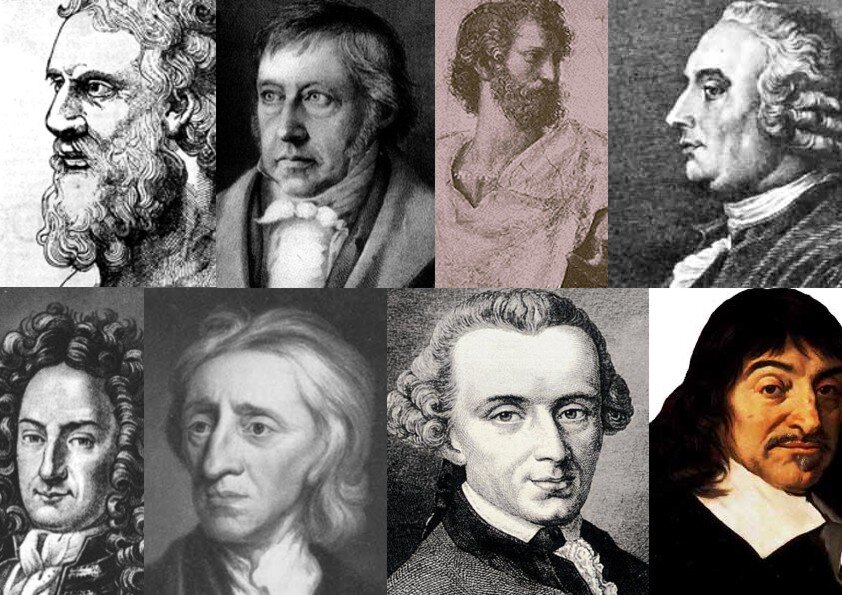
The idea isn't new. It traces back over two thousand years to ancient Greece. Philosophers like Aristotle were on a quest for foundational knowledge. He defined a first principle as the “first basis from which a thing is known.”
These thinkers wanted to find truths so fundamental they couldn't be deduced from any other proposition or assumption. They were the solid ground upon which all other knowledge could be built. This systematic approach to questioning everything, down to its very essence, laid the groundwork for modern science and logic.
Thinking vs. Copying
Reasoning by analogy is our brain's default setting. It's a mental shortcut. When we say, “This is like that,” we’re using an analogy. This is helpful for quick decisions, but it can trap us in the past, limiting our thinking to what has already been done.
For example, if you wanted to improve transportation in the 19th century using analogy, you might have focused on breeding stronger, faster horses. You would improve on the existing solution. First principles thinking, on the other hand, asks: “What is the fundamental goal of transportation?” The answer is moving something from A to B. What are the physics of that? From these basic truths, you might invent something entirely new, like an automobile.
Reasoning by analogy is conservative and safe. First principles thinking is disruptive and creative. One optimizes the present, while the other invents the future.
Why It Matters Today
This way of thinking is critical in any field where innovation is valued.
In science, it's the engine of discovery. A scientist doesn't just accept existing theories; they test the underlying principles through experimentation. In engineering, it's how we get revolutionary technologies. Instead of making a better version of an existing product, an engineer might ask about the fundamental physical constraints and build something entirely new.
Business is no different. Entrepreneurs who challenge the core assumptions of an industry are the ones who create new markets. They don't ask, “How can we do what our competitors do, but cheaper?” They ask, “What is the fundamental human need our industry is trying to serve, and is there a better way to serve it from the ground up?”
What is the core idea behind first principles thinking?
The text compares reasoning by analogy to following a recipe. In this metaphor, what is first principles thinking equivalent to?
By learning to separate a problem into its core truths, you can find opportunities and solutions that others, stuck reasoning by analogy, will never see.