Mastering First Principles Thinking
Introduction to First Principles Thinking
Breaking Down Problems
Most of us think by analogy. We see something new and compare it to what we already know. This is a useful shortcut for daily life. When you see a new type of chair, you don't have to re-learn what a chair is. You know it’s for sitting because it’s like other chairs you've seen. But this way of thinking can be a trap. It limits you to small improvements on what already exists.
First principles thinking is different. It’s a way of taking a complex problem and breaking it down into its most basic, essential elements. You strip away all assumptions and conventions until you're left with fundamental truths. From there, you build your way back up to a new, often better, solution.
First principles thinking means breaking everything down to fundamental truths—things you know are absolutely true—and building up from there.
Imagine you're trying to improve a backpack. Reasoning by analogy, you might add a new pocket or use a slightly different material. Reasoning from first principles, you’d ask: What is the fundamental purpose of a backpack? To carry items efficiently and comfortably. What are the basic elements involved? A container, straps, and the human body. By starting from scratch, you might invent a completely new way to carry things.
An Ancient Idea
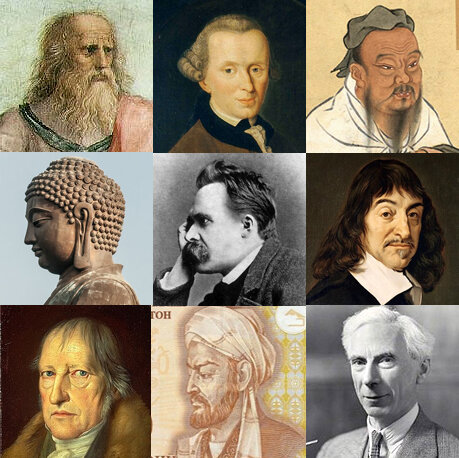
This isn't a new concept. The idea traces back over 2,000 years to the Greek philosopher Aristotle. He defined a first principle as “the first basis from which a thing is known.” It's a foundational proposition that cannot be deduced from any other. It’s the starting point of knowledge, the solid ground you can build an argument on.
For centuries, scientists and thinkers have used this method to challenge the status quo and push boundaries. It’s about asking “why” until you can’t ask it anymore. When you hit a bedrock truth, that's your first principle.
First Principles in Action
A famous modern example is Elon Musk and SpaceX. When he decided to build rockets, the cost was astronomical—up to $65 million per rocket. The industry reasoned by analogy: rockets are expensive, so new rockets will also be expensive.
Musk went back to first principles. He asked, "What is a rocket made of?" The answer: aerospace-grade aluminum alloys, titanium, copper, and carbon fiber. Then he asked, "What is the value of those materials on the commodity market?" It turned out the raw material cost was only about 2% of the typical price of a rocket.
The vast majority of the cost came from building and assembling the parts. By questioning the assumption that rockets had to be built the traditional way, SpaceX found ways to manufacture in-house and reuse components, drastically cutting the cost of spaceflight.
Reasoning from first principles allows you to see where a huge amount of money is being spent on things that aren't fundamentally necessary.
This approach isn't just for building rockets. You can apply it to business strategy, personal goals, or creative projects. Anytime you feel stuck or that the only options are minor tweaks to an existing solution, try going back to first principles. Question your assumptions, identify the fundamental truths, and build a new path forward.
Ready to test your understanding?
First principles thinking involves breaking down a complex problem into its most...
Reasoning by analogy is described as a potential 'trap' because it primarily...
By breaking problems down to their core, you open the door to solutions that others, stuck in analogical thinking, might never see.