Mastering First Principles
Introduction to First Principles Thinking
Breaking Problems Down
Most of us solve problems by looking at how others have solved similar problems. We see a solution that works and we copy it, maybe with a small tweak. This is called reasoning by analogy, and it's an efficient way to get through daily life. It saves us from reinventing the wheel every single time.
But what if the wheel we're copying isn't the best design? What if it's based on flawed assumptions? This is where first principles thinking comes in. It's a way of looking at a problem by breaking it down into its most basic, essential parts. Instead of copying an existing solution, you build a new one from the ground up, based only on fundamental truths.
First principles thinking is a method of reasoning that breaks down complex problems into basic elements and then reassembles them from the ground up.
Think of it like cooking. You could follow a recipe exactly (reasoning by analogy), or you could understand the fundamental principles of how heat, fat, acid, and salt interact. With that core knowledge, you're not just limited to the recipes you know; you can create entirely new dishes.
first principle
noun
A foundational proposition or assumption that stands alone and cannot be deduced from any other proposition or assumption.
Two Ways to Think
Reasoning by analogy is our default mode. It's fast and often effective. If you're opening a restaurant, you might look at other successful restaurants and copy their menu layout, seating arrangement, and marketing strategy. You're assuming that what worked for them will work for you.
First principles thinking forces you to ask more fundamental questions. Instead of copying another restaurant, you'd ask: What is the purpose of a restaurant? To provide food. What is the best way to get food to people who want it? This line of questioning might lead you to a traditional restaurant, a food truck, a delivery-only kitchen, or something no one has thought of yet.
By questioning every assumption, you open the door to true innovation. You're no longer just improving on what already exists; you're creating something new.
| Feature | Reasoning by Analogy | First Principles Thinking |
|---|---|---|
| Starting Point | An existing solution or idea | Fundamental truths or facts |
| Process | Copying, iterating, comparing | Questioning, decomposing, rebuilding |
| Goal | Incremental improvement | Potential for breakthrough innovation |
| Risk | Lower, path is well-known | Higher, outcome is uncertain |
An Ancient Idea
This approach isn't a modern invention. The concept dates back over two thousand years to the ancient Greek philosopher Aristotle. He believed that true knowledge comes from understanding the foundational causes of things, which he called "first principles." For Aristotle, you couldn't truly know something until you understood it from its most basic, undeniable truths.
He defined a first principle as “the first basis from which a thing is known.” This philosophical foundation has been a cornerstone of the scientific method ever since, encouraging thinkers to challenge accepted wisdom and seek out the underlying laws of nature.
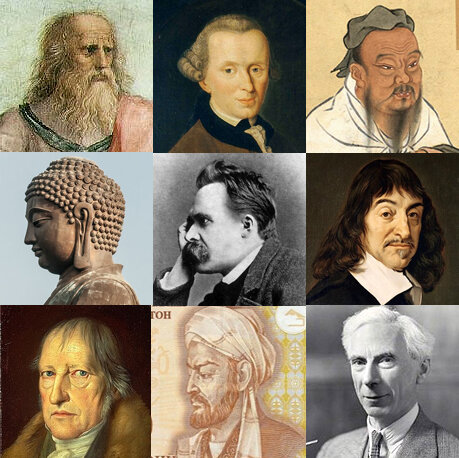
This method has powered countless breakthroughs. In science, it's about deriving laws from observation rather than just accepting old theories. In engineering, it means designing a new engine based on the laws of thermodynamics, not just tweaking last year's model. In business, it's about questioning industry norms to create entirely new markets or business models.
By building from a foundation of truth, first principles thinking provides a powerful toolkit for anyone looking to solve hard problems and create something new.
What is the primary difference between first principles thinking and reasoning by analogy?
An entrepreneur wants to start a new food service. Instead of copying the menu and layout of existing successful restaurants, they start by asking: "What is the core purpose of a meal?" and "What is the most efficient way to provide nutritious food to busy people?" This line of questioning exemplifies which approach?