Mastering Feynman Physics Vol 1
Atoms in Motion
Everything Is Atoms
If all scientific knowledge were lost in a catastrophe, what single sentence would you pass on to the next generation? Many scientists agree on this one: All things are made of atoms—little particles that move around in perpetual motion, attracting each other when they are a little distance apart, but repelling upon being squeezed into one another.
This is the atomic hypothesis. It's a simple idea, but it’s the foundation of modern science. It tells us that the chair you're sitting on, the air you're breathing, and even you yourself are made of countless tiny, jiggling particles. These atoms are so small that a single drop of water contains more of them than there are stars in our galaxy.
Their constant motion and interaction explain an incredible amount about the world. Let's start with the most familiar: the states of matter.
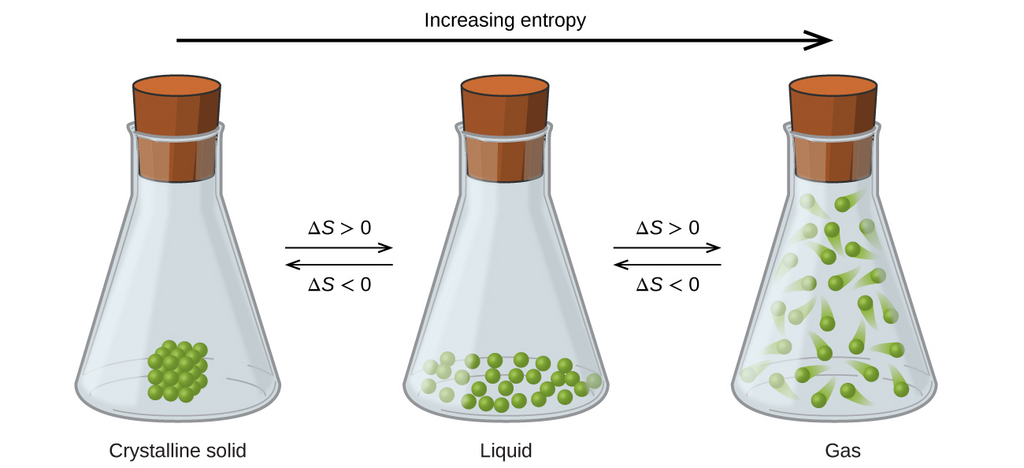
In a solid, atoms are packed tightly together in a fixed structure, like people in a crowded elevator. They can't go anywhere, but they can jiggle in place. This is why a solid object keeps its shape.
In a liquid, the atoms are still close but have enough energy to slide past one another. They tumble around, which is why a liquid can flow and take the shape of its container.
In a gas, the atoms are much farther apart and fly around at high speeds, bouncing off each other and the walls of their container. This is why a gas expands to fill any space it's given.
Temperature Is Jiggling
What we feel as temperature is simply a measure of the average kinetic energy of these atoms. In simpler terms, temperature is atomic motion.
When you heat a pot of water, you’re giving the water molecules more energy, causing them to jiggle and move faster. Get them moving fast enough, and they break free from their neighbors to become a gas (steam). Cool the water down, and you take energy away. The molecules slow down, eventually locking into a fixed pattern to become a solid (ice).
This means there's a limit to how cold something can be. Absolute zero ( K or °C) is the temperature at which atoms have the minimum possible energy. They slow to a near-standstill.
atom
noun
The smallest unit of ordinary matter that forms a chemical element. Every solid, liquid, gas, and plasma is composed of neutral or ionized atoms.
For a long time, the existence of atoms was just a hypothesis. Nobody had ever seen one. But we could see their effects. In 1827, the botanist Robert Brown was looking at pollen grains suspended in water through his microscope. He noticed that the grains were constantly moving in a random, zig-zag pattern.
He first thought the pollen was alive, but then he saw the same motion with dust particles. What was causing this dance?
The mystery wasn't solved until 1905, when Albert Einstein published a paper explaining that the pollen grains were being jostled by countless, invisible water molecules. The tiny water molecules, moving randomly due to their thermal energy, were constantly bumping into the much larger pollen grain. The combined effect of these random pushes caused the grain to dance. This phenomenon, called Brownian motion, was powerful evidence that matter really is made of atoms.
Atoms Rearranging
The atomic hypothesis also explains chemical reactions. A chemical reaction isn't magic; it's simply a rearrangement of atoms. The atoms themselves don't change, but their connections to other atoms do.
Think about burning hydrogen gas in oxygen. This reaction produces water. The hydrogen atoms and oxygen atoms that you started with are all still there in the end. They've just unlinked from their original partners and re-linked in a new way to form water molecules.
This principle of conservation—that atoms are just shuffled around, never created or destroyed in chemical reactions—is a cornerstone of chemistry. Everything from baking a cake to rusting iron is just a story of atoms in motion, forming and breaking bonds.
Now, let's test your understanding of these fundamental ideas.
According to the atomic hypothesis, which statement best describes the nature of atoms?
Why does a liquid, like water, take the shape of its container while a solid, like a block of ice, does not?
This simple model of jiggling, interacting atoms is the starting point for understanding almost everything in the physical world. It explains the properties of materials, the nature of heat, and the processes of life itself.