Mastering Feline Illustration and Anatomy
Feline Skeletal Framework
Beyond Shapes: The Skeleton
You've mastered breaking down the cat into basic shapes. Now, let's look underneath the skin at the framework that dictates every pose: the skeleton. Understanding the bone structure—specifically the skull, spine, rib cage, and pelvis—is the key to drawing cats that look and move realistically. This isn't about memorizing every bone, but about grasping the core structure that creates a cat's unique form and flexibility.
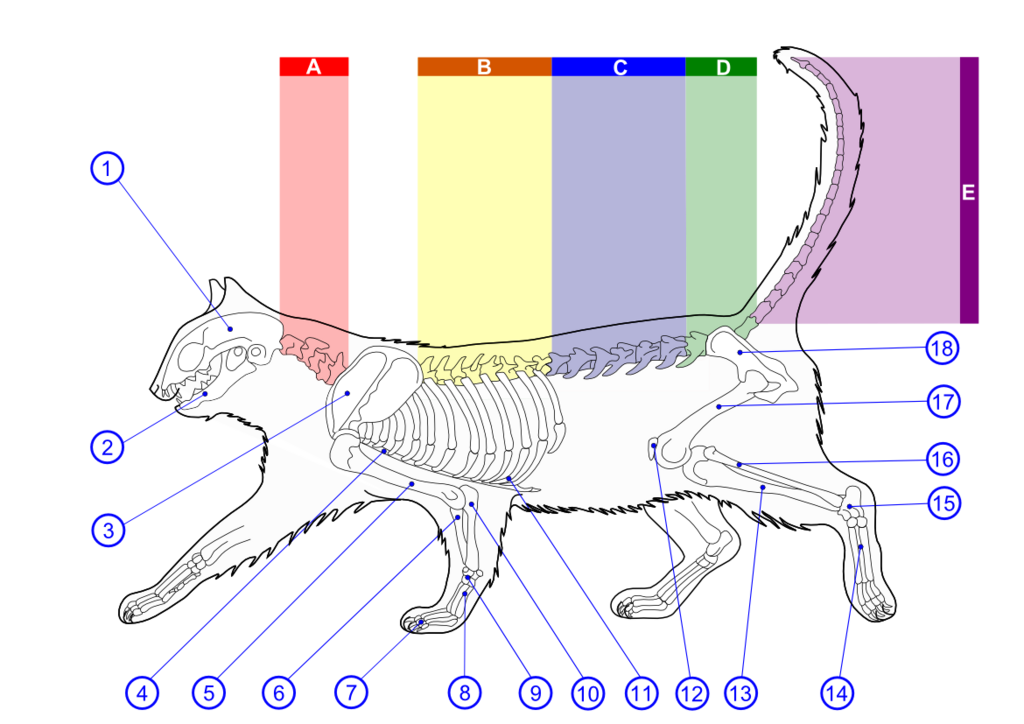
We'll focus on the major bone masses and how they connect. Think of the skull, rib cage, and pelvis as solid, unchanging blocks. The spine, neck, tail, and limbs are the flexible connectors that allow for dynamic movement. Getting the relationship between these rigid and flexible parts right is everything.
The Skull and Spine
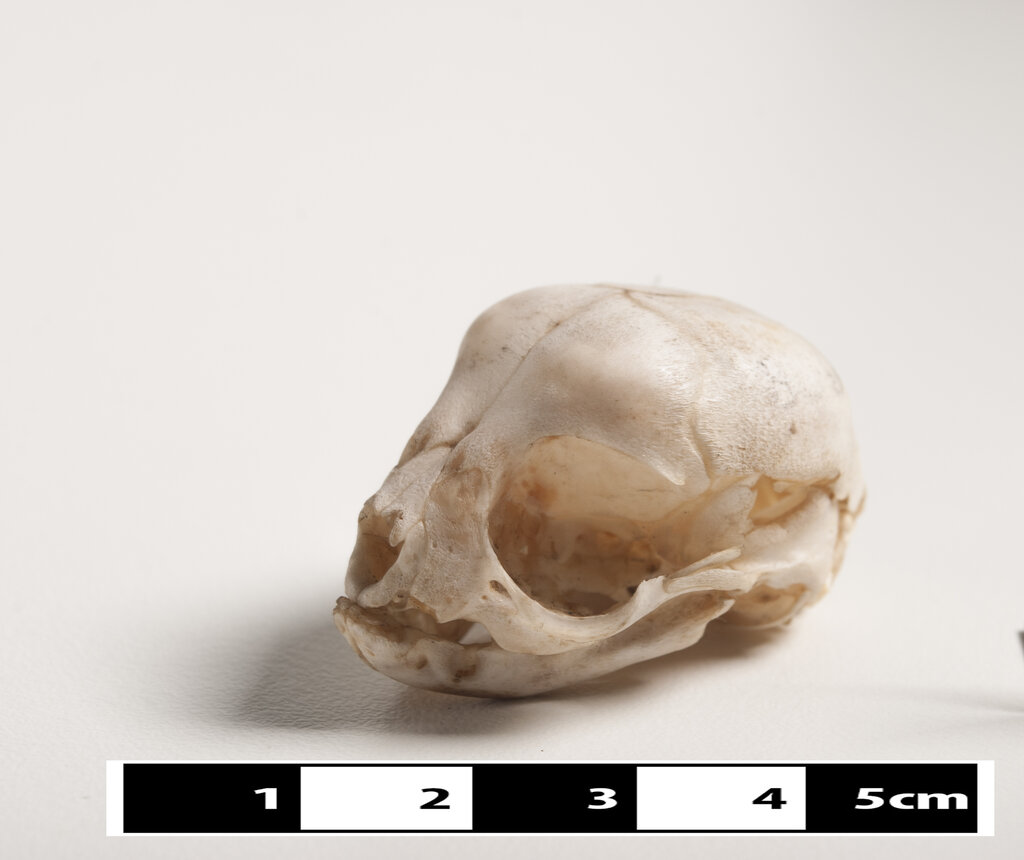
A cat's skull is compact and efficient. It's defined by its large eye sockets and a relatively short snout, giving it that characteristic feline look. When sketching, you can simplify the skull into two main parts: a sphere for the cranium, where the brain sits, and a wedge or box shape for the muzzle and jaw.
The spine connects everything. It flows from the base of the skull, dips slightly between the shoulders, and then arches over the back before tapering into the tail. A cat's spine is remarkably flexible, especially in the lumbar region (the lower back). This is what allows them to arch their back so dramatically, twist their bodies mid-air, and spring into action. In contrast, the rib cage is a rigid, barrel-shaped structure that protects the organs. It moves as a single unit.
Think of the rib cage and pelvis as solid anchors connected by a flexible, curving chain—the spine.
Floating Shoulders and a Solid Pelvis
Here’s one of the most important features for capturing feline movement: the scapula, or shoulder blade. Unlike in humans, a cat's scapula is not attached to the rest of the skeleton with a collarbone (clavicle). Instead, it 'floats,' held in place only by muscle. This gives the front limbs an incredible range of motion and contributes to the cat's fluid, slinky walk. It also allows them to narrow their shoulders to squeeze through tiny openings.
In contrast, the pelvic girdle is a solid, fused structure. It’s firmly attached to the base of the spine and serves as a powerful anchor for the hind legs, which generate most of the cat's propulsive force for running and jumping. The key joint articulation points for drawing are the shoulder joint (where the leg meets the scapula) and the hip joint (a ball-and-socket where the femur meets the pelvis). These are the main pivot points for the limbs.
Simplifying for Gesture
For gesture drawing, you can simplify this entire structure into a stick figure. The goal isn't anatomical perfection, but capturing the flow and energy of a pose. Start with a line of action representing the curve of the spine. Then, block in the three rigid masses: a circle for the skull, an oval or box for the rib cage, and a smaller, slightly angled box for the pelvis. Finally, connect them with lines for the limbs and tail, paying attention to the major joints at the shoulders, elbows, hips, and knees.
Practicing these simplified skeletons will build your intuitive understanding of how a cat's body works. You'll begin to see the underlying structure in every pose, allowing you to create drawings that are not only accurate in proportion but also full of life and movement.
When simplifying a cat's skeleton for drawing, which three parts are considered the major rigid masses?
What is a unique feature of a cat's scapula (shoulder blade) that allows it to squeeze through tight spaces?
With this skeletal framework in mind, you're ready to start adding muscle and form to your drawings.