Mastering Exploratory Data Analysis
Introduction to EDA
Getting to Know Your Data
Imagine someone hands you a massive, disorganized box of LEGO bricks. Before you can build a castle or a spaceship, you first need to see what you're working with. You'd probably dump the bricks on the floor, sort them by color, find all the unique pieces, and get a general sense of what's possible. That initial, curious investigation is exactly what Exploratory Data Analysis (EDA) is for data.
EDA is the process of using simple tools and visuals to understand a dataset's main characteristics, uncover patterns, spot strange outliers, and form initial ideas or questions.
It’s less about finding definitive answers and more about asking better questions. Before building complex models or drawing firm conclusions, you need to become familiar with your data's structure, content, and quirks. This step is foundational because the insights you gather here will guide every subsequent decision you make in your analysis.
A Shift in Perspective
The idea of formally exploring data isn't new, but it was popularized by the American mathematician John Tukey in the 1970s. He argued that traditional statistics was too focused on confirming pre-existing hypotheses. This classical approach, often called Confirmatory Data Analysis (CDA), is like being a detective who already has a suspect and is just looking for evidence to make an arrest.
EDA, on the other hand, is like a detective arriving at a fresh crime scene. There are no suspects yet. The goal is to survey the area, gather clues, and understand the situation before forming any theories. It’s an open-minded investigation.
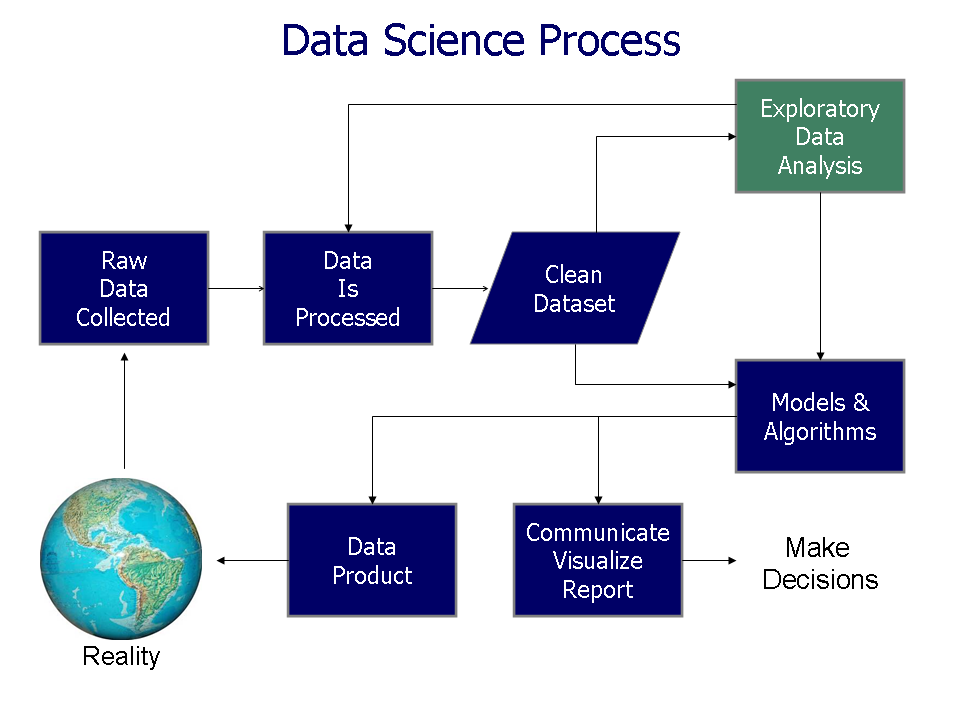
The distinction is crucial. With a classical approach, you might ask, "Did our marketing campaign increase sales by 10%?" You then collect data to answer that specific yes-or-no question. With an exploratory approach, you'd start with the sales data and ask, "What happened to sales last quarter? Are there any weird spikes or dips? Do sales in one region look different from another?"
| Feature | Exploratory Data Analysis (EDA) | Classical Data Analysis (CDA) |
|---|---|---|
| Goal | Generate questions and hypotheses | Test and confirm hypotheses |
| Approach | Open-ended, flexible | Structured, rigid |
| Starting Point | The data itself | A specific question |
| Primary Tools | Visualizations, summary statistics | Formal statistical models, hypothesis tests |
Why Bother Exploring?
Skipping EDA is like setting out on a road trip without looking at a map. You might eventually get somewhere, but you'll probably get lost, waste time, and miss all the interesting sights along the way. The primary objectives of EDA are to build a solid foundation for the rest of your analysis.
The main goals of EDA are to:
- Maximize insight into a dataset.
- Uncover underlying structure and relationships.
- Detect anomalies and mistakes in the data.
- Check assumptions required for more formal modeling.
By taking the time to explore, you can catch a data entry error (like a person's height listed as 20 feet) or discover an unexpected relationship (like sales of ice cream correlating with shark attacks). These initial findings are invaluable. They ensure your data is clean and reliable, and they point you toward the most interesting paths for deeper analysis.
Let's test your understanding of these foundational ideas.
What is the primary goal of Exploratory Data Analysis (EDA)?
According to the text, skipping EDA is like setting out on a road trip without a map.
Ultimately, EDA is a philosophy. It encourages curiosity and skepticism, reminding us that we should let the data speak for itself before we try to force it into a narrative.