Mastering Etsy Print on Demand Operations
Provider Networks and APIs
Choosing Your Production Engine
When you sell a print-on-demand product, you're not just selling a design on a t-shirt. You're selling a service powered by a complex production and logistics network. The provider you choose acts as your virtual factory, and their operational model directly impacts your costs, quality, and customer experience.
The three dominant models are the marketplace, the integrated, and the localized network. Each has distinct advantages and trade-offs.
Think of it like choosing a kitchen for your restaurant. Do you rent space in a massive shared commercial kitchen with hundreds of other chefs (marketplace), build your own custom kitchen from scratch (integrated), or use a network of small, local kitchens that cook your recipes on demand (localized)?
Printify represents the marketplace model. It doesn't own any printers or warehouses. Instead, it's a vast network connecting your store to over 110 independent print labs worldwide. When an order comes in, you can choose which lab produces it, or let Printify's routing algorithms pick the best option based on location, price, or availability. This model offers an enormous product catalog and competitive pricing, as labs compete for your business. The downside is potential inconsistency. A t-shirt printed in Texas might look slightly different from the same one printed in Latvia.
Printful, on the other hand, uses a .. It owns and operates its own production facilities across North America and Europe. This gives them end-to-end control over the entire process, from printing and embroidery to packing and shipping. The result is highly consistent quality and more robust branding options, like custom neck labels and personalized packing slips. This control comes at a cost, however. Printful's base prices are often higher than Printify's, which can squeeze your profit margins.
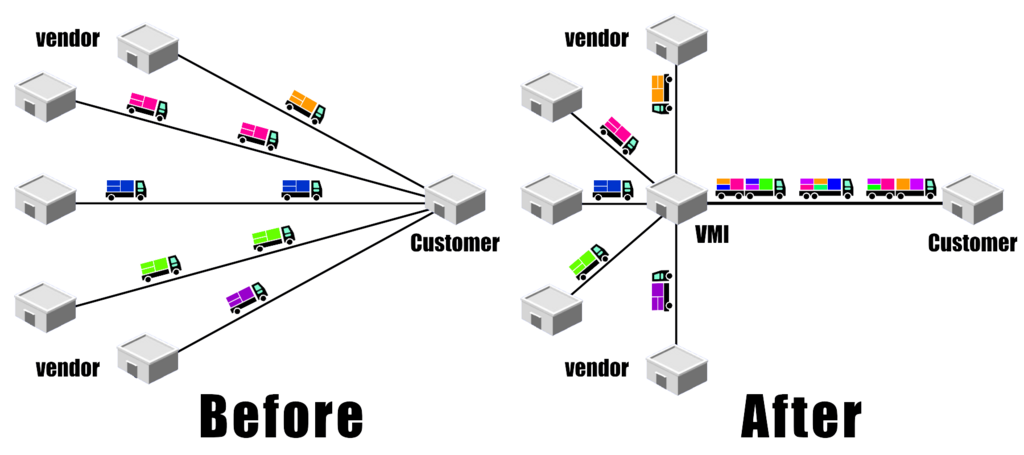
Gelato offers a hybrid: a localized, software-driven network. It partners with printers in over 32 countries, but unlike Printify's open marketplace, Gelato's network is more curated. Its key selling point is local production. An order from a customer in Japan is routed to a partner in Japan, while an order from Brazil is printed in Brazil. This dramatically cuts shipping times, costs, and customs headaches, while also reducing the carbon footprint of each order. The trade-off is a more limited product catalog compared to Printify.
The API: Your Digital Handshake
Regardless of the fulfillment model, the magic that connects your online store to your chosen provider is the API, or Application Programming Interface. It’s the digital messenger that automates the entire order process. When a customer clicks 'buy' on your Shopify store, the API instantly and securely transmits the order details—what product, what design, the shipping address—to your POD partner for production. No manual entry is needed.
A good API integration is non-negotiable. When evaluating providers, look for clear documentation, real-time order status updates (tracking production from printing to shipping), and reliable error handling. A weak API can lead to lost orders, incorrect shipments, and a customer service nightmare.
Costs, Branding, and Specialization
Your choice of partner ultimately comes down to balancing three factors: cost, branding, and product specialization.
Cost: Marketplaces like Printify generally offer the lowest base costs because their partner labs compete on price. This allows for higher profit margins, but you must be vigilant about quality by ordering samples from different suppliers.
Branding: Vertically integrated providers like Printful excel at creating a branded customer experience. They offer services like adding custom neck labels to apparel, inserting promotional flyers or stickers into packages, and using custom-branded packaging. These touches make the product feel like it came directly from your brand, not a third-party factory, but they add to the overall cost.
Specialization: No single provider is best for everything. As your store grows, you might use multiple providers for different product categories. For instance, Printful is renowned for its high-quality embroidery on hats and apparel. For niche tech accessories like phone cases or AirPods cases, a specialist like Podbase might offer better quality and a wider selection. The key is to leverage each platform's strengths.
| Provider | Best For | Key Trade-Off |
|---|---|---|
| Printify | Widest product selection & maximizing profit margins. | Quality can vary between print labs. |
| Printful | Consistent high quality & strong branding control. | Higher base costs reduce profit margins. |
| Gelato | Fast, low-cost international shipping. | Smaller product catalog than competitors. |
Choosing the right technical foundation is a strategic decision. By understanding the differences in fulfillment models, API robustness, and provider specializations, you can build a print-on-demand business that is scalable, reliable, and profitable.
A business owner wants to offer the widest possible variety of products and achieve the lowest possible base cost. They are willing to accept some potential for inconsistency in quality between different production facilities. Which print-on-demand model best suits their needs?
Which company is presented as the primary example of a vertically integrated print-on-demand provider, known for owning its production facilities to ensure quality control and offer advanced branding options?