Mastering ERPNext Implementation
ERPNext Overview
Your Business in One Place
Most businesses start with a collection of separate tools. A spreadsheet for accounting, a different app for customer contacts, and maybe another for tracking inventory. It works for a while, but eventually, things get messy. Data doesn't match up, time is wasted switching between apps, and getting a clear picture of the business is nearly impossible.
Enter the Enterprise Resource Planning (ERP) system. An ERP brings all these different functions into a single, unified platform. ERPNext is a popular, open-source ERP system. "Open-source" means the software is free to use, and its underlying code can be viewed and modified by anyone. This makes it a powerful and flexible option for businesses of all sizes, without the hefty licensing fees of many other ERPs.
ERPNext eliminates the need for multiple software tools and provides a single, integrated system for business management.
The Core Modules
ERPNext is built with a modular design. Think of it like a set of building blocks. You can start with just the essential modules your business needs and add more as you grow. This keeps the system from feeling bloated or overly complicated. Each module is designed to handle a specific part of your business, but they all talk to each other seamlessly.
| Module | What It Does |
|---|---|
| Accounting | Manages your finances, from ledgers and taxes to billing and payroll. |
| Sales | Tracks leads, creates quotations, and manages sales orders. |
| Purchasing | Handles supplier information, purchase requests, and orders. |
| Inventory | Keeps track of stock levels, manages warehouses, and processes shipments. |
| Human Resources | Manages employee records, leave, attendance, and recruitment. |
For example, when your sales team closes a deal in the Sales module, it can automatically trigger an invoice in the Accounting module and update stock levels in the Inventory module. No more manual data entry or jumping between systems.
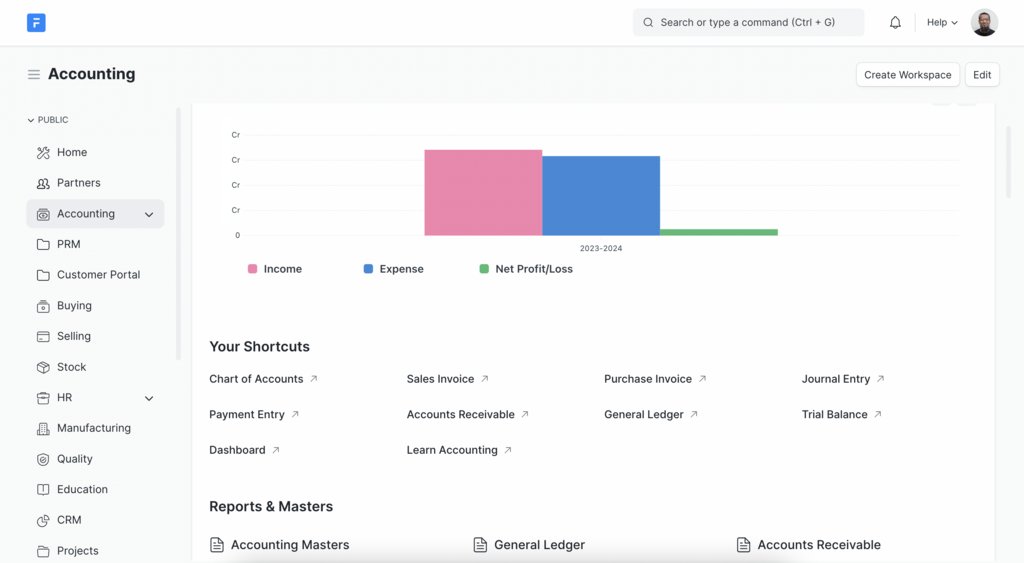
The Benefits of a Unified System
Using an integrated system like ERPNext brings several key advantages. The most obvious is improved productivity. When all your data is in one place, you spend less time searching for information and more time getting work done.
Operations become more streamlined. Because data flows automatically between modules, processes that used to take multiple steps and involve several people can happen in an instant. This reduces the chance of human error and ensures everyone is working with the most up-to-date information.
Finally, you get better data transparency. With a unified dashboard, you can see a complete and accurate picture of your business's health in real-time. This allows you to make smarter, faster decisions based on solid data, not guesswork.
One source of truth for your entire business.
The Frappe Framework
What makes ERPNext so flexible is the platform it's built on: the Frappe Framework. You can think of Frappe as the foundation and toolset used to build and customize ERPNext. It's a "low-code" framework, which means you can make significant changes to the system, like creating new forms or reports, without needing to be an expert programmer.
This framework-based approach is ERPNext's secret sauce. It allows businesses to tailor the system to their unique workflows. Instead of changing your business processes to fit the software, you can adapt the software to fit your business.
What is the primary problem that Enterprise Resource Planning (ERP) systems are designed to solve for businesses?
The text describes ERPNext as having a "modular design." What does this mean?
ERPNext offers a powerful way to bring all your business operations under one roof, providing the tools to grow efficiently and make data-driven decisions.