Mastering ERP Systems and Implementation
ERP System Architecture
The Three-Tier Architecture
At the heart of most modern Enterprise Resource Planning (ERP) systems is a three-tier client-server architecture. This model elegantly separates the system's major functions into three distinct, logical layers. Think of it like a restaurant: you have the dining room where customers interact, the kitchen where food is prepared, and the pantry where ingredients are stored. Each part has a specific job, but they all work together.
-
The Presentation Layer: This is what you see and interact with—the user interface (UI) on your computer or mobile device. It's the front-end that displays data and collects your inputs, like the menus and forms in the restaurant's dining room.
-
The Application Layer: This is the engine of the ERP. It contains the business logic that processes the data. When you submit a sales order, this layer checks inventory levels, calculates pricing, and updates customer records. It’s the kitchen, taking raw ingredients (data) and turning them into a finished dish (a processed transaction).
-
The Database Layer: This is where the company's data is permanently stored and managed. It's the system's memory—a highly organized pantry. This layer is responsible for ensuring data is stored securely and can be retrieved or updated quickly by the application layer.
A Single Source of Truth
The biggest advantage of this architecture is how it enables a Single Source of Truth (SSOT). Before integrated ERPs, each department often had its own separate system. The sales team had their database, accounting had theirs, and the warehouse had theirs. This created data silos, where information was often duplicated, out-of-date, or contradictory.
Imagine a salesperson closes a deal for 100 widgets, but the warehouse system shows only 50 in stock because it hasn't been updated with a recent delivery. The sale can't be fulfilled, leading to an unhappy customer and lost revenue. This is a classic data silo problem.
An ERP system solves this by connecting all departments to one central database. When the warehouse receives a new shipment, the inventory data is updated in real time. When a salesperson checks stock levels, they are viewing the same, up-to-the-minute information as the warehouse manager. This ensures data consistency across the entire organization, from the factory floor to the executive dashboard.
Architectural Flavors
Not all ERPs are built the same way. Historically, many were monolithic. This means the entire system was a single, tightly-coupled unit. All the functions—finance, HR, supply chain—were part of one massive codebase. While stable, monolithic systems are inflexible. Customizing one part could break another, and updating the system was a major undertaking.
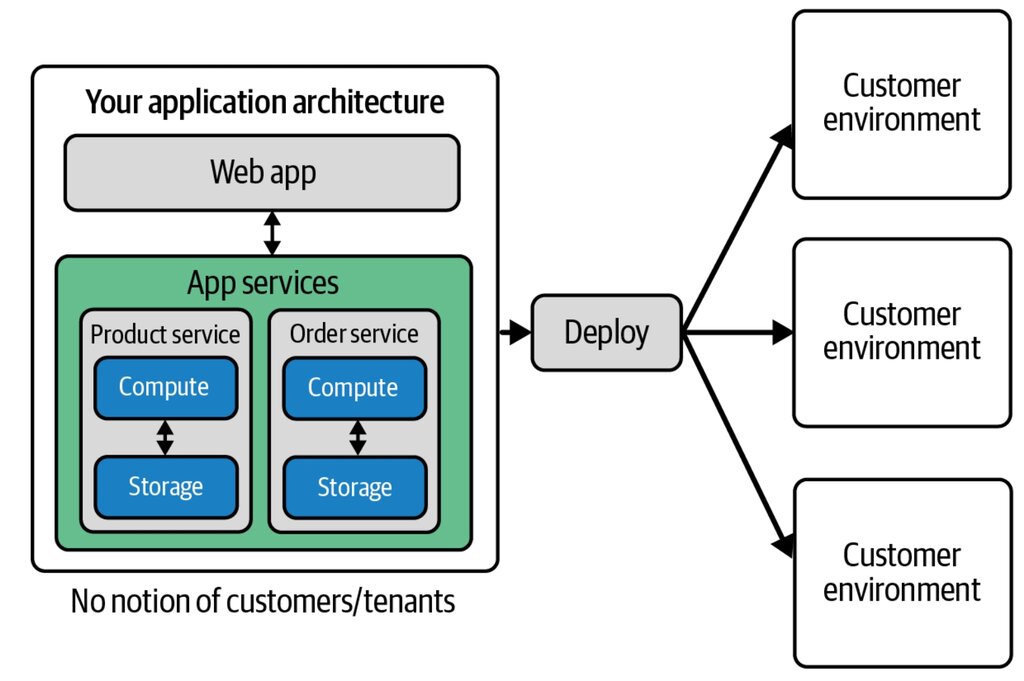
Modern systems often use a Service-Oriented Architecture (SOA). In this model, the ERP is built from a collection of smaller, independent services that communicate with each other. For example, there might be a 'customer management' service, an 'inventory' service, and a 'billing' service. Each can be updated or replaced without affecting the others.
This communication between services happens through (APIs). An API is a set of rules and protocols that allows different software applications to talk to each other. It's like a universal translator, enabling the billing service to request customer information from the customer service, or allowing a third-party e-commerce site to connect directly to your ERP's inventory service.
On-Premise vs. The Cloud
Finally, a key architectural decision is where the ERP system lives. This leads to two main models: single-tenant and multi-tenant.
| Model | Analogy | Description | Best For |
|---|---|---|---|
| Single-Tenant | Owning a house | A single company gets its own dedicated instance of the ERP software and supporting infrastructure. | Companies needing high control, security, and deep customization. |
| Multi-Tenant | Renting an apartment | Multiple companies share the same instance of the software and infrastructure, but their data is kept separate and secure. | Companies prioritizing lower cost, scalability, and less maintenance. |
Single-tenant models are common for on-premise deployments, where a company runs the ERP on its own servers. It offers maximum control but also requires a significant investment in hardware and IT staff.
A architecture is the foundation of most cloud-based Software-as-a-Service (SaaS) ERPs. The provider manages the infrastructure, and customers pay a subscription fee. This model allows for economies of scale, making powerful ERP software accessible to smaller businesses while ensuring data for each 'tenant' is completely isolated and secure.
Understanding these architectural layers and models is key to seeing how an ERP can function as the central nervous system of a modern business, connecting disparate parts into a cohesive whole.
Which layer of the three-tier ERP architecture is responsible for processing data and executing business logic, such as calculating prices or checking inventory?
In the restaurant analogy for ERP architecture, what does the pantry, where ingredients are stored, represent?