Mastering ERP Systems
ERP Fundamentals
What Is an ERP System?
Think about a large company. It has a sales team, an accounting department, a warehouse for inventory, and a human resources team. In the past, each of these departments likely used its own software, tailored to its specific tasks. The sales team used a customer relationship management (CRM) tool, accounting had its own finance software, and the warehouse used a system to track inventory.
The problem? None of these systems talked to each other. Information was stuck in separate silos. When the sales team closed a big deal, they had to manually tell the warehouse to ship the product and the accounting team to send an invoice. This process was slow, inefficient, and prone to human error.
Enterprise Resource Planning (ERP)
noun
A type of software that organizations use to manage day-to-day business activities such as accounting, procurement, project management, risk management and compliance, and supply chain operations.
Enterprise Resource Planning (ERP) systems solve this problem by integrating all of these separate functions into one single, comprehensive system. Instead of having multiple disconnected databases, an ERP system uses a central database. This means everyone in the company, from the CEO to a warehouse clerk, is looking at the same, up-to-date information.
Enterprise Resource Planning ERP systems integrate information across an entire organization that automate core activities such as finance accounting, human resources, manufacturing, production and supply chain management etc. to facilitate an integrated centralized system and rapid decision making resulting in cost reduction, greater planning, and increased control.
When a sales rep enters an order, the system automatically checks inventory levels, alerts the warehouse to ship the product, updates the financial records, and sends an invoice to the customer. This seamless flow of information is the core purpose of an ERP.
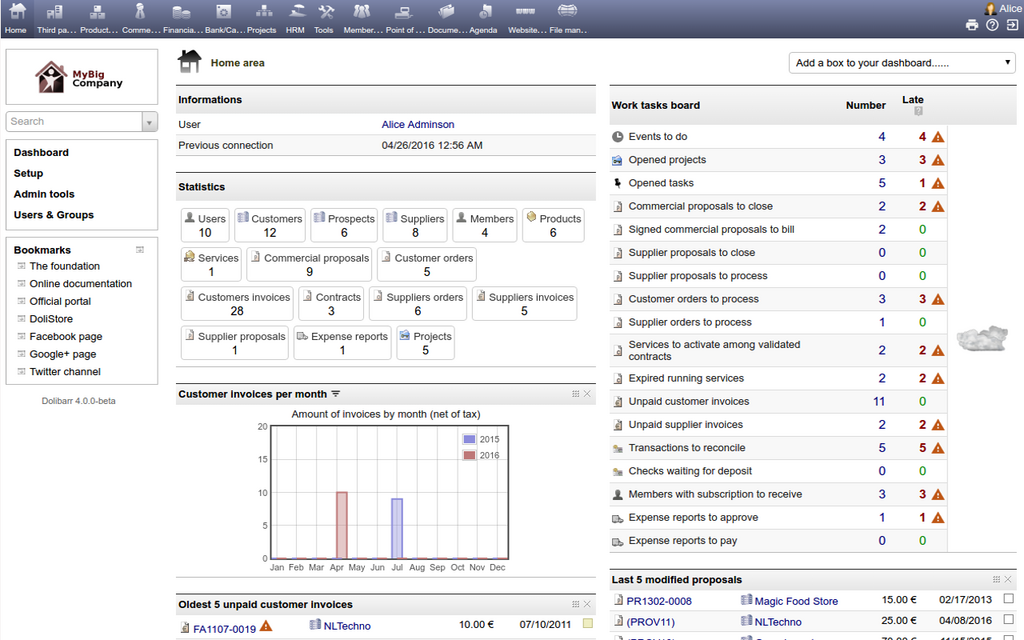
The Building Blocks of ERP
ERP systems are typically modular. This means a company can choose which components, or modules, it needs. While some businesses might need a full suite of tools, others might start with just a few core modules and add more as they grow. Think of it like building with LEGOs; you pick the blocks that fit your specific needs.
| Module | Function |
|---|---|
| Finance | Manages the general ledger, accounts payable/receivable, and financial reporting. |
| Human Resources (HR) | Handles payroll, employee records, recruiting, and benefits administration. |
| Supply Chain Management (SCM) | Oversees the entire process from purchasing raw materials to delivering final products. |
| Manufacturing | Manages production planning, scheduling, and quality control on the shop floor. |
| Customer Relationship Management (CRM) | Tracks customer interactions, manages sales leads, and supports marketing efforts. |
Each module is designed for a specific business function, but they all share information from the central database. This integration is what makes an ERP system so powerful.
From Factory Floors to the Cloud
The idea behind ERP isn't new. Its roots go back to the 1960s with the rise of manufacturing. Early systems, called Material Requirements Planning (MRP), were simple tools to help manufacturers calculate the materials they needed and when they needed them.
By the 1980s, these evolved into Manufacturing Resource Planning (MRP II), which expanded to include more factory processes like scheduling and capacity planning. Finally, in the 1990s, the concept broadened beyond the factory floor. Technology company Gartner coined the term "Enterprise Resource Planning" to describe a system that integrated all of a company's functions, including finance and HR. Today, many ERP systems are hosted in the cloud, making them more accessible and scalable for businesses of all sizes.
Benefits and Challenges
When implemented successfully, an ERP system can transform a business. The benefits are significant:
- Improved Efficiency: Automating and streamlining processes saves time and reduces manual work.
- Better Decision-Making: With access to real-time, company-wide data, leaders can make more informed decisions, faster.
- Enhanced Data Accuracy: A single source of truth eliminates redundant data entry and inconsistencies between departments.
- Greater Visibility: It provides a comprehensive view of business operations, from inventory levels to financial health.
However, implementing an ERP system is a major undertaking and comes with challenges. The software itself can be expensive, and the implementation process can be long and complex, requiring careful planning and significant employee training. Migrating data from old systems can also be a difficult hurdle.
One of the major reasons for ERP Implementation failure is poor communication between teams.
The market for ERP software is dominated by a few major players. Companies like SAP, Oracle, and Microsoft offer robust solutions for large corporations. For small and medium-sized businesses, vendors like NetSuite (owned by Oracle), Acumatica, and the open-source platform ERPNext provide more flexible and affordable options.
Now, let's test your understanding of these core concepts.
What is the primary problem that Enterprise Resource Planning (ERP) systems are designed to solve?
The concept of ERP evolved from earlier systems, known as MRP and MRP II, which were focused primarily on which business area?
Understanding these fundamentals provides a solid foundation for exploring how ERP systems function as the operational backbone of modern businesses.