Mastering EQ Reading People
Understanding Emotions
What Are Emotions?
Emotions are more than just feelings. They are complex, full-body responses to the world around us. Think of a time you felt a surge of joy or a pang of fear. It wasn't just in your head, was it? Your heart might have raced, your muscles tensed, or a smile might have spread across your face without you even thinking about it. These reactions are a blend of subjective experience (how you feel), physiological response (what your body does), and expressive behavior (how you show it).
Emotion
noun
A complex psychological state involving a subjective experience, a physiological response, and a behavioral or expressive response.
Psychologists have tried to map out the vast landscape of human emotion. One common approach is to identify a set of basic, universal emotions that are recognized across cultures. These often include happiness, sadness, fear, anger, surprise, and disgust. More complex emotions are then seen as combinations or variations of these core ones.
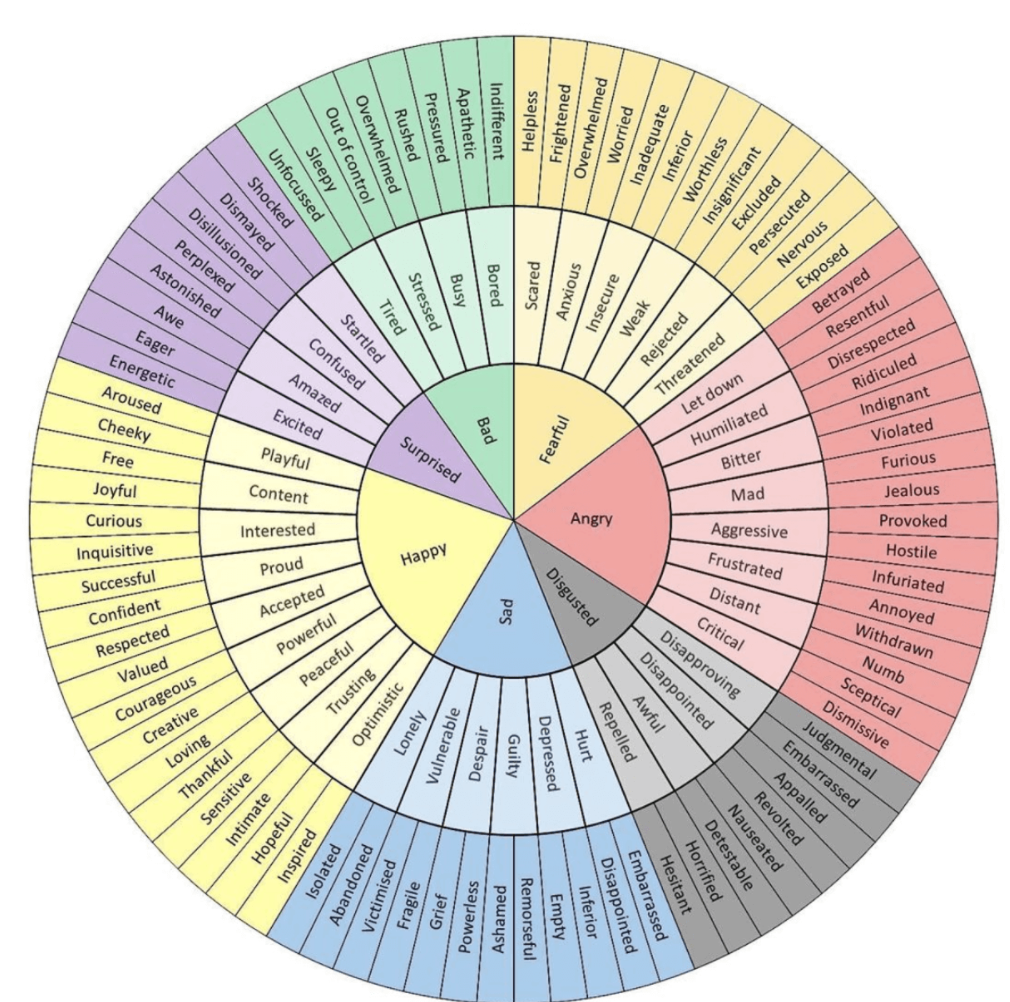
It's also helpful to distinguish emotions from feelings and moods. While we often use the words interchangeably, they have distinct meanings in psychology. Emotions are intense but brief reactions to specific events. Feelings are our subjective interpretation of those emotions. Moods are less intense and can last for hours or even days, without a clear trigger.
Where Do Emotions Come From?
The question of how emotions arise has fascinated thinkers for centuries. Is it the body that tells the mind what to feel, or the other way around? Several key psychological theories offer different perspectives on this chicken-and-egg problem.
Imagine you're walking in the woods and see a bear. Your heart pounds and your palms sweat. Do you feel fear because your body is reacting, or does your body react because you feel fear?
The James-Lange theory suggests the first option: our physiological responses come first. According to this view, you don't run from the bear because you're afraid; you feel afraid because you're running. Your brain interprets your body's physical changes—the racing heart, the quickened breath—and labels that experience as "fear."
The Cannon-Bard theory disagreed, arguing that the emotional experience and the physical reaction happen at the same time. When you see the bear, your brain sends signals simultaneously to your cortex (creating the feeling of fear) and your nervous system (triggering the racing heart). One doesn't cause the other; they are parallel responses.
Later, the Schachter-Singer two-factor theory added a crucial piece to the puzzle: cognition. This theory proposes that we first experience a general physiological arousal, and then we look for cues in our environment to explain it. Our brain then labels the arousal based on the context. If your heart is pounding while you see a bear, you label the feeling as fear. If it's pounding on a thrilling roller coaster, you label it excitement. The physical sensation is similar, but the cognitive label changes everything.
| Theory | Sequence of Events |
|---|---|
| James-Lange | Stimulus → Physiological Arousal → Emotion |
| Cannon-Bard | Stimulus → Physiological Arousal & Emotion (Simultaneously) |
| Schachter-Singer | Stimulus → Physiological Arousal → Cognitive Label → Emotion |
Why Do We Have Emotions?
Emotions aren't just random feelings; they are highly evolved tools that serve critical functions in our lives. They help us navigate the world safely and effectively.
One of the most important functions is survival. Fear motivates us to avoid danger. Disgust helps us steer clear of things that could make us sick, like spoiled food. Without these automatic responses, our ancestors would have had a much harder time staying alive.
Emotions also motivate our behavior. Joy and excitement can push us to explore new things and pursue goals. Anger can fuel us to stand up against injustice. They provide the energy we need to take action, make changes, and strive for what we want.
Finally, emotions are fundamental to social communication. Our facial expressions, tone of voice, and body language broadcast our internal states to others. A smile signals friendship and approachability, while a frown warns others to keep their distance. This nonverbal communication is essential for building relationships, navigating social hierarchies, and fostering cooperation.
Even our "gut feelings" are a form of emotional intelligence at work, using past experiences to guide our decisions in the present.
Now that you have a better understanding of what emotions are, where they come from, and why we have them, let's test your knowledge.