Mastering EOS Quarterly Planning
Three Year Mapping
From Picture to Plan
Your Vision/Traction Organizer (V/TO) sets the 10-Year Target, the ultimate destination. But a ten-year goal can feel distant. The 3-Year Picture bridges that gap. It's not just a smaller version of the long-term vision; it's a specific, tangible state your company must achieve to make that 10-year target a believable outcome.
Think of it as the first major basecamp on the way to the summit. To get here, you need more than a dream. You need a map. This involves translating your three-year vision into concrete numbers and descriptions that will guide every major decision for the next 12 months.
Validate the Numbers
The first step is to get brutally honest about the financials. Your 3-Year Picture must have a future date, a revenue target, and a profit target. These aren't just wishful numbers pulled from thin air. They should represent a logical milestone on the path to your 10-Year Target.
If your 10-year goal is $100 million in revenue, what does your revenue need to be in three years to make that feasible? $25 million? $30 million? The leadership team must agree on a number that is both ambitious and achievable. This isn't a forecast; it's a stake in the ground. Once set, these numbers become a non-negotiable filter for your one-year plan.
A 💲30 million revenue target in three years means your plan for the upcoming year must build the capacity to support that trajectory. Anything less is just hoping.
Define What It Looks Like
Beyond revenue and profit, you need to paint a clear picture of the business with a handful of bullet points. These are your measurables—quantifiable and observable attributes of the company in three years. This is where the vision gets texture.
These points answer the question: "What must be true about our company for us to hit those financial targets?" They might describe the number of employees, the size of your client base, your market position, or key operational capabilities. For example, a measurable might be "150 'A-Player' employees," "Operating in 5 new international markets," or "#1 in customer satisfaction in our industry."
Each point should be specific enough that you can say with certainty whether you've achieved it. Vague statements like "improved company culture" aren't helpful. A better version would be "Achieved an employee Net Promoter Score (eNPS) of 50 or higher."
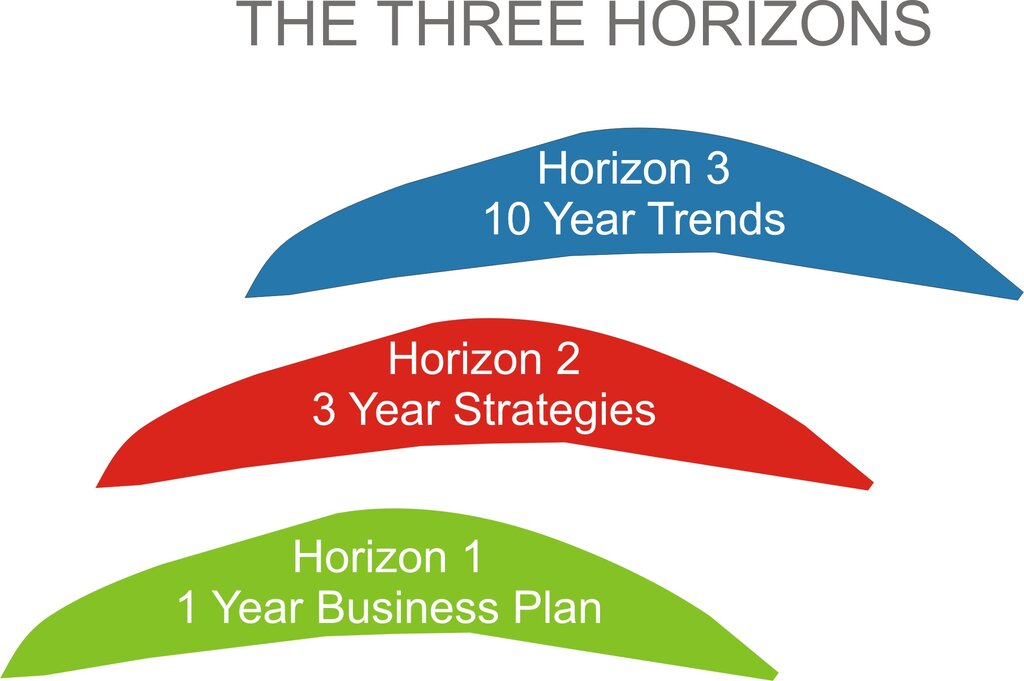
Once established, the 3-Year Picture becomes a powerful for the entire organization. It’s the fixed point you can always reference when debating priorities for the coming year. When a new opportunity, project, or hiring decision arises, the leadership team's first question should be: "Does this move us closer to our 3-Year Picture?"
If the answer is no, you must have the discipline to discard it. This alignment ensures that you're not just busy, but busy doing the right things. It prevents the company from chasing short-term wins that deviate from the long-term path.
Assess Departmental Resources
With a clear and agreed-upon 3-Year Picture, the final step is to cascade this vision down to the departmental level. Each leader must analyze the picture and determine what their department needs to look like to support it. This is where high-level strategy translates into tactical
The head of sales asks, "To reach $30 million in revenue, how many salespeople will I need? What should their quotas be? What technology or training do they require?" The head of operations asks, "To serve 1,000 clients with an eNPS of 50, what processes must we streamline? How many support staff are needed?"
This exercise forces every department to think beyond their current capacity and budget for the future. It ensures that when the one-year plan is built, it's not based on the resources you have now, but on the resources you'll need to make the 3-Year Picture a reality.
What is the primary purpose of the 3-Year Picture within the Vision/Traction Organizer (V/TO) framework?
When evaluating a new opportunity, what is the key question leadership should ask to ensure it aligns with the 3-Year Picture?