Mastering Entity-Relationship Diagrams
Introduction to ER Diagrams
The Blueprint for Your Data
Before building a house, you need a blueprint. It shows what the rooms are, where they go, and how they connect. An Entity-Relationship (ER) diagram is the blueprint for a database. It's a visual way to map out the structure of your data, showing what you need to store and how the different pieces of information relate to one another.
We often make an entity-relationship (ER) diagram, ERD, or entity-relationship model, in the early stages of designing a database.
Creating this map before you start building your database helps you think through the requirements clearly. It ensures the final structure is logical, efficient, and avoids common pitfalls. Let's break down the three core components of any ER diagram.
Entities: The Nouns of Your Data
An entity is any real-world object or concept that you want to store information about. Think of them as the main nouns in your system. If you're designing a database for an online store, your entities might be Customer, Product, and Order.
Each entity represents a collection of similar things. The Customer entity represents all of your customers, not just a single person. In a database, an entity usually becomes a table. The Customer entity will become the Customers table.
Entity
noun
A distinct object, concept, or event in the real world about which data is stored.
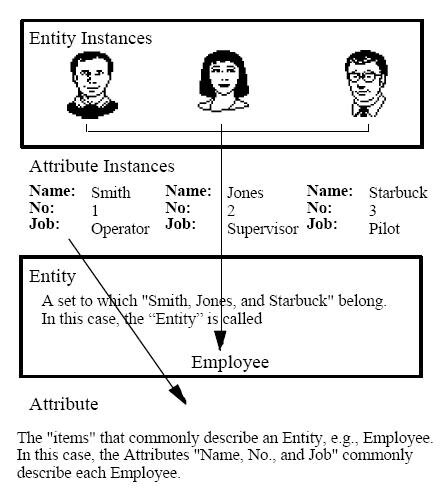
An important distinction is between an entity (the general category) and an entity instance (a specific example). 'Employee' is an entity, while the employee named Jane Smith is an entity instance.
Attributes: The Details
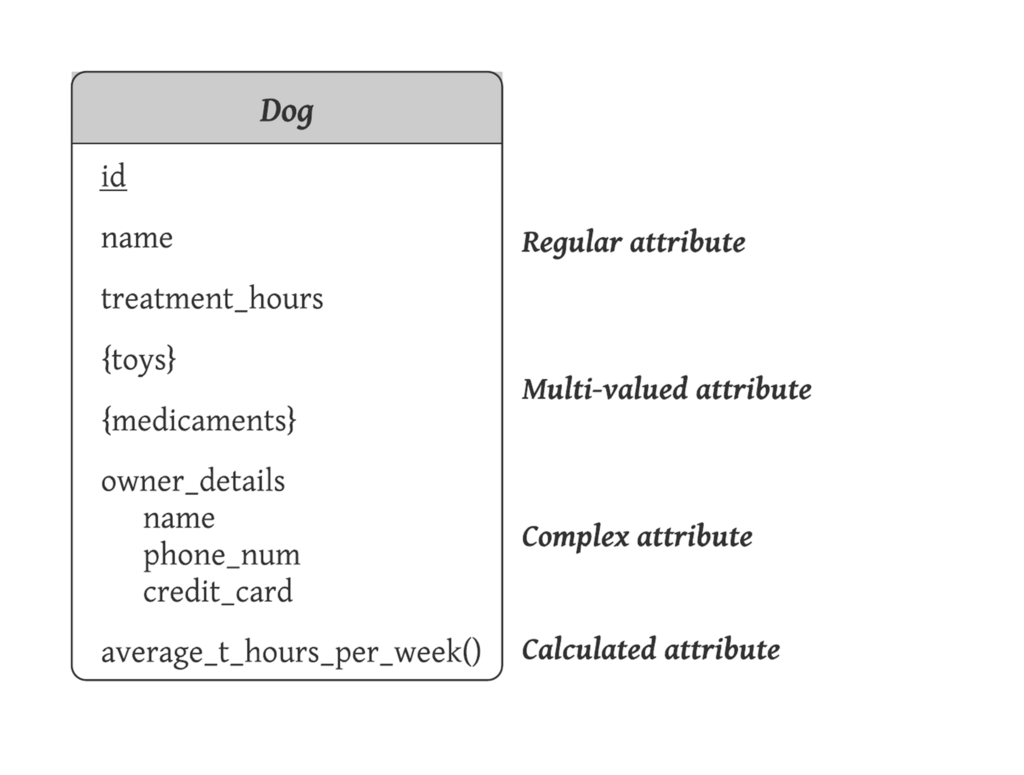
Entities aren't just names; they have properties that describe them. These properties are called attributes. If Customer is our entity, its attributes might include FirstName, LastName, Email, and ShippingAddress. In a database table, attributes become the columns.
Every entity instance will have a value for each attribute. For example, one customer instance might have FirstName = "Alice" and LastName = "Williams," while another has FirstName = "Bob" and LastName = "Johnson."
One special type of attribute is a primary key. This is an attribute (or a set of attributes) that uniquely identifies each instance of an entity. For a Customer entity, a CustomerID number would be a great primary key, since no two customers will share the same ID. An email address could also work, as they are typically unique.
Relationships: The Connections
The real power of a database comes from connecting entities. A relationship is an association between two or more entities. It describes how they interact. For our online store, a Customer can place an Order. That's a relationship. An Order contains a Product. That's another one.
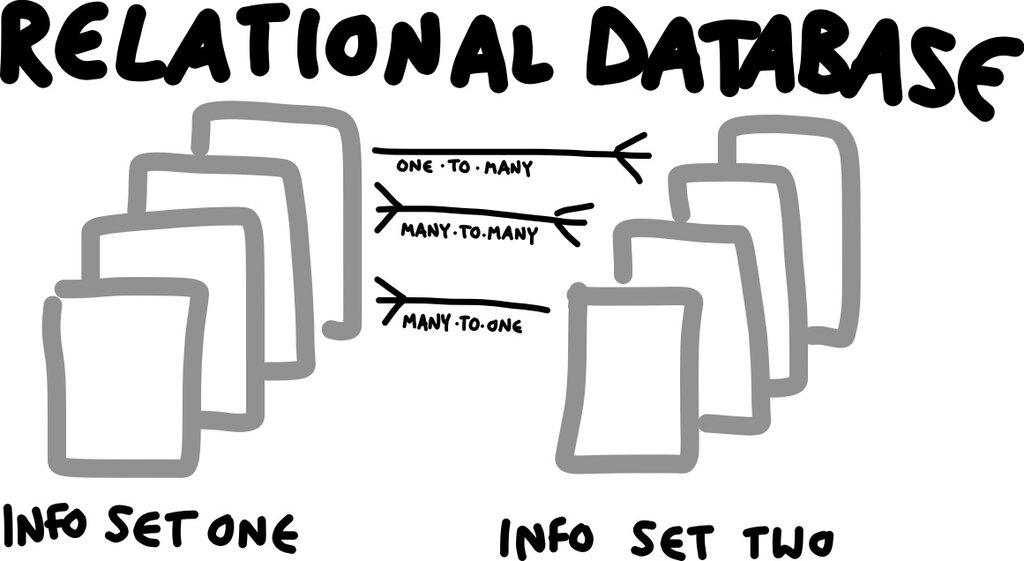
Relationships are defined by their cardinality, which describes the number of instances of one entity that can be associated with instances of another entity. There are three main types.
| Type | Description | Example |
|---|---|---|
| One-to-One (1:1) | Each instance in Entity A can relate to only one instance in Entity B, and vice-versa. | A User has one Profile. A Profile belongs to only one User. |
| One-to-Many (1:N) | One instance in Entity A can relate to many instances in Entity B, but each instance in B relates to only one in A. | A Customer can place many Orders, but each Order is placed by only one Customer. |
| Many-to-Many (N:M) | Many instances in Entity A can relate to many instances in Entity B. | A Student can enroll in many Courses, and a Course can have many Students. |
Understanding these connections is vital. They dictate how you'll query your data and ensure its integrity. Many-to-many relationships often require a special linking table (sometimes called a junction or associative table) to be implemented in a relational database.
With these three components—entities, attributes, and relationships—you have everything you need to start building clear and effective blueprints for any database.
Time to test your knowledge of these foundational concepts.
What is the primary purpose of an Entity-Relationship (ER) diagram in database design?
In a database for a public library, which of the following is an example of an entity instance?