Mastering English Social and Professional Greetings
Register and Context
Beyond a Simple 'Hello'
You already know how to say hello. But choosing the right greeting is more than just knowing the words. It's about understanding the social situation you're in. The language you use, from your word choice to your tone, is called register. Think of it as a spectrum, from highly formal to very informal.
Choosing the right register is like choosing the right clothes. You wouldn't wear a swimsuit to a business meeting. In the same way, you wouldn't greet a CEO with 'Yo, what's up?'
Every greeting you use sends a message about your relationship with the other person and your understanding of the situation. Are they a stranger or a friend? A boss or a teammate? Are you in an office or at a concert? These factors determine where you should be on the formality spectrum.
Reading the Social Cues
So, how do you decide what level of formality to use? Two key factors are social distance and context.
Social distance refers to how well you know someone. The less you know them, the greater the social distance, and the more formal your language should be. This applies to people with higher status or authority, like a manager, an older person, or a new client.
Context is the environment or situation. A professional setting like a job interview or a formal presentation requires formal greetings. A casual setting, like a party or a coffee shop with friends, calls for informal language.
| Situation | Social Distance | Relationship | Appropriate Greetings |
|---|---|---|---|
| Job Interview | High | Interviewer, stranger | 'Good morning/afternoon, Ms. Chen.' |
| Meeting a new colleague | Medium | Peer, new acquaintance | 'Hi, I'm Alex. It's nice to meet you.' |
| Seeing your boss in the hall | Medium (Hierarchical) | Superior | 'Good morning, David.' |
| Running into a classmate | Low | Peer, acquaintance | 'Hey, how's it going?' |
| Greeting a close friend | Very Low | Friend, family | 'What's up?' or 'Hey!' |
Notice how the greetings shift. Formal situations often use titles ('Ms. Chen') and complete sentences. As the social distance shrinks and the context becomes more casual, greetings become shorter and more relaxed.
The Formality Spectrum
Let's break down the spectrum of greetings, from the most formal to slang.
Formal
adjective
Used in professional or serious situations with people you don't know well or who have a higher status. It shows respect.
Examples of formal greetings include:
- Good morning / Good afternoon / Good evening.
- It's a pleasure to meet you.
- How do you do? (This is very formal and a bit old-fashioned, but still used in some circles. The expected response is also 'How do you do?')
Neutral Greetings: These are safe choices for most everyday situations when you're not sure how formal to be. They are polite but not stiff.
- Hello.
- Hi.
- How are you?
- Nice to see you.
Informal and Slang Greetings: These are for casual conversations with friends, family, and people you know very well. Using them in a formal situation can seem disrespectful or unprofessional.
- Hey / Hey there.
- What's up? / 'Sup?
- How's it going?
- Yo!
Tone and Body Language
Your words are only part of the message. Your tone of voice and body language must match the greeting.
A formal greeting like 'Good morning, Mr. Jones' should be delivered with a clear, calm voice, direct eye contact, and perhaps a firm handshake. Your posture should be upright and confident.
An informal 'Hey, what's up?' is typically said in a more relaxed tone, often with a smile, a nod, a wave, or even a high-five. The key is congruence—making sure your words, tone, and actions all send the same message of formality (or informality).
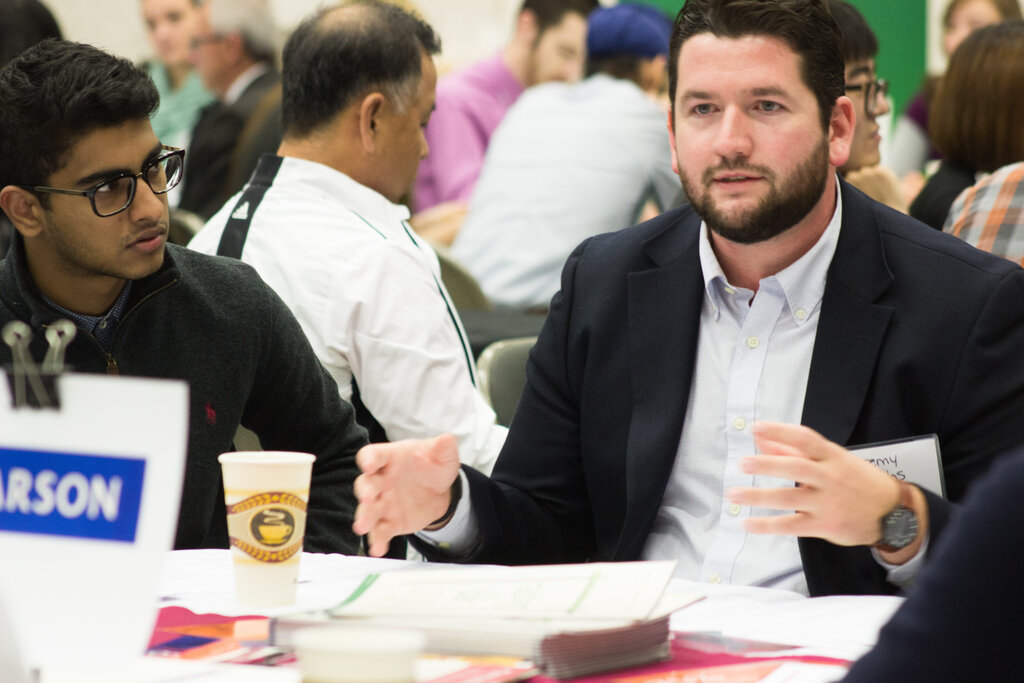
If your body language is overly casual while your words are formal, it can create confusion or seem insincere. Likewise, a stiff posture while saying 'What's up?' feels awkward. When in doubt, it's usually safer to start with a more neutral or slightly formal greeting. You can always become more casual as you get to know the person and the situation better.
What is 'register' in the context of language?
You are at a coffee shop and see a close friend you haven't seen in a few months. Which greeting is most appropriate?