Mastering English Grammar
Parts of Speech
The Building Blocks of Language
Think of a sentence as a well-built house. You can't just throw bricks and wood together and hope it stands. You need different materials for different jobs: a foundation, walls, windows, and a roof. Words work the same way. Each one has a specific role, a job to do. These roles are called the parts of speech.
Understanding these roles is the first step to building clear, strong sentences. There are eight main parts of speech. Let's look at each one.
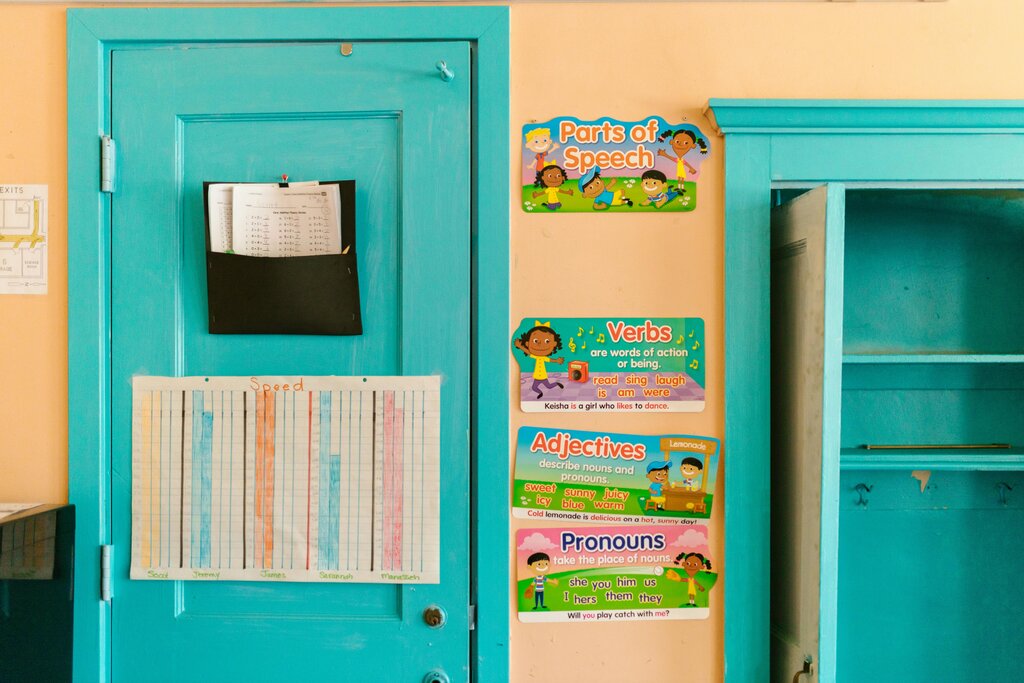
Naming Things
First, we need to name the things we're talking about. That's where nouns and pronouns come in.
Noun
noun
A word that represents a person, place, thing, or idea.
Nouns are everywhere. Your name is a noun. City, computer, love, and team are all nouns. They give us the subjects and objects of our sentences.
Nouns name the who, what, and where of a sentence.
Now, imagine saying, "Maria went to the store, and then Maria bought milk because Maria was thirsty." It's repetitive. Pronouns are the solution.
Pronoun
noun
A word that takes the place of a noun.
Common pronouns include I, you, he, she, it, we, and they. They make our language flow more smoothly by standing in for nouns we've already mentioned.
Actions and Descriptions
Once we have our nouns, we need to make them do things and give them character. Verbs, adjectives, and adverbs add the action and detail.
Verb
verb
A word that expresses an action or a state of being.
Every complete sentence must have a verb. Action verbs are words like run, think, and create. State of being verbs connect the subject to a description, like the verb is in "The sky is blue."
Adjectives and adverbs are the decorators. They add color and texture to our sentences.
Adjective
noun
A word that describes or modifies a noun or pronoun.
Adjectives answer questions like "what kind?" or "how many?" A tall tree, a happy dog, three books—the words tall, happy, and three are all adjectives.
Adverb
noun
A word that modifies a verb, an adjective, or another adverb.
Adverbs often end in "-ly" and answer questions like "how?", "when?", or "where?" For example, "She spoke softly." The adverb softly tells us how she spoke. In "It's incredibly cold," the adverb incredibly modifies the adjective cold.
Connecting the Pieces
The last few parts of speech act as the glue and seasoning, connecting our ideas and adding expression.
Preposition
noun
A word that shows the relationship between a noun or pronoun and some other word in the sentence.
Prepositions often indicate location or time. Think of them as words that tell you where a squirrel can go: up a tree, in a hole, around the branch, over the fence.
Conjunction
noun
A word used to connect words, phrases, or clauses.
The most common conjunctions are easy to remember with the acronym FANBOYS: For, And, Nor, But, Or, Yet, So. They join ideas together to create more complex sentences.
Conjunctions are the hinges that connect different parts of a sentence.
Finally, we have interjections. These are words thrown into a sentence to express sudden feeling.
Interjection
noun
A word or phrase that expresses strong emotion.
Interjections like Oh!, Hey!, and Well, are usually followed by an exclamation point or a comma. They aren't grammatically connected to the rest of the sentence, but they add a burst of personality.
Ready to test your knowledge? Try these questions to see how well you understand the different parts of speech.
In the sentence "The team celebrated their victory," what part of speech is the word "team"?
Which word in the following sentence is an adverb? "The incredibly happy dog wagged its tail quickly."
Recognizing these eight parts of speech is the foundation of grammar. Once you can spot them, you're on your way to understanding how sentences work and how to build better ones yourself.