Mastering English Grammar Essentials
Parts of Speech
The Building Blocks of Language
Think of a sentence as a small machine. For it to work, every part needs to have a specific job. In language, these parts are called the parts of speech. Every single word in English belongs to one of eight categories: nouns, pronouns, verbs, adjectives, adverbs, prepositions, conjunctions, and interjections. Understanding these roles is the first step to building clear, correct sentences.
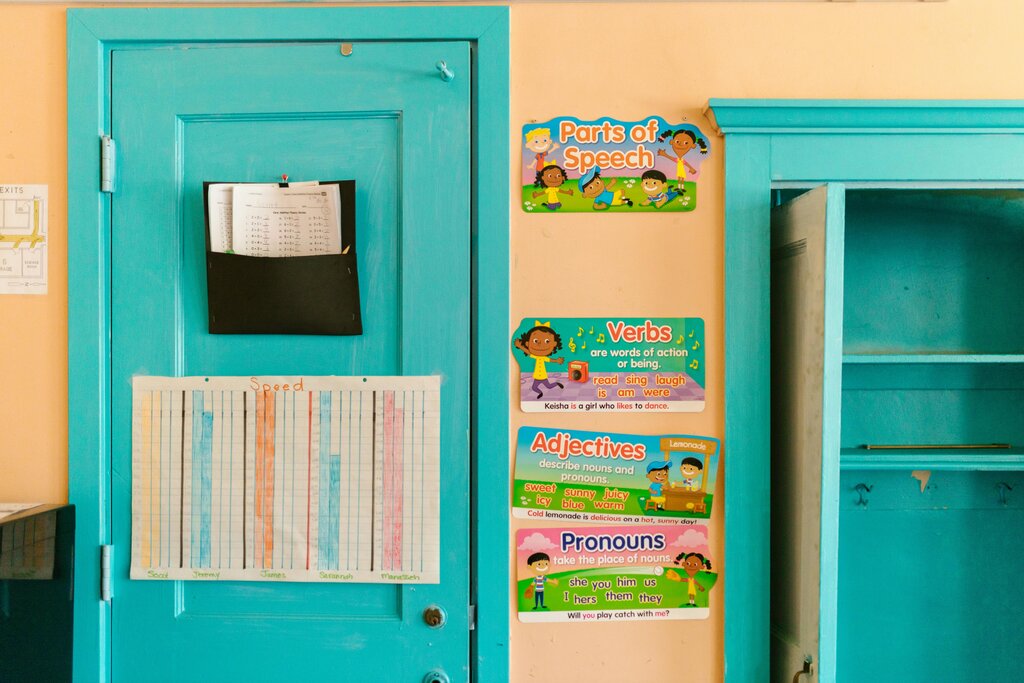
Let's break down each category one by one. You'll see how they fit together to create meaning.
Naming and Action
First, we need to name things. That's where nouns come in. They give us the 'who' and 'what' of our sentences.
Noun
noun
A word that represents a person, place, thing, or idea.
Nouns are everywhere. Your name is a noun. The device you're reading this on is a noun. The feeling of curiosity is a noun.
Sometimes, repeating nouns can sound clumsy. That's why we have pronouns. They act as stand-ins or shortcuts for nouns we've already mentioned.
Pronoun
pronoun
A word that takes the place of a noun.
Common pronouns include I, you, he, she, it, we, and they.
Once we have our nouns and pronouns, we need them to do something. That's the job of a verb. Verbs show action or a state of being.
Verb
verb
A word that expresses an action or a state of being.
Without a verb, you don't really have a complete thought. A sentence needs a subject (a noun or pronoun) and a verb to be complete. Dogs bark. She thinks. It is.
Adding Detail and Connection
Now that we have the basic skeleton of a sentence, we can add more detail. Adjectives and adverbs help us paint a fuller picture.
An adjective describes a noun or a pronoun. It answers questions like 'what kind?', 'how many?', or 'which one?'.
Adjective
adjective
A word that modifies or describes a noun or pronoun.
The tall girl bought the expensive book.
Adverbs, on the other hand, describe verbs, adjectives, or even other adverbs. They often, but not always, end in '-ly'. They answer questions like 'how?', 'when?', 'where?', or 'to what extent?'.
Adverb
adverb
A word that modifies a verb, an adjective, or another adverb.
Finally, we have words that connect all the other pieces. Prepositions show the relationship between a noun or pronoun and another word in the sentence. They often indicate location, time, or direction.
Preposition
preposition
A word that shows the relationship of a noun or pronoun to another word.
The keys are on the table in the kitchen.
Conjunctions are the glue of sentences. They join words, phrases, or entire sentences together.
Conjunction
conjunction
A word used to connect clauses, sentences, or words.
He is smart, but he is lazy.
Last, we have interjections. These are short exclamations that express emotion. They aren't grammatically connected to the rest of the sentence.
Interjection
interjection
A word or phrase that expresses strong feeling or sudden emotion.
And that's it! Every word fits into one of these eight categories. Now that you know their jobs, you're ready to see how they assemble into powerful sentences.
What is the primary function of a pronoun in a sentence?
In the sentence, 'The fluffy cat slept soundly,' what part of speech is the word 'soundly'?