Mastering English Grammar Essentials
Parts of Speech
The Building Blocks of Sentences
Every word in the English language belongs to a category, or a “part of speech.” Think of these categories like different types of LEGO bricks. You can't build a solid structure with just one type of brick; you need a variety of shapes and sizes that fit together in specific ways. Understanding these eight categories is the first step to building clear, correct sentences.
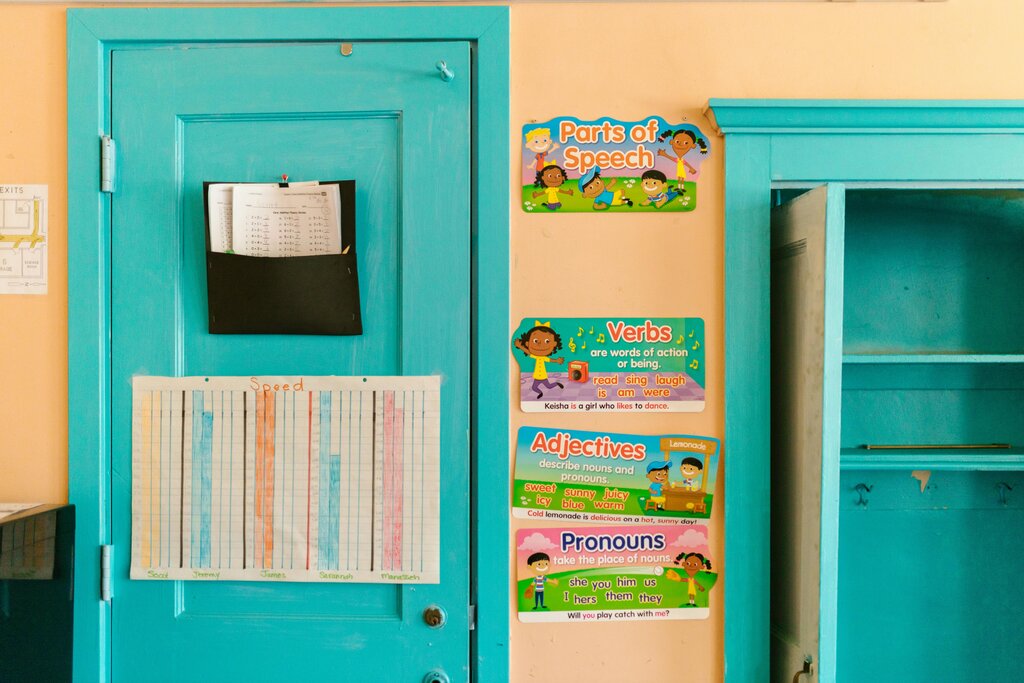
Let's break them down one by one.
Nouns and Pronouns
The foundation of almost any sentence is the noun. It’s the word for a person, place, thing, or idea. Nouns give your sentences a subject to talk about.
noun
noun
A word used to identify any of a class of people, places, or things (common noun), or to name a particular one of these (proper noun).
People: Maria, doctor, team Places: Paris, kitchen, space Things: book, phone, car Ideas: love, freedom, happiness
Writing the same noun over and over can get repetitive. That's where pronouns come in. They stand in for nouns to make sentences flow more smoothly.
pronoun
pronoun
A word that can function as a noun phrase used by itself and that refers either to the participants in the discourse or to someone or something mentioned elsewhere.
Instead of: Maria saw David, and Maria waved to David. Use this: She saw him, and she waved to him.
Verbs, Adjectives, and Adverbs
If nouns are the subjects of our sentences, verbs are what bring them to life. A verb expresses an action or a state of being.
verb
verb
A word used to describe an action, state, or occurrence, forming the main part of the predicate of a sentence.
Action: run, jump, think, create State of being: is, are, was, were, seem, feel
Now that we have nouns and verbs, we can add more detail. Adjectives and adverbs are descriptive words, but they modify different things.
Adjectives describe nouns or pronouns. They answer questions like: Which one? What kind? How many?
adjective
adjective
A word naming an attribute of a noun.
The tall building. (What kind?) Several people were late. (How many?) She is happy. (Describes the pronoun 'she'.)
Adverbs, on the other hand, modify verbs, adjectives, or even other adverbs. They often end in '-ly' and answer questions like: How? When? Where? To what extent?
adverb
adverb
A word or phrase that modifies or qualifies an adjective, verb, or other adverb or a word group, expressing a relation of place, time, circumstance, manner, cause, degree, etc.
Modifying a verb: She ran quickly. (How did she run?) Modifying an adjective: The building is very tall. (To what extent is it tall?) Modifying another adverb: He finished the test incredibly fast. (How fast?)
The Connectors
The last three parts of speech act like glue, holding all the other words together in a logical way.
Prepositions show the relationship between a noun (or pronoun) and another word in the sentence. They often indicate location, time, or direction.
preposition
preposition
A word governing, and usually preceding, a noun or pronoun and expressing a relation to another word or element in the clause.
The cat is under the bed. (Location) We will meet after the movie. (Time) She walked toward the store. (Direction)
Conjunctions connect words, phrases, or clauses. The most common ones are easy to remember: for, and, nor, but, or, yet, so (FANBOYS).
conjunction
conjunction
A word used to connect clauses or sentences or to coordinate words in the same clause.
Connecting words: I'll have the soup and salad. Connecting phrases: You can wait in the car or by the door. Connecting clauses: He was tired, so he went to bed.
Finally, interjections are short exclamations that express emotion. They often stand alone and are followed by an exclamation point.
interjection
interjection
An abrupt remark, made especially as an aside or interruption. An exclamation, especially as a part of speech.
Ouch! That hurt. Hey! How are you? Oh no, I forgot my keys.
Here's a quick summary of all eight parts of speech.
| Part of Speech | Function | Example Word |
|---|---|---|
| Noun | Names a person, place, thing, or idea | pirate |
| Pronoun | Replaces a noun | they |
| Verb | Shows action or state of being | is |
| Adjective | Describes a noun or pronoun | happy |
| Adverb | Describes a verb, adjective, or adverb | slowly |
| Preposition | Shows a relationship | under |
| Conjunction | Connects words, phrases, or clauses | and |
| Interjection | Expresses strong emotion | Wow! |
Now, let's test your knowledge.
In the sentence, "The happy dog quickly chased the ball," which word is an adverb?
What is the primary function of a conjunction?
Mastering these eight categories is a huge step toward writing and speaking with confidence. They are the essential tools for building language.