Mastering English Fundamentals
Introduction to English Sounds
The Building Blocks of English
Every word you speak is built from small units of sound. Think of them like LEGO bricks. Once you know what the different bricks are and how they feel, you can start building anything. In English, these sound-bricks come in two main types: vowels and consonants.
Understanding these sounds is the first step to clear pronunciation. It’s not about memorizing rules, but about training your mouth and ears to recognize and make new shapes and noises. All the sounds you make come from how you shape your mouth, tongue, and lips to control the flow of air.
Vowel Sounds
Vowel
noun
A speech sound produced with an open vocal tract, so the airway is not blocked by the tongue, lips, or teeth.
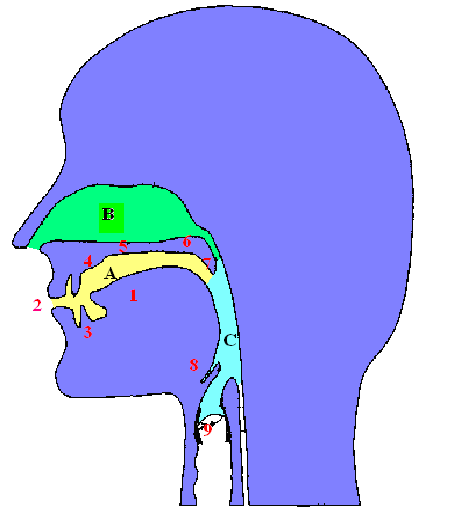
Vowels are the open, musical sounds in a language. They are the core of every syllable. When you make a vowel sound, the air flows freely from your lungs out of your mouth. The sound changes based on the shape of your mouth and where you place your tongue. Is your tongue high or low? Forward or back? Are your lips rounded or spread out?
English has more vowel sounds than it has vowel letters (a, e, i, o, u). For example, the letter 'a' sounds different in cat, car, and cake. We'll focus on the sounds themselves, not the letters. We can group them into short sounds and long sounds.
Short vowels are quick and clipped. Think of the sounds in cat, bed, sit, top, and cup.
Long vowels often sound like you're saying the name of the letter. Think of cake, see, bike, boat, and cute.
Consonant Sounds
Consonant
noun
A speech sound made by partially or completely blocking the flow of air through the mouth.
If vowels are the music, consonants are the rhythm. They are the sounds you make by blocking the air in some way. You might press your lips together for a 'p' sound, touch your tongue to the roof of your mouth for a 't' sound, or bring your teeth to your bottom lip for an 'f' sound.
Some consonants are 'voiced,' which means your vocal cords vibrate when you make them. Others are 'unvoiced,' meaning they don't. Try this: place your fingers on your throat and say 'zoo.' You'll feel a vibration. Now say 'sue.' No vibration. The sounds /z/ and /s/ are made with the exact same mouth shape, but one is voiced and the other is not.
| Unvoiced Sound | Example | Voiced Sound | Example |
|---|---|---|---|
| /p/ | pat | /b/ | bat |
| /t/ | time | /d/ | dime |
| /k/ | coat | /g/ | goat |
| /f/ | fan | /v/ | van |
| /s/ | sip | /z/ | zip |
Putting Sounds Together
Words are just sequences of these sounds. A very common pattern in English is Consonant-Vowel-Consonant, or CVC. Think of words like c-a-t, d-o-g, or s-i-t. Each part is a distinct sound that blends into the next.
Try saying these words slowly, separating each sound:
m-a-p
r-e-d
b-i-g
p-o-t
s-u-n
As you get comfortable with individual sounds, you'll start to notice how they combine to form all the words you know. The key is to listen carefully and practice making the sounds yourself. Don't worry about being perfect right away. The goal is to build awareness.
It is something that must come before a student’s ability to read and write, as it plays a key factor in understanding how sounds work to make words.
Now let's review these concepts and test your knowledge.
What is the primary difference between how vowel and consonant sounds are produced?
Voiced consonants, like /z/ or /v/, require the vocal cords to vibrate.
Becoming familiar with these basic sounds is the foundation for everything else in English. Keep listening, and keep practicing.