Mastering English for Personal Growth and Reflection
Emotional Intelligence Lexicon
Naming Your Inner World
Moving beyond simple labels like 'happy' or 'sad' is the first step toward true emotional intelligence. A precise vocabulary allows you to understand your internal landscape with greater clarity. It's the difference between knowing you're 'uncomfortable' and being able to identify that you're feeling a mix of apprehension and disappointment. This skill, sometimes called emotional granularity, is foundational for self-awareness.
Let's explore some key terms for internal states. Introspection is the deliberate act of examining your own thoughts and feelings. It's an active, curious process. In contrast, equanimity is a state of mental calmness and composure, especially in difficult situations. It's not about suppressing emotion, but about maintaining balance amidst it. One is an action, the other a state of being.
Ambivalence
noun
The state of having mixed feelings or contradictory ideas about something or someone.
Another complex state is vicariousness. This is when you experience feelings indirectly, through the imagined experiences of another person. It's the chill you feel when a movie character is in peril or the joy you feel for a friend's success. This ability is powered by cognitive processes that allow us to simulate another's perspective, involving brain structures like mirror neurons that fire both when we act and when we observe the same action performed by another.
The Art of Regulation
Identifying emotions is only half the battle. The other half is managing them. Self-regulation is the broad skill of controlling one's behavior, emotions, and thoughts in the pursuit of long-term goals. It's the umbrella term for staying in the driver's seat of your own mind.
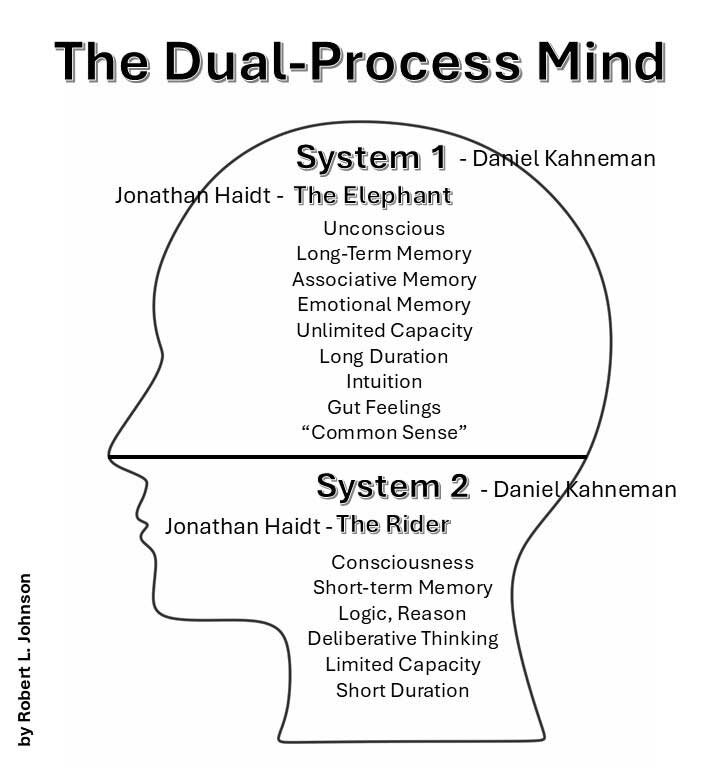
Within self-regulation, we find more specific actions. Modulation is the fine-tuning of an emotional response. Think of it like adjusting the volume, turning it up or down to fit the situation. If you're feeling irritated by a minor inconvenience, you might modulate that feeling down to prevent an overreaction. Tempering, on the other hand, specifically involves restraining or softening a strong or extreme emotion. It's about taking the edge off of intense feelings like anger or excitement to maintain control.
Regulation isn't about eliminating emotions; it's about responding to them wisely instead of reacting blindly.
Distinguishing Nuances
Many emotional concepts have close synonyms that are often used interchangeably, but their differences are important. Consider solitude versus isolation. Solitude is the state of being alone without being lonely; it's a positive and constructive state of engagement with oneself. Isolation, however, is a state of being separate from others that often involves feelings of loneliness and unwanted separation.
| Concept | Definition | Focus |
|---|---|---|
| Empathy | The ability to understand and share the feelings of another. | Feeling with someone. |
| Sympathy | Feelings of pity and sorrow for someone else's misfortune. | Feeling for someone. |
The distinction is crucial. Empathy involves a shared emotional experience, building a bridge of connection. Sympathy maintains a distance; you acknowledge their pain without necessarily feeling it yourself. Developing empathy is a core component of because it underpins social awareness and relationship management.
Another pair to separate is introspection and rumination. As we've discussed, introspection is a healthy, curious examination of one's thoughts. Rumination, however, is a compulsive fretting; it’s dwelling on distress and negative feelings without moving toward a solution. It's like a mental hamster wheel, spinning in place without making progress. One leads to insight, the other to anxiety.
Ready to test your understanding of these nuanced terms?
What is the best definition of 'equanimity'?
You are watching a documentary about a mountain climber reaching a summit and you feel a surge of triumph and joy for them, as if you were there. What concept does this best illustrate?
Building this vocabulary is a lifelong practice. The more precisely you can name your experience, the more power you have to shape it.