Mastering English Fluency
Pronunciation Mastery
The Building Blocks of Sound
Clear pronunciation starts with individual sounds. In linguistics, the smallest unit of sound that can distinguish one word from another is called a phoneme. Think of the difference between pin and bin. The only change is the first sound, but it creates a completely different word. Those /p/ and /b/ sounds are phonemes.
Phoneme
noun
The smallest unit of sound in a language that can convey a distinct meaning.
English sounds are broadly divided into vowels and consonants. Mastering them is the first step to sounding more natural.
Vowels are created by the open flow of air through the mouth. The shape of your mouth and the position of your tongue determine the sound. Unlike many languages, English has a large and tricky vowel system. For example, the letter 'a' sounds different in cat, father, and late.
| Vowel Type | Example Word | Sound Description |
|---|---|---|
| Short 'i' | sit | A quick, relaxed sound. |
| Long 'ee' | seat | A tense sound, like you're smiling. |
| Short 'a' | cat | Mouth is wide. |
| Long 'ay' | late | A combination of two vowel sounds. |
Consonants, on the other hand, are formed by obstructing the airflow in some way. This obstruction can happen with your lips, teeth, or tongue. A key distinction between consonants is voicing. Voiced consonants use your vocal cords, while voiceless ones don't. Place your fingers on your throat and say "zoo," then "sue." You'll feel a vibration for "zoo" (a /z/ sound) but not for "sue" (an /s/ sound).
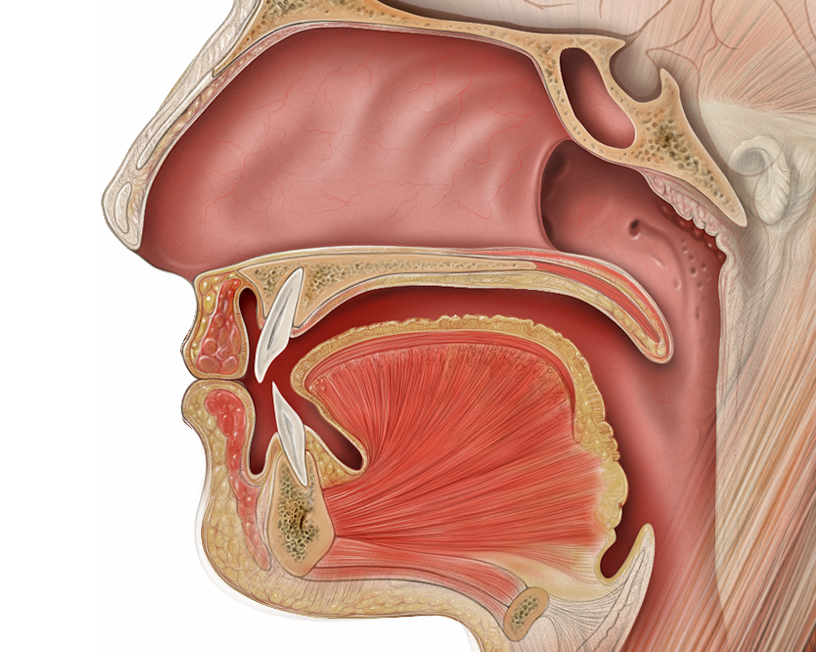
Many English learners find the 'th' sounds tricky. There are two: the voiceless /θ/ in "think" and the voiced /ð/ in "this." To make both, the tip of your tongue needs to touch the back of your top teeth.
The Music of Language
Once you have the individual sounds down, the next step is combining them. Pronunciation isn't just about articulating sounds correctly; it's also about the melody and rhythm of your speech. This is where word stress, sentence stress, and intonation come in.
Word stress is the emphasis placed on a specific syllable in a word. Stressing the wrong syllable can make a word difficult to understand or even change its meaning entirely.
Consider the word record. As a noun, the stress is on the first syllable: "Let's listen to the REcord." As a verb, the stress is on the second: "Please reCORD your voice."
Intonation is the rise and fall of your voice when you speak. It's the music of a sentence, and it adds crucial meaning. A rising intonation at the end of a sentence usually signals a question, while a falling intonation indicates a statement.
- "You're finished." (Falling intonation, a statement of fact.)
- "You're finished?" (Rising intonation, a question expressing surprise.)
Finally, English has a distinct rhythm. It's known as a stress-timed language. This means the rhythm is based on the stressed syllables, and the time between stressed syllables is roughly equal. Unstressed syllables and words are squeezed in between. This is what creates the characteristic beat of spoken English.
Putting It Into Practice
Understanding the theory is one thing, but improving your pronunciation requires active practice. There are several effective techniques to help you refine your accent and speak more clearly.
One of the most critical public speaking strategies for non-native speakers is improving pronunciation and speech clarity.
One of the best methods is shadowing. This involves listening to a short recording of a native speaker and repeating it back, trying to imitate their pronunciation, rhythm, and intonation as closely as possible. It helps train your mouth muscles and your ear at the same time.
Using technology can also be a huge help. There are many apps and websites that provide feedback on your pronunciation. You can record yourself saying a word or phrase, and the software will analyze it and show you how close you are to a native speaker's pronunciation.

Finally, don't underestimate the power of tongue twisters. They may seem silly, but they are an excellent workout for your mouth. They force you to focus on articulating specific, often difficult, sound combinations.
Try this one slowly at first, then speed up:
She sells seashells by the seashore.
Ready to test your knowledge? Let's see what you've learned.
What is a phoneme?
How is a consonant sound produced?
Consistent practice is the key to mastering pronunciation. By focusing on these elements, you can significantly improve your clarity and confidence when speaking English.