Mastering English Conversation and Fluency
Phonetics and Articulation
Beyond the Alphabet
You already know the sounds of English, but moving from clear to natural speech requires a deeper look at the mechanics. It's like going from knowing the notes on a piano to understanding how to use the pedals and dynamics. This is where phonetics comes in. We'll use the (IPA) not as a list to memorise, but as a practical toolkit for fine-tuning your articulation.
Think of your mouth, tongue, and lips as a complex instrument. The slightest change in position can dramatically alter the sound you produce. We'll focus on the sounds that most often trip up learners, starting with the trickiest consonants.
Mastering Tricky Consonants
Let's start with the infamous 'th' sounds. English has two: the unvoiced /θ/ in "think" and the voiced /ð/ in "this". The physical action is the same for both. Place the tip of your tongue lightly between your top and bottom teeth and push air through. The only difference is what your vocal cords are doing.
This brings us to a critical concept: voiced versus unvoiced consonants. Many English consonants come in pairs. The mouth and tongue position is identical for both sounds, but for a voiced consonant, your vocal cords vibrate. For an unvoiced one, they don't. You can feel the difference by placing your fingers on your throat. You'll feel a buzz for /v/ but not for /f/.
Here are some common pairs:
| Voiced (Vocal Cords Vibrate) | Unvoiced (No Vibration) |
|---|---|
| /b/ (bat) | /p/ (pat) |
| /d/ (dog) | /t/ (top) |
| /g/ (goat) | /k/ (coat) |
| /v/ (van) | /f/ (fan) |
| /ð/ (then) | /θ/ (thin) |
| /z/ (zoo) | /s/ (sue) |
| /ʒ/ (measure) | /ʃ/ (shoe) |
Another classic challenge is the distinction between 'r' (/r/) and 'l' (/l/). For /l/, the tip of your tongue presses firmly against the alveolar ridge, just behind your top teeth. Air flows around the sides of the tongue. For /r/, the body of the tongue bunches up in the middle of the mouth, with the tip curled back slightly, not touching anything. It's a game of millimetres, but mastering this placement is key to clarity.
Vowel Nuances
Consonants shape words, but vowels give them colour and depth. English vowel sounds aren't just about position; they're also about length. For example, the vowel sound in 'seat' (/i:/) is held longer than the one in 'sit' (/ɪ/). This distinction, known as , can change the entire meaning of a word.
Think of 'ship' versus 'sheep', or 'pull' versus 'pool'. The IPA helps us see this clearly. The colon-like symbol /:/ indicates a long vowel. Learning to recognise and produce these different lengths will make your speech sound much more natural.
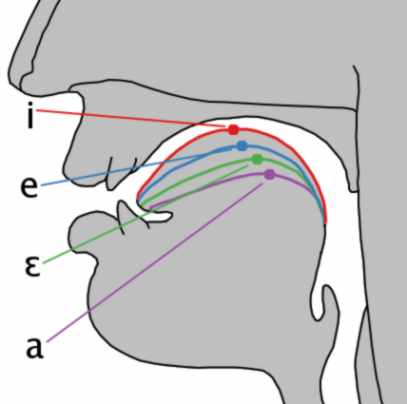
The position of your tongue also creates different vowel qualities. Is it high in the mouth (as in 'see') or low (as in 'sat')? Is it at the front ('bed') or the back ('boot')? Experimenting with small movements of your tongue while sustaining a vowel sound is a powerful way to train your ear and your mouth.
Becoming Your Own Coach
The ultimate goal is to develop the ability to self-correct. This isn't about achieving a perfect accent; it's about clear and confident communication. A great technique is to use your phone to record yourself speaking. Pick a short paragraph and read it aloud.
Listen back and focus on one specific sound you're working on. For instance, are your /θ/ and /ð/ sounds clear? Are you distinguishing between long and short vowels? This is one of the fastest ways to improve. You compare what you hear to what you intended, make a small adjustment, and try again.
Don't aim for perfection. Aim for connection. Clear articulation helps your listener understand your ideas without getting distracted by the sounds themselves.
Let's check your understanding of these core concepts.
What is the primary physical difference between producing a voiced consonant (like /v/) and its unvoiced counterpart (like /f/)?
When producing the /l/ sound, as in 'light', where should the tip of your tongue be placed?
By focusing on these mechanical details, you're not just mimicking sounds. You're building a deep, physical understanding of how English is spoken.