Mastering English Basics
Introduction to English Sounds
The Building Blocks of English
Let's start with the familiar: the English alphabet. It has 26 letters, and it's the foundation of the written language.
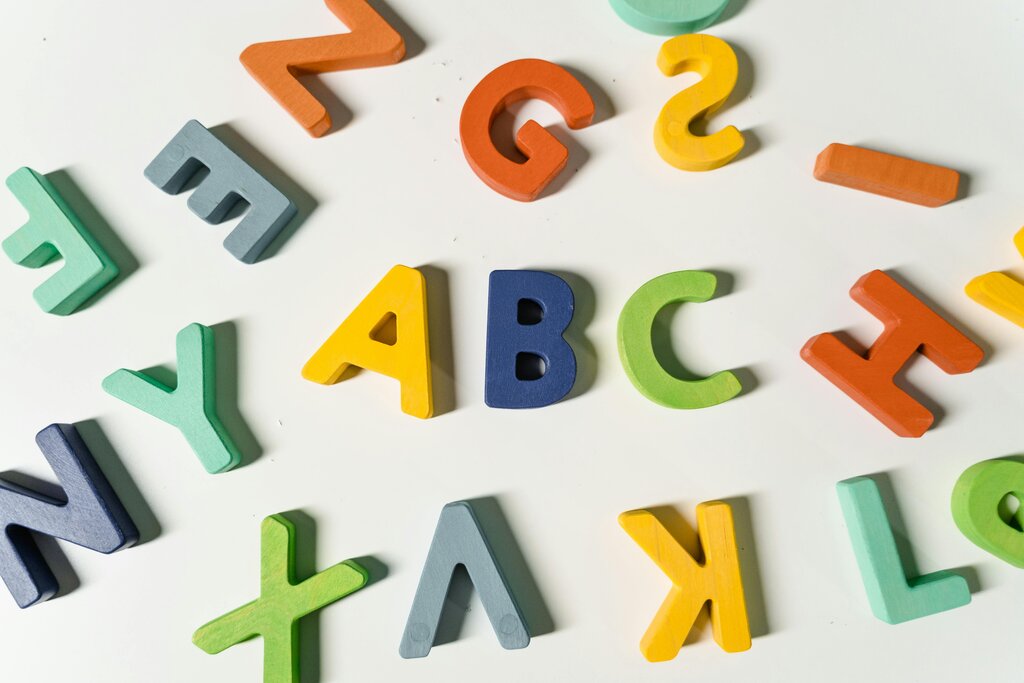
But here's a twist: in English, letters and sounds are not the same thing. One letter can represent many different sounds. Think about the letter 'a'. It sounds different in the words cat, car, and cake.
This is why just knowing the alphabet isn't enough to pronounce words correctly. To really understand English pronunciation, we need to think in terms of sounds, not just letters.
Letters vs. Sounds
The individual sounds of a language are called phonemes. While the English alphabet has 26 letters, it has around 44 phonemes. This mismatch is what makes English pronunciation tricky.
phoneme
noun
The smallest unit of sound in a language that can distinguish one word from another.
Sometimes, different letters or groups of letters can create the same sound. For example, the 'f' sound can be written as 'f' (fun), 'ph' (phone), or even 'gh' (laugh).
Other times, a single letter can make different sounds depending on the word. The letter 'c' sounds like /k/ in cat but like /s/ in city. To help us see these sounds clearly, linguists use a special set of symbols.
An Introduction to Phonetic Symbols
Phonetic symbols represent sounds, not letters. Each symbol stands for exactly one sound. This takes the guesswork out of pronunciation. You don't need to memorize the entire chart, but learning a few common symbols can be very helpful.
All sounds in English fall into two main categories: vowels and consonants. Vowels are made with an open vocal tract, like the 'a' in apple or the 'ee' in see. Consonants involve some kind of obstruction, like the 'p' in pop where your lips come together.
Think of it this way: Letters are for writing, but phonemes are for speaking.
Let's look at a few examples of common English sounds and their phonetic symbols. Notice how the symbol for a sound is always the same, no matter how it's spelled in a word.
| Category | Example Word | Sound | Phonetic Symbol |
|---|---|---|---|
| Vowel | cat | The short 'a' sound | /æ/ |
| Vowel | see | The long 'e' sound | /iː/ |
| Vowel | book | The short 'oo' sound | /ʊ/ |
| Consonant | pen | The 'p' sound | /p/ |
| Consonant | shoe | The 'sh' sound | /ʃ/ |
| Consonant | thin | The 'th' sound | /θ/ |
Learning to 'hear' the individual phonemes in words is the first step toward clearer pronunciation. As you learn new words, pay attention to their sounds, not just their spelling.
Ready to check your understanding of these foundational concepts?
What is the primary reason that English pronunciation can be tricky, based on the relationship between letters and sounds?
An individual unit of sound in a language is called a ________.
Getting comfortable with the sounds of English is a journey. By focusing on phonemes, you're building a strong foundation for speaking and listening.