Mastering Engineering Thermodynamics
Zeroth Law
The Rule of Equilibrium
The Zeroth Law of Thermodynamics sounds a bit strange, but it describes an idea so fundamental we often take it for granted. It’s a simple rule of logic applied to heat.
Here it is: If object A is in thermal equilibrium with object C, and object B is also in thermal equilibrium with object C, then objects A and B are in thermal equilibrium with each other.
Think of it like this: If Alice is the same height as Charles, and Bob is also the same height as Charles, then Alice and Bob must be the same height.
Thermal Equilibrium
noun
A state where two objects in contact stop exchanging heat energy. They have reached the same temperature, and there is no net flow of heat between them.
When you leave a cold drink on the counter, it gradually warms up to match the room's temperature. When it stops warming, it has reached thermal equilibrium with the room. The drink and the air are now at the same temperature. This simple, intuitive idea is what the Zeroth Law formalizes. It establishes that temperature is a fundamental and measurable property of matter.
The Basis for Measurement
The Zeroth Law is why thermometers work. A thermometer is simply our object C. When you place it in a pot of water (object A), you wait for the thermometer and the water to reach thermal equilibrium. The reading you see is the temperature at which that equilibrium occurs.
If you then use the same thermometer to measure a block of metal (object B) and get the same reading, the Zeroth Law guarantees that the water and the metal are at the same temperature, even if they never touch.
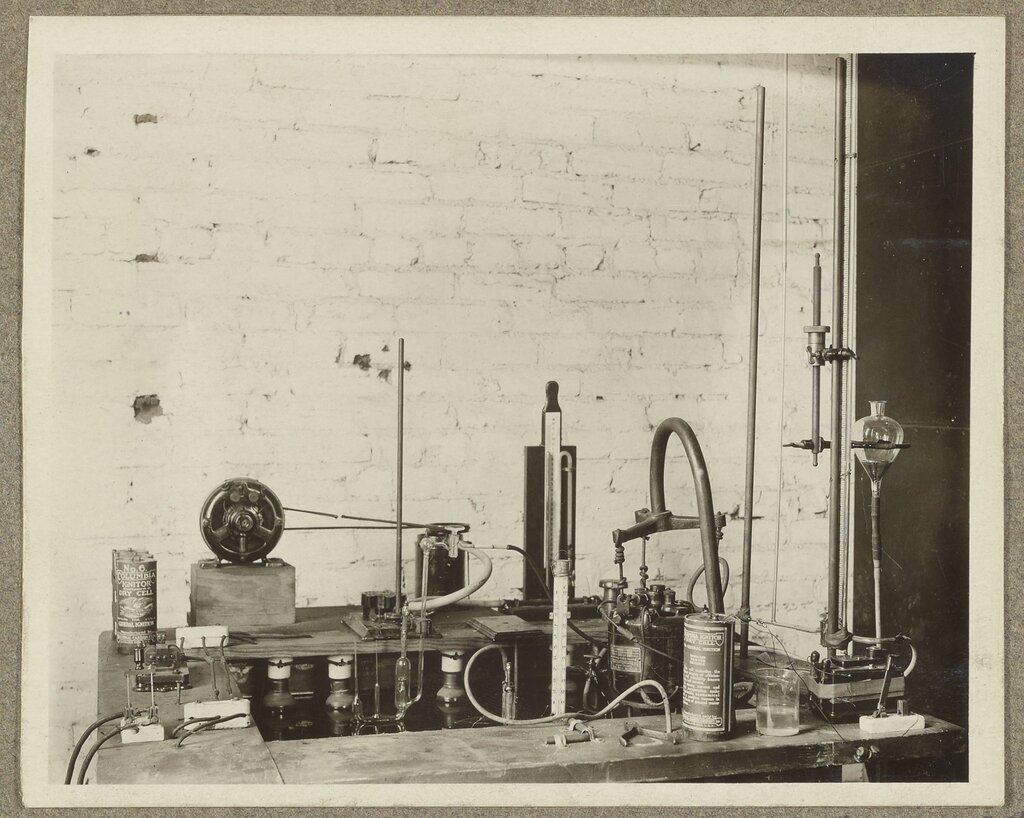
This principle applies to all kinds of thermometers. A classic mercury thermometer works because the volume of the mercury changes with temperature. It expands or contracts until its temperature equals that of its surroundings. A digital thermometer might use a thermocouple, which generates a voltage based on temperature. In every case, the device (C) is designed to have a measurable property that changes until it's in equilibrium with the system being measured (A or B).
Engineering Applications
Beyond basic thermometers, the Zeroth Law is critical in countless engineering systems. Any process that requires temperature control relies on it. Your home's heating and cooling system uses a thermostat to measure the air temperature. When the thermostat and the air are not in equilibrium at the desired setpoint, the system turns on to either heat or cool the room.
In manufacturing, chemical processes often need to be held at precise temperatures to work correctly. Sensors constantly monitor the temperature of reaction vessels, ensuring they are in thermal equilibrium at the optimal temperature. Even the engine in a car uses temperature sensors to ensure it doesn't overheat. Each of these sensors acts as a trusted "object C," providing reliable temperature data because of the Zeroth Law.
Which statement best describes the Zeroth Law of Thermodynamics?
A metal spoon is placed into a cup of hot tea. After a few minutes, the spoon and the tea are at the same temperature. This state is known as:
The Zeroth Law provides the logical foundation for temperature, allowing us to build the rest of thermodynamics on solid ground.