Mastering Engineering Consulting Projects
Consultancy Financial Models
The Engine of a Consultancy
The core business of an engineering consultancy isn't just solving problems; it's selling expertise packaged as time. The financial health of the firm hinges on how effectively it prices and sells this time. The fundamental unit is the billable hour.
Not every hour of a consultant's day can be billed to a client. There's internal training, business development, and administrative work. To remain profitable, firms set billable utilisation targets. This is the percentage of a consultant's total working hours that are charged to projects. A common industry benchmark is around 80%. Falling below this for extended periods signals inefficiency or a lack of work, while consistently exceeding it can lead to burnout.
From Raw Cost to Billable Rate
A consultant's salary is only the starting point for their cost. To arrive at a billable rate, the firm must account for all the costs of doing business and then add a profit margin. This is done using a multiplier, which transforms the base salary into a final rate charged to the client. This is often called the 'burdened' labor rate because it carries the burden of all business costs.
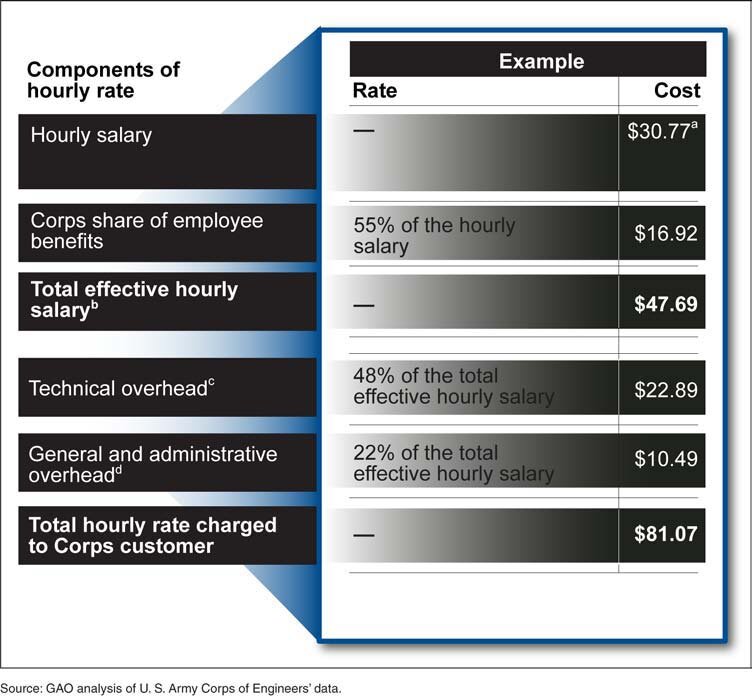
The multiplier typically accounts for three things:
- Direct Labour Cost: The consultant's raw hourly wage.
- Overhead: All non-project costs required to run the business. This includes rent for the office, software licenses, insurance, administrative salaries, and utilities.
- Profit: The margin the company aims to make on the work.
A typical multiplier might be around 3.0. If a consultant's base pay is 💲50 per hour, their billable rate would be 💲150 per hour. Roughly 💲50 covers their salary, 💲50 covers their share of overhead, and 💲50 is the firm's profit.
Structuring the Deal
Once you have the rates, you need to structure the contract. The two most common models are Time and Materials (T&M) and Fixed-Price.
Under a Time and Materials contract, the client pays for the hours worked and the cost of any materials used. This model shifts the financial risk to the client. If the project scope expands or unforeseen issues arise, the final cost will be higher. For the consultancy, it's a low-risk model that ensures all work is compensated.
A Fixed-Price contract is the opposite. The consultancy agrees to deliver a specific scope of work for a single, predetermined price. This shifts the risk to the consultant. If the work takes longer than estimated, the profit margin shrinks or disappears. This model is best for projects with a very clearly defined scope and predictable tasks.
| Contract Type | Consultant Risk | Client Risk | Best For |
|---|---|---|---|
| Time & Materials (T&M) | Low | High | Projects with unclear scope or high uncertainty. |
| Fixed-Price | High | Low | Well-defined projects with predictable tasks. |
To bridge the gap between these two models, firms often use a '' (NTE) clause. This is essentially a T&M contract with a price ceiling. The client pays for actual hours worked, but only up to an agreed-upon maximum. This gives the client budget certainty while still offering the consultant some protection if the work is completed more efficiently than planned.
Building the Fee Proposal
A credible fee proposal is built on a solid foundation of estimation. The most reliable method is bottom-up estimation. You break the project down into its smallest tasks, estimate the hours required for each task by each team member, and then multiply those hours by their respective burdened labor rates.

This process involves:
- Work Breakdown: Deconstruct the project into phases and specific, manageable tasks.
- Resource Allocation: Assign team members (e.g., Principal Engineer, Junior Engineer, Drafter) to each task.
- Hour Estimation: Determine how many hours each person will need to complete their assigned tasks.
- Cost Calculation: Sum the total cost by multiplying the hours for each resource by their burdened rate.
- Add Contingency: No estimate is perfect. It's standard practice to add a contingency buffer, often 10-20% of the total estimated cost, to cover unforeseen problems or scope adjustments. This buffer protects the firm's profitability against minor project risks.
This detailed, resource-driven approach provides a transparent and defensible basis for your fee, showing the client exactly what they are paying for.
What is the primary purpose of a 'multiplier' when an engineering consultancy calculates a billable rate?
An engineering firm agrees to complete a site drainage plan for a total fee of $50,000. Due to unexpected rock formations, the work takes 30% longer than estimated. Under a standard Fixed-Price contract, who bears the primary financial loss from the extra hours worked?
Understanding these financial mechanics is what separates a project manager from a business leader in the consulting world. It's about balancing risk, demonstrating value, and ensuring the firm remains profitable.