Mastering Energy Efficiency
Introduction to Energy Efficiency
Getting More from Less
Think about making a pot of tea. You can boil the water in an open pot, letting heat escape into the kitchen. Or, you can put a lid on it. The water will boil much faster, using less gas or electricity to do the exact same job. Putting the lid on is an act of energy efficiency.
Energy Efficiency
noun
The practice of using less energy to perform the same task or produce the same result.
Energy efficiency is about working smarter, not harder. It’s not about going without; it’s about getting the same comfort, light, and mobility while cutting down on energy waste. This is usually achieved through better technology, clever design, or improved processes. An efficient appliance performs its function with a minimal amount of energy input.
Efficiency vs. Conservation
People often use the terms “energy efficiency” and “energy conservation” interchangeably, but they mean different things. While they both lead to lower energy use, their approaches are distinct.
Energy efficiency focuses on the technology you use. Swapping an old, energy-guzzling refrigerator for a new model that keeps food just as cold for half the electricity cost is an efficiency upgrade.
Energy conservation is about changing your behavior. Deciding to turn off the lights when you leave a room is an act of conservation. You are consciously choosing to use less of a service to save energy.
Efficiency is doing the same with less. Conservation is doing less.
Both are important. An energy-efficient home filled with LED bulbs doesn't save much electricity if the owner leaves all the lights on 24/7. Likewise, diligently turning off incandescent bulbs is good, but you'd save much more by switching to LEDs in the first place. The biggest impact comes from combining both strategies.
| Tactic | Energy Efficiency | Energy Conservation |
|---|---|---|
| Focus | Technology and innovation | Behavior and habit |
| Example 1 | Installing a smart thermostat | Setting the thermostat lower in winter |
| Example 2 | Driving a hybrid vehicle | Carpooling or taking the bus |
| Goal | Get the same output with less input | Reduce overall energy consumption |
The Triple Win
Improving energy efficiency delivers benefits across the board, creating economic, environmental, and social advantages.
Energy efficiency and its conservation is one of the best ways to bridge the gap between demand and supply.
Economic: The most direct benefit is saving money. When a factory uses less energy to produce the same goods, its costs go down. When your home is more efficient, your utility bills are lower. On a larger scale, efficiency reduces the need to build costly new power plants and infrastructure, freeing up capital for other investments.
Environmental: Using less energy means burning fewer fossil fuels. This directly translates to lower greenhouse gas emissions, like carbon dioxide (), which is the primary driver of climate change. It also reduces other pollutants that cause acid rain and smog, leading to cleaner air and water.
Social: Energy efficiency can improve quality of life. Well-insulated homes are more comfortable and healthier to live in. A more stable and less strained power grid is less prone to blackouts. Furthermore, the push for efficiency creates jobs in manufacturing, insulation, technology, and construction.
A World of Energy
To grasp why efficiency is so critical, it helps to see the scale of our energy use. Globally, energy consumption is enormous and continues to rise as populations grow and economies develop. This demand is met largely by burning fossil fuels like coal, oil, and natural gas.
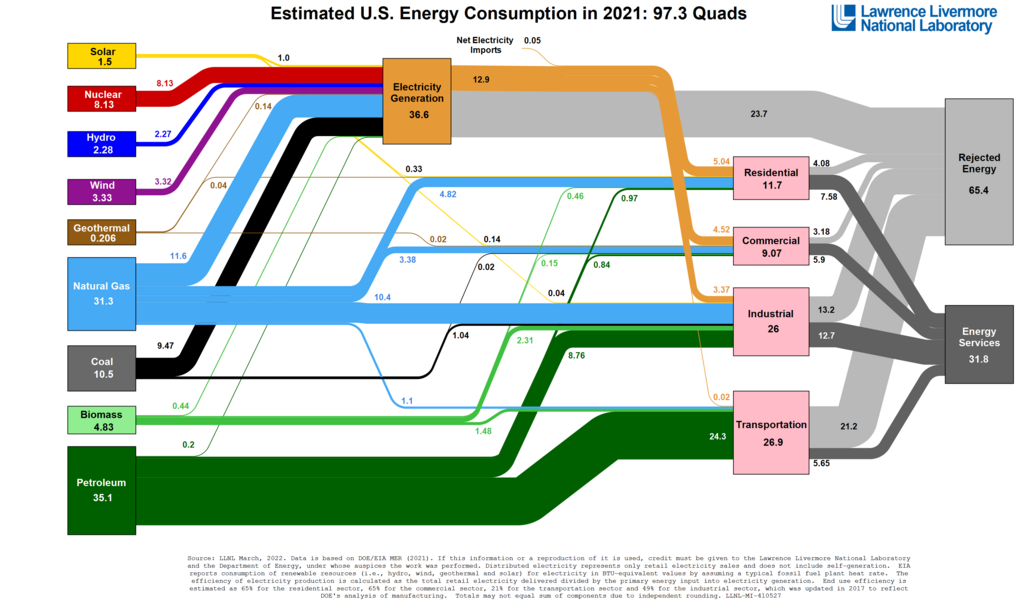
Look closely at charts of national energy use, like the one above. You’ll often see a massive arrow labeled “Rejected Energy.” This is, in simple terms, wasted energy, mostly in the form of heat. For example, a car’s internal combustion engine converts only about 20% of the energy in gasoline into motion; the rest is lost as heat. A traditional light bulb wastes about 90% of its electricity as heat.
This staggering amount of waste is where energy efficiency becomes our most powerful tool. It’s often cheaper, faster, and easier to save a unit of energy than it is to generate one. By targeting this waste, we can make huge strides in reducing our overall environmental impact without changing our lifestyles.
Improving efficiency is fundamental to tackling climate change. It is one of the most effective ways to cut emissions, and the technology to do so is already widely available. By choosing efficiency, we choose a more sustainable and secure future.
Which of the following scenarios is the best example of energy conservation?
The terms “energy efficiency” and “energy conservation” mean the same thing.