Mastering Emotional Intelligence in Leadership
Neurobiology of Executive Stress
The Brain's Boardroom Conflict
In high-stakes leadership, a constant battle rages between two parts of your brain: the primal, emotional limbic system and the logical, analytical prefrontal cortex. The limbic system, particularly the amygdala, is your rapid-response threat detector. It's fast, efficient, and evolved to keep you alive. The prefrontal cortex is the executive suite, responsible for planning, reasoning, and impulse control. It's slower but more sophisticated.
Under normal pressure, these two systems work in harmony. But when stress spikes, the amygdala can stage a coup. This is the infamous , where emotional reactivity overrides executive function. The faster, more primitive pathway takes control, sidelining the prefrontal cortex just when you need its clarity the most.
When the amygdala hijacks our brain’s logical centre, the prefrontal cortex, we might react impulsively, overlook details, or find it challenging to think clearly.
The Chemical Cocktail of Stress
When the amygdala sounds the alarm, it triggers a hormonal cascade. The brain signals the adrenal glands to flood your system with adrenaline and This chemical response is designed for short-term survival. Adrenaline boosts your heart rate and sharpens your immediate senses, preparing you for fight or flight. Cortisol sustains this state of high alert, mobilising sugar into the bloodstream for quick energy.
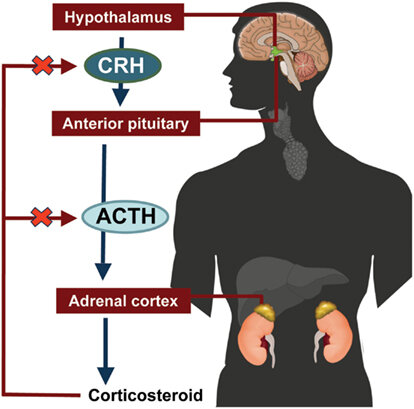
While useful for escaping a physical threat, this state is disastrous for executive decision-making. These hormones actively suppress the prefrontal cortex. Your ability to think flexibly, consider long-term consequences, and manage complex information plummets. Instead, your thinking becomes rigid, black-and-white, and focused on the immediate perceived threat, whether it's a critical email or a sudden market downturn.
Your Window of Tolerance
Every leader operates within a —an optimal zone of arousal where you can effectively process information and respond to demands without becoming overwhelmed. Inside this window, you feel calm, focused, and in control. You can think clearly and manage your emotions.
Stress hormones shrink this window. When pushed outside of it, you enter a state of either hyperarousal (fight or flight: anxiety, anger, reactivity) or hypoarousal (freeze: feeling numb, withdrawn, or shut down). Neither state is conducive to effective leadership.
The key is to recognise the subtle biological precursors that signal you're approaching the edge of your window. These are your body's early-warning system. They might include a tightening in your chest, shallow breathing, clenched jaw, or a sudden urge to interrupt. Paying attention to these physical cues allows you to intervene before you're fully hijacked, using techniques to down-regulate your nervous system and bring your prefrontal cortex back online.
Test your understanding of how stress impacts the brain.
What is the term for the event where the brain's emotional, rapid-response system overrides its logical, executive function during high stress?
During a high-stress situation, the adrenal glands release adrenaline and cortisol. What is a primary effect of this hormonal response on a leader's cognitive abilities?
By understanding this neurobiology, you shift from being a passenger in your own emotional state to being the pilot. You learn to manage your internal state to meet the external demands of leadership.